Highfield Boats just dropped a short recap video from its 2026 North American Dealer Meeting, and this year the crew moved the party to Chicago.
For years the event lived in Cadillac, Michigan, close to the factory. It simply got too big.
The video itself is quick and upbeat.
You see dealers and partners from the US and Canada mingling, checking out new RIBs, and generally having a good time on the water. Think networking, product demos, a dinner, and the usual competitive cornhole.
Nothing deep here, just a thank you to the people who sell their boats. Still, a nice look at a brand that keeps growing.
Highfield Boats gives a behind-the-scenes look at its headquarters and RIB production operation in Weihai, China.
The video shows the people, facilities and manufacturing processes behind one of the best-known names in the rigid inflatable boat market.
Highfield’s Weihai base plays a central role in the production of its aluminium RIBs, bringing key stages of construction and finishing together at one location.
Rather than focusing only on completed boats, the video offers a broader view of how Highfield Boats operates behind the scenes.
It connects RIB manufacturing with the teams responsible for production, organisation and worldwide distribution.
For anyone interested in how modern aluminium RIBs are built, this provides a useful look inside Highfield’s production base in China.
What Does “Friends of RIBsONLY.com” Actually Mean?
Rigid Inflatable Boats have something special about them. They combine a rigid hull with inflatable tubes, creating a boat that is stable, practical and capable in a wide range of conditions.
For people who share that passion, RIBsONLY.com has been dedicated to the remarkable world of RIBs since 2008.
Along the way, we have also built relationships with companies that know this market inside out. I call them Friends of RIBsONLY.com
You will find links to these companies in the RIBsONLY.com sidebar on the right. Pay them a visit.
Who Are the Friends of RIBsONLY.com?
They are not simply RIB manufacturers or marine suppliers.
What connects them is their focus on quality, specialist knowledge on the RIB market.
Friends of RIBsONLY.com may offer:
RIBs designed for leisure, professional or performance use;
Professional tube fabrics and materials;
RIB rentals and charters for B2B;
Specialist marine seating;
Equipment, accessories and technical resources;
Practical advice based on real experience.
A Focus on Quality
RIBsONLY.com has always placed quality above quantity.
The same principle applies to Friends of RIBsONLY.com. The aim is not to create the longest possible list of marine companies here on RIBsONLY.com. It is to highlight businesses that are relevant to RIB owners and serious about what they do.
That means looking at factors such as:
Product and build quality;
Materials and engineering;
Durability and safety;
Specialist knowledge;
Reputation and reliability.
If you’re curious about all active RIB builders worldwide, check my RIBManufadturerList.com. There are more than 200!
Good Service Still Matters
A good product is only part of the story. Good service and support after sales are at least as important. Solid companies understand that.
Buying a RIB, replacing tubes or choosing new seats often involves technical questions and important decisions.
Friends of RIBsONLY.com listen first and are client centred. They help customers find a solution that suits the way they actually use their boat.
That might mean helping a first-time RIB buyer or discussing specific technical requirements with an experienced owner.
Either way, useful advice matters more than a hard sell.
Finding the Right Companies
The RIB market has grown enormously, and there is no shortage of choice.
Friends of RIBsONLY.com are companies with a clear connection to the RIB world.
They know the products, understand the customers and share an interest in keeping people safely and happily on the water.
If you are looking for a RIB, the Friends of RIBsONLY.com network is a very good place to start.
Join the RIBs ONLY Community
RIBsONLY.com is about more than boats and equipment. It is also about the people who use them.
If you have a question, want to share your experience or simply enjoy talking about RIBs, join the conversation in the RIBs ONLY 2.0 Facebook group.
Advice from experienced owners can often be just as valuable as information from manufacturers and suppliers.
And there you can share all your knowledge, your boating trips, great looking RIBs, RIB meetings and so on.
The Aqua Adrenaline Series brings three different watercraft together to carry out a series of races.
Jet Bikes (not a rib), OCR boats (not a rib) and Pro Cats (almost but not quite a rib).
As with most powered sport they organise different events across the Country from May – October.
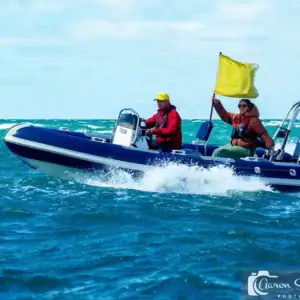
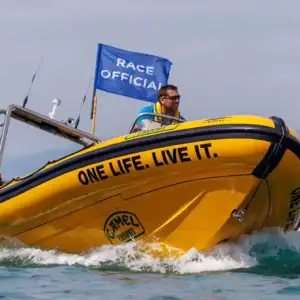
However, what holds the series together and allows them to operate safely? The Safety Fleet and yes, they are almost nearly all RIBs.
Primarily all boats are there to keep the course safe, to ensure other water users, that aren’t so observant, don’t stray into the danger area and to keep an eye out for water based mammals.
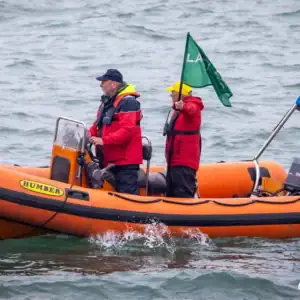
Red (stop) and yellow (warning) flags are carried and both start and finish are signed from one or other of the ribs.
That said each safety boat has its own characteristics and layouts, which suits them to different roles.
The Safety Fleet
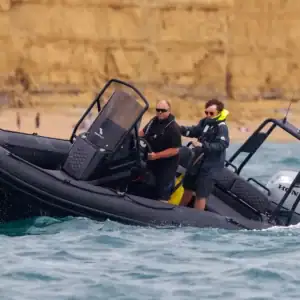
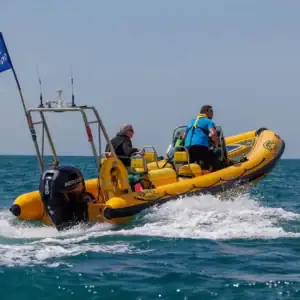
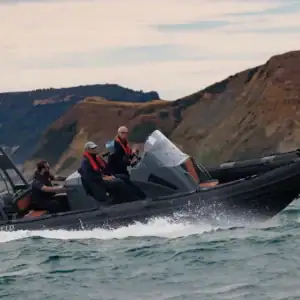
The July event, held at Westbay in Dorset saw this RIB fleet:
RIB
Length
Engine
Fuel capacity
Highfield Patrol 600
6,00 m
Honda 135 hp
140 l inboard
Highfield Patrol 700
7,00 m
Honda 200 hp
285 l inboard
Avon Adventure
6,20 m
Mercury Optimax 150 hp
70 – 120 l inboard
Ribtec
5,00 m
Yamaha 100 hp
150 l inboard
Ribtec Camel
6,55 m
Mercury 150 hp
280 l, multiple inboard tanks
Humber
5,00 m
Yamaha 90 hp
35 l external
With the 5.4 m Sea Rider, that’s often present, having a well deserved break.
To provide the best experiences, we use technologies like cookies to store and/or access device information. Consenting to these technologies will allow us to process data such as browsing behavior or unique IDs on this site. Not consenting or withdrawing consent, may adversely affect certain features and functions.
Functional
Always active
The technical storage or access is strictly necessary for the legitimate purpose of enabling the use of a specific service explicitly requested by the subscriber or user, or for the sole purpose of carrying out the transmission of a communication over an electronic communications network.
Preferences
The technical storage or access is necessary for the legitimate purpose of storing preferences that are not requested by the subscriber or user.
Statistics
The technical storage or access that is used exclusively for statistical purposes.The technical storage or access that is used exclusively for anonymous statistical purposes. Without a subpoena, voluntary compliance on the part of your Internet Service Provider, or additional records from a third party, information stored or retrieved for this purpose alone cannot usually be used to identify you.
Marketing
The technical storage or access is required to create user profiles to send advertising, or to track the user on a website or across several websites for similar marketing purposes.