Paul Liddiatt, Sales and Marketing Manager at Ribcraft, fully edited by Medianaut, Nautical News Media
Techniques and Judgment for Handling Waves and Swell Safely
To drive a RIB in rough water is a different skill from calm-water handling, and it can’t be improvised safely.
Wave shape, direction, and boat trim all interact, and getting them wrong can cause loss of control quickly.
This guide covers the core techniques experienced RIB skippers use, along with the judgment calls behind them.
It might be of interest to have beforehand the needed information of sea state and wind: Wind, Waves, Swell: Beaufort vs Douglas Sea Scale.
Before You Go: Reading Conditions
Always check the marine forecast for wind speed, wave height, and wave period, not just a general “sunny” outlook.
Short wave period with meaningful height creates steep, closely-spaced waves that are far harder to handle than long swell. Local knowledge matters. Tidal races, headlands, and river mouths can create dangerous conditions that generic forecasts don’t capture.
If in doubt, don’t go. Turning back early is always safer than pressing on into deteriorating conditions.
Our guide Are Rigid Inflatable Boats Safe? explains how hull design and tube volume affect behaviour in waves.
Drive is All About Trim and Throttle Control in Waves
Trimming the outboard down (bow down) generally improves control and reduces slamming in head seas.
Trimming up can help in following seas, keeping the bow from digging into the wave ahead.
Reduce speed before conditions demand it, not after the boat has already become difficult to control.
Constant micro-adjustments to throttle, easing off over crests and applying power in troughs, smooth out the ride considerably.
Avoid locking the throttle at a fixed speed; rough water requires continuous, active management rather than a set-and-forget approach.
Approaching Waves at the Right Angle
Taking waves directly on the bow, at a slight angle, is generally the safest approach in head seas. Hitting a wave square-on at speed causes hard slamming, uncomfortable and potentially damaging to hull and occupants alike.
Taking waves too far off the bow risks the boat rolling or the tubes catching the wave unpredictably. Adjust your heading slightly as each wave approaches rather than holding a rigid, fixed course throughout.
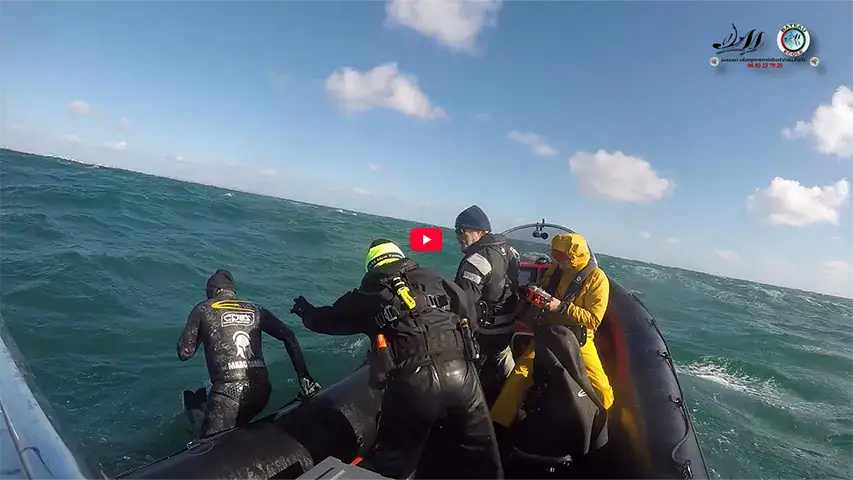
Out on training and then this happens. Watch until the end
Handling Following Seas
Following seas (waves from behind) are often more dangerous than head seas, despite feeling calmer initially. The risk is broaching: the stern is pushed sideways by a wave, turning the boat unexpectedly and violently.
Reduce speed in following seas and stay alert to the boat’s tendency to slew as waves pass underneath. Avoid surfing down wave faces at speed; this significantly increases the risk of losing directional control.
Handling Beam Seas
Beam seas (waves from the side) create the most uncomfortable and potentially unstable motion of any approach.
Where possible, alter course to take waves more from ahead or behind rather than directly abeam. If beam seas are unavoidable, reduce speed and keep weight distribution balanced to minimise rolling.
When to Slow Down or Turn Back
Persistent spray over the bow, difficulty maintaining course, or repeated hard slamming are all signals to reduce speed immediately. If conditions are still deteriorating after slowing down, turning back is the appropriate decision, not a failure.
Fatigue affects judgment quickly in rough conditions; a tired skipper makes worse decisions than a rested one. Brief all crew before conditions worsen, including where to hold on and what to do if visibility drops.
Common Mistakes That Cause Loss of Control
Excessive speed for the conditions is the single most common cause of loss of control in rough water. Fixed throttle settings, rather than active management, leave the boat unprepared for sudden changes in wave height.
Poor weight distribution, with too much weight aft or to one side, worsens handling in waves significantly. Ignoring early warning signs, hoping conditions will improve, often leads to a much harder decision later.

Building Rough-Water Confidence Safely
Practice in moderate conditions before attempting genuinely rough water, ideally with an experienced skipper aboard. Start close to shelter and safe harbour, gradually extending range as your judgment and boat-handling improve.
Every RIB and every set of conditions behaves slightly differently; experience with your specific boat matters considerably.
Our guide Best RIB for Rough Water: What Really Matters? explains how hull shape and design affect this behaviour.
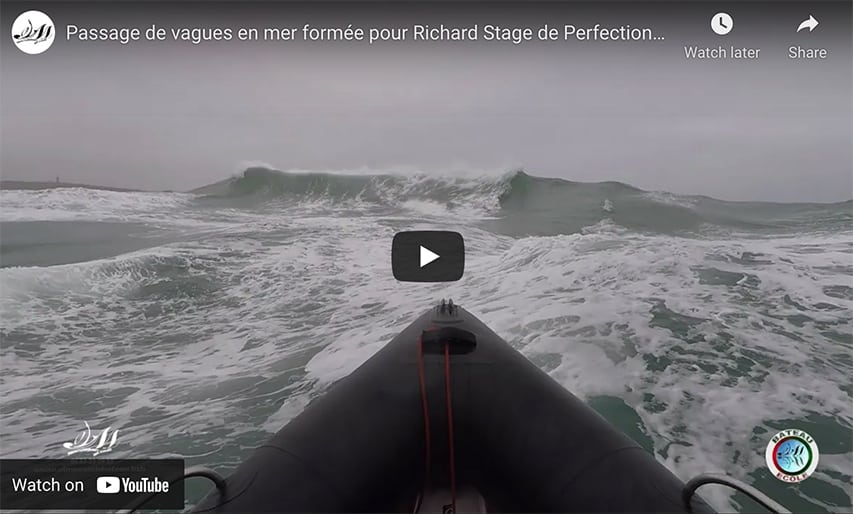
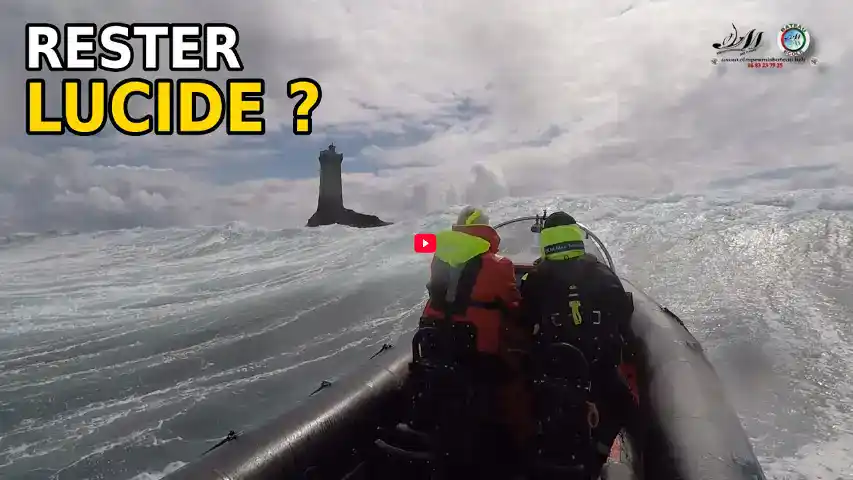
To give you a pretty good idea what seas you can encounter, watch these impressive training videos by OLM.
Frequently Asked Questions
What’s the biggest mistake new RIB skippers make in rough water?
Maintaining too much speed for the conditions, often because the boat still feels controllable at that moment.
Are following seas really more dangerous than head seas?
Often yes, due to broaching risk. Following seas can feel deceptively calm while carrying significant hidden risk.
Should I trim up or down in rough water?
Generally down (bow down) in head seas for control, and up in following seas to avoid bow-digging.
When should I simply turn back?
When speed reductions no longer restore control, when fatigue sets in, or when conditions keep worsening rather than settling.
Related reading: What Is a Rigid Inflatable Boat? · Are Rigid Inflatable Boats Safe? · Essential Safety Equipment for a RIB · Best RIB for Rough Water: What Really Matters? · Can a RIB Sink? · Wind, Waves, Swell: Beaufort vs Douglas