Before upgrading your boat with engines beyond the specs, review safety limits carefully and consider adjusting your insurance coverage to avoid costly consequences.
In this video a 1995 Zodiac Hurricane 472, a former rescue craft, is repurposed as a rugged project boat.
Originally rated for 70 hp, it receives a BF90 engine. That’s overpowering.
The engine’s long shaft is roughly 6 inches too long, lowering the cavitation plate and causing porpoising.
They consider removing a 5.5-inch extension, but the required parts would cost over a thousand dollars.
Instead, they install a fixed TH Marine Jack Plate costing about $265, cheaper than $400 adjustable versions.
If you’re into DIY mode, this video shows you step by step how to install Mercury SmartCraft® Connect Mobile (website)
It could be interesting for those that need of like real-time engine data, diagnostics and performance insights.
1. Remove the Cowl
Start by removing the engine cowl to access the components underneath.
Locate the 10-pin plug on your engine—on this 90 hp four-stroke, it’s at the front. Though on other models it may be positioned on the side.
Look for the plug labeled “terminator,” which could be yellow, red, or blue.
2. Check the Package
Open the SmartCraft® Connect package and ensure it contains the device, a small bag with zip ties and a screw,. Check the QR code that links to installation instructions and the digital owner’s manual.
3. Prepare the Plug
To prepare the plug, remove any friction-fit shroud to gain better access. Press the black release mechanism on the terminator cap and remove it to expose the pins.
4. Connect the Device
Attach the SmartCraft® Connect device by plugging it into the 10-pin connector until it clicks securely. Keep the terminator cap in a safe place in case you ever need to remove the device.
5. Secure the Device
Secure the device under the cowl using zip ties, ensuring it stays away from moving parts, fuel lines, spark plug wires, and ignition coils.
Replace the shroud if necessary to keep the area neat and protected.
6. Pair with the App
Turn on the engine and download the Mercury Marine app on your mobile device. Create an account, log in, and pair your phone with the SmartCraft® Connect via Bluetooth.
7. Finish Up
Finally, reinstall the cowl. Your installation is complete, and the boat is ready for the water with real-time engine data accessible on your phone.a one-page quick-reference sheet.
This video was published on the Mercury Marine YouTube channel.
This post is part of the extensive DIY and how-to series here on RIBsONLY.com. Here they are: DIY and how-to.
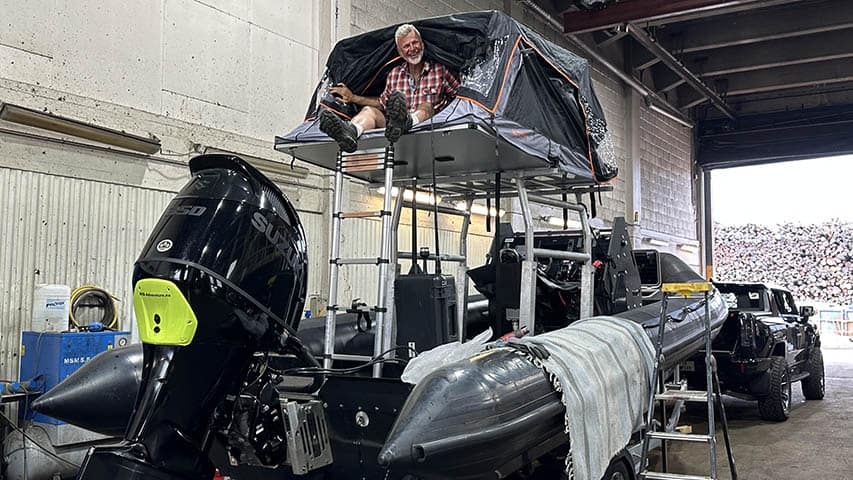
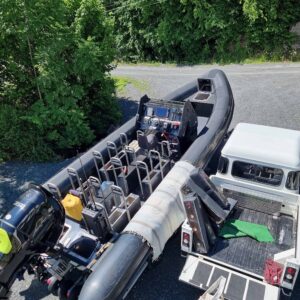
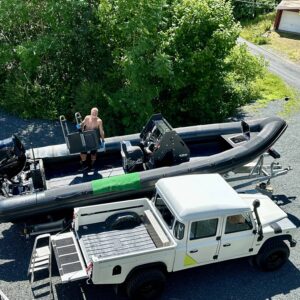
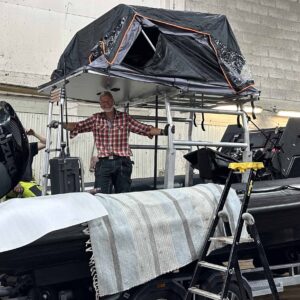
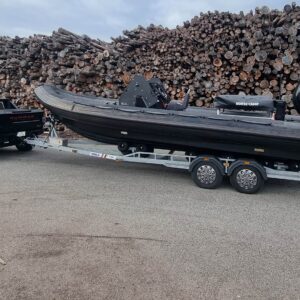
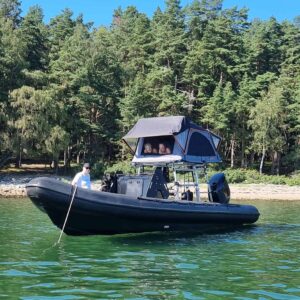
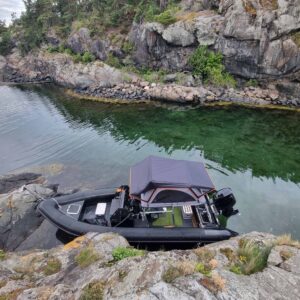
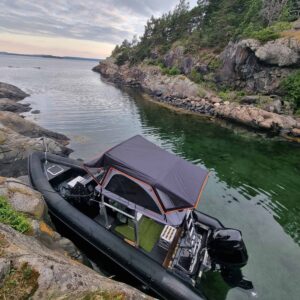
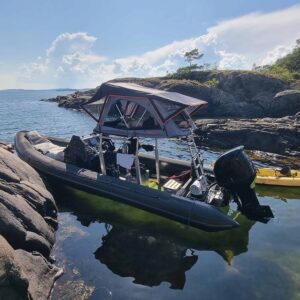
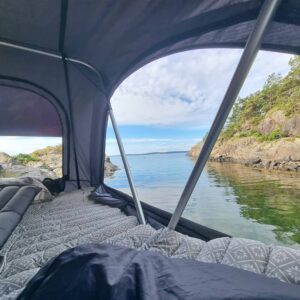
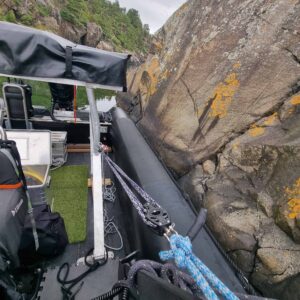
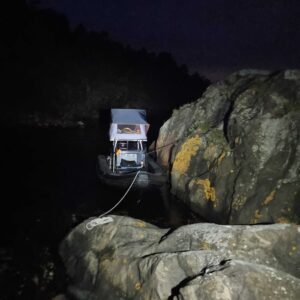
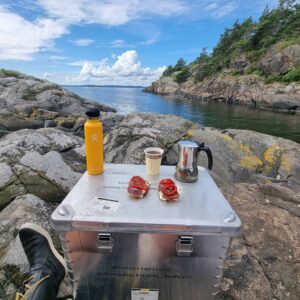
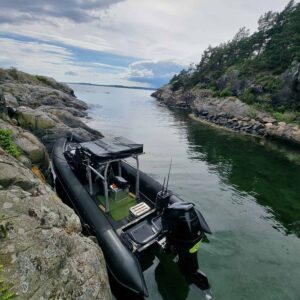
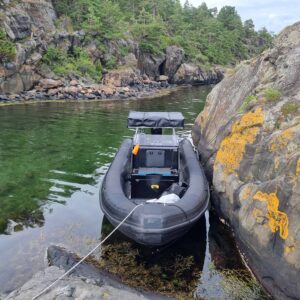
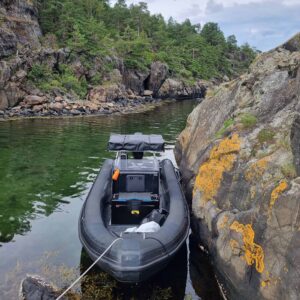
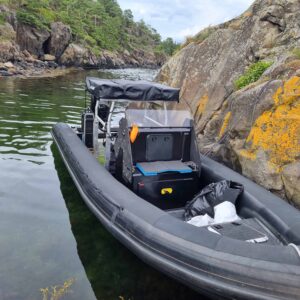
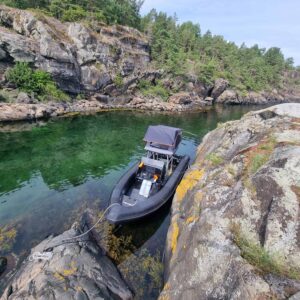
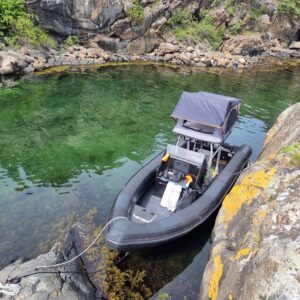
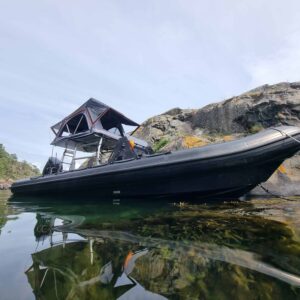
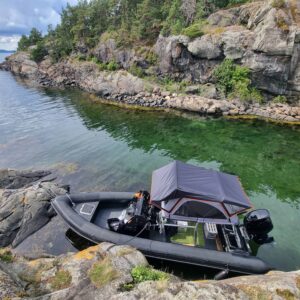
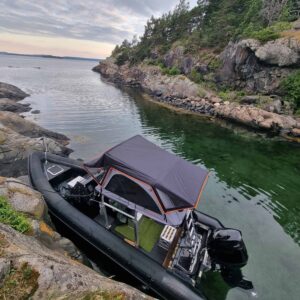
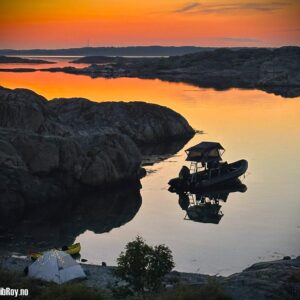
A little over a year ago my son Endre and I came across a picture of a cabin boat with a rooftop tent in Canada.
The concept looked cool. However, such a setup has a high center of gravity. It would never work at sea. In fact, it would be downright dangerous.
Still, the idea stuck with us.
The best kind of vacation our family has ever had has been with a RIB on expedition in exciting waters (check out my YouTube channel)
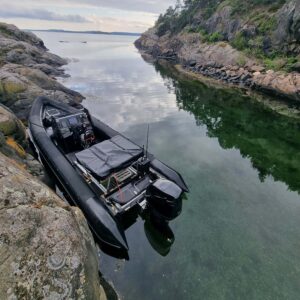
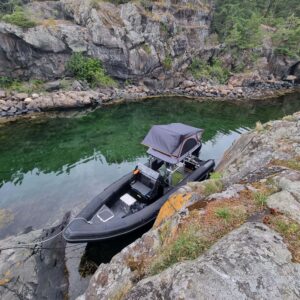
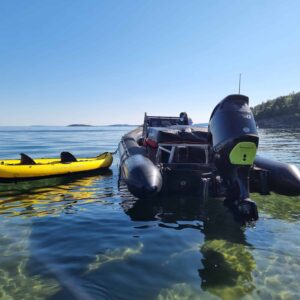
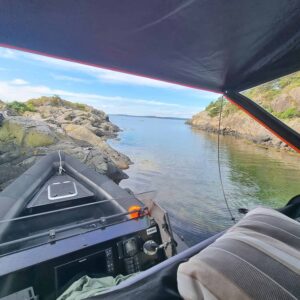
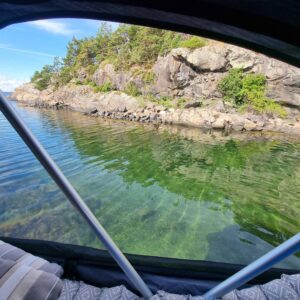
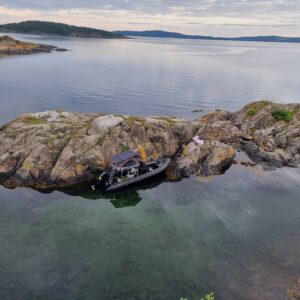
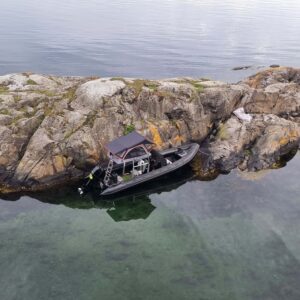
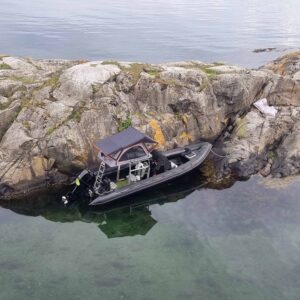
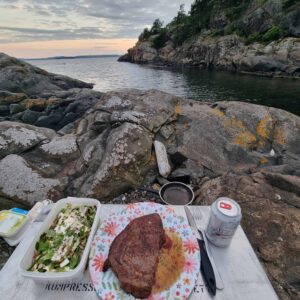
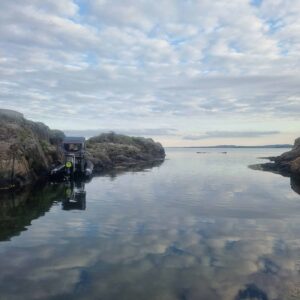
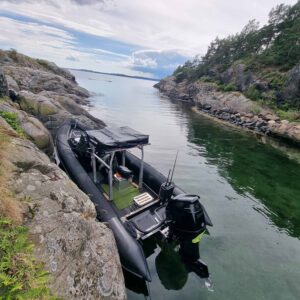
A RIB with an outboard motor needs barely any water. Even in the middle of peak holiday season, you can find spots and anchorages entirely to yourself.
Most modern boaters avoid shallow and complex waters, preferring the safety (and crowding) of busy marinas.
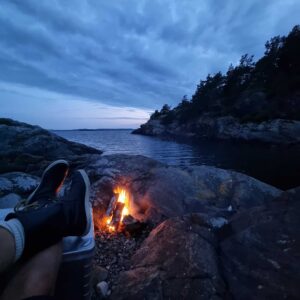
We, on the other hand, prefer having an island, rock, or bay all to ourselves.
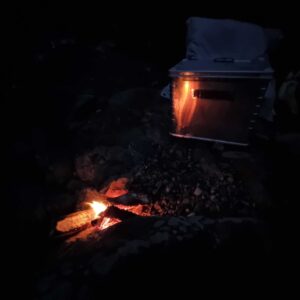
However, there’s always a bit of hassle involved in setting up a tent and hauling gear ashore.
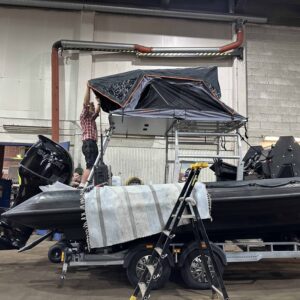
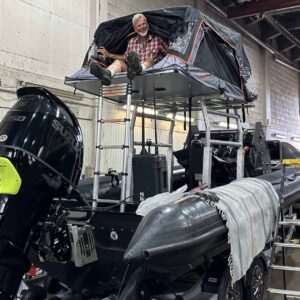
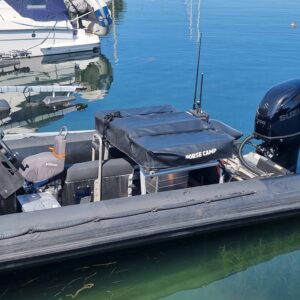
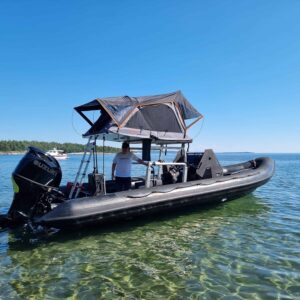
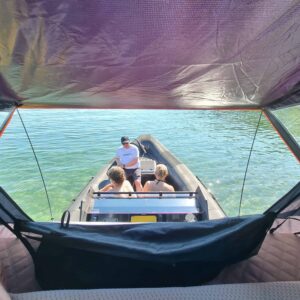
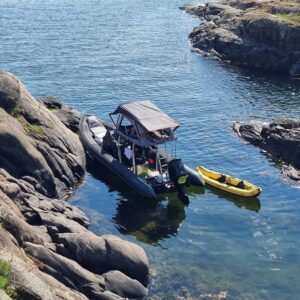
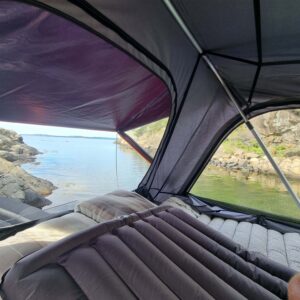
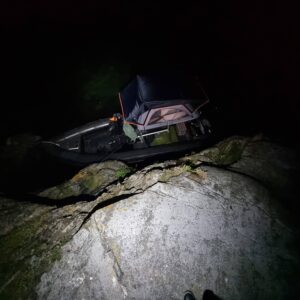
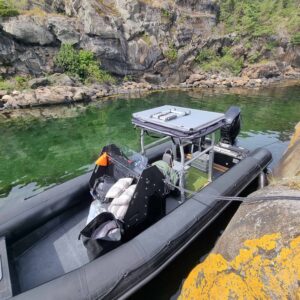
A rooftop tent on a RIB would make life much easier and significantly more comfortable.
It would be the perfect vessel for “overlanding” expeditions on fjords and along the coast.
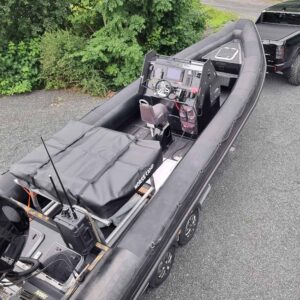
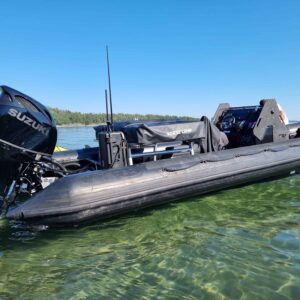
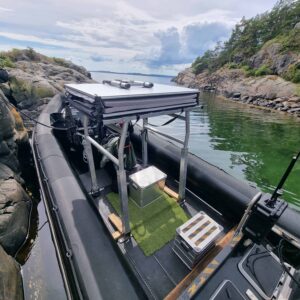
As many know, one of the concepts we’ve been testing is the mounting of seats on tracks in a RIB.
This opens up opportunities for creative onboard layouts and equipment—like a rooftop tent, for example.
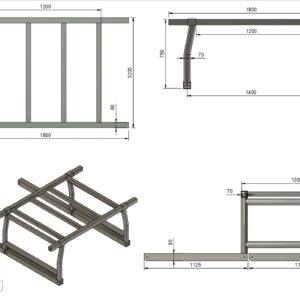
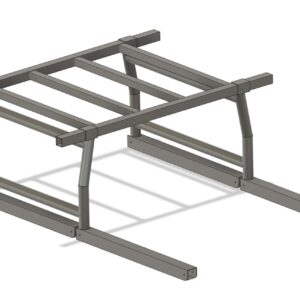
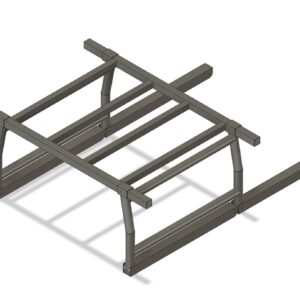
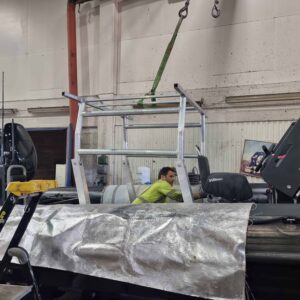
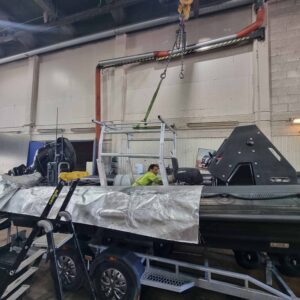
Endre and I have been sketching throughout the winter. We’ve been thinking, and we came up with a solution we believe can work.
Our most important criteria were to keep the center of gravity low. We also needed to ensure the setup remains stable at speed.
Additionally, we wanted room in the boat for other gear. Finally, it had to be comfortable to live in while at anchor.
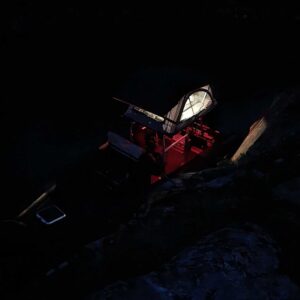
We now finally have a working prototype, and with a few adjustments and refinements, we’re almost ready for testing.
Overlanding with a 4 x 4 vehicle has been popular for years.
However, we haven’t seen anyone do this with the ocean’s equivalent of a 4 x 4—a RIB.
We think we may have sparked a new kind of boating lifestyle.
But what should we call it? Overfjording? Oceanlanding? Any other suggestions?
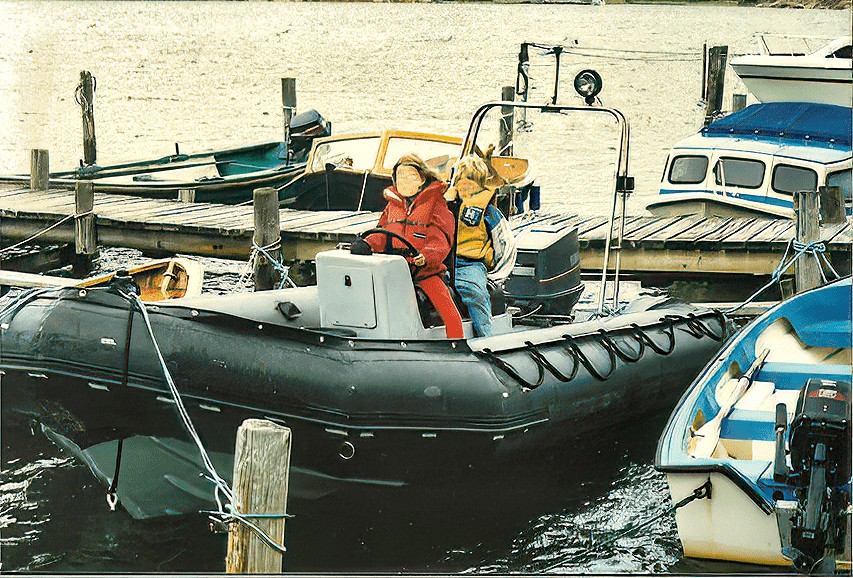
An article taken from Scandinavian Inflatable Club (Skandinaviska gummibåtsklubben) membership magazine 1998 issue 4.
It must be pointed out that before 1998, in Sweden, there were very few RIBs. Knowledge about them was sparse.
Something that made it extra exciting and fun to start designing and construct a RIB. And also a feedback from the designer 25 years (!) after the RIB was built.
I’m very honoured that this article has been allowed to get published on RIBs ONLY and I would like to thank these RIB passionates for their outstanding work to bring this unique story to you: Text and construction: Mats Ryde, Sweden Translation, epilogue and editing:Mårten Danielsson
To provide the best experiences, we use technologies like cookies to store and/or access device information. Consenting to these technologies will allow us to process data such as browsing behavior or unique IDs on this site. Not consenting or withdrawing consent, may adversely affect certain features and functions.
Functional
Always active
The technical storage or access is strictly necessary for the legitimate purpose of enabling the use of a specific service explicitly requested by the subscriber or user, or for the sole purpose of carrying out the transmission of a communication over an electronic communications network.
Preferences
The technical storage or access is necessary for the legitimate purpose of storing preferences that are not requested by the subscriber or user.
Statistics
The technical storage or access that is used exclusively for statistical purposes.The technical storage or access that is used exclusively for anonymous statistical purposes. Without a subpoena, voluntary compliance on the part of your Internet Service Provider, or additional records from a third party, information stored or retrieved for this purpose alone cannot usually be used to identify you.
Marketing
The technical storage or access is required to create user profiles to send advertising, or to track the user on a website or across several websites for similar marketing purposes.