How Commercial and Rescue Ribs Differ From Leisure Boats
Professional and rescue RIBs share the same basic concept as leisure boats but are built to a very different standard. Reliability, durability, and performance in extreme conditions take priority over comfort, styling, or cost efficiency.
This guide explains how these boats differ in construction, certification, and application from typical leisure RIBs.
What Defines a Professional or Rescue RIB
Professional RIBs are built for commercial, military, or rescue applications rather than leisure use. They typically meet stricter certification standards and undergo far more rigorous testing than consumer-grade equivalents.
Applications include search and rescue, coast guard, military, pilot transfer, port authority, and commercial diving support.
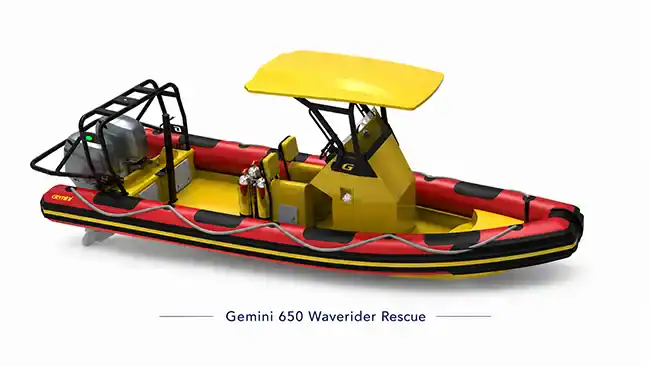
© Gemini Marine
Construction Differences
Professional RIB tubes are often foam-filled rather than air-filled, eliminating the risk of complete deflation from puncture. Multi-chamber tube construction is standard, ensuring the boat remains functional even if one chamber is damaged.
Hulls are typically more heavily reinforced, built to withstand years of hard commercial or operational use.
Our guide PVC vs Hypalon/CSM RIB Tubes explains why Hypalon/CSM dominates this segment, given its durability advantages.
Hull Design for Professional Use
Deep-V hulls are near-universal in this segment, since rough-water performance is often mission-critical rather than optional.
Our guide Best RIB for Rough Water: What Really Matters? explains why hull shape matters so much for these applications.
Reinforced fendering and impact-resistant materials protect the hull during frequent docking against larger vessels or piers.
Engine and Performance Requirements
Professional RIBs often run significantly more power relative to size than comparable leisure boats. Redundancy matters: twin engines are common, ensuring the boat can return safely if one engine fails.
Reliability under sustained hard use is prioritised over efficiency, given the operational demands these boats face.
Certification and Regulatory Standards
Rescue and commercial RIBs must meet stricter regulatory categories than typical leisure boats sold to private owners. Requirements vary by application and jurisdiction, covering stability, buoyancy, and equipment standards specific to commercial use.
Our guide How Does a RIB Work? explains the buoyancy and stability principles that these stricter standards build upon.
Materials and Longevity
Aluminium hulls are common in this segment, valued for their durability and resistance to impact damage.
Our guide Aluminium vs Fibreglass RIB compares these materials in more detail, relevant to both leisure and professional buyers.
Professional RIBs are typically designed and maintained for a longer operational lifespan than most leisure equivalents.
Cost and Lifecycle Differences
Professional RIBs cost significantly more than comparable-sized leisure boats, reflecting stricter build standards and certification requirements.
Maintenance schedules are typically more rigorous, with more frequent inspections mandated by operating authorities or insurers. Total lifecycle cost is often justified by the mission-critical nature of the application rather than by resale value.

Why This Matters for Leisure Buyers
Understanding professional RIB standards helps leisure buyers appreciate what separates a genuinely robust boat from a lighter-duty equivalent. Some manufacturers offer leisure models derived from professional designs, carrying over meaningful durability advantages.
Our RIB Buying Guide: How to Choose the Right Boat helps leisure buyers weigh these durability factors against cost.
Frequently Asked Questions
Why are professional RIB tubes foam-filled instead of air-filled?
Foam-filled tubes can’t fully deflate from puncture, ensuring the boat stays operational during rescue or commercial missions.
Can leisure buyers purchase professional-grade RIBs?
Yes, though at significantly higher cost. Some manufacturers offer civilian versions of their professional or rescue models.
Why do rescue RIBs almost always use deep-V hulls?
Rough-water performance is often mission-critical for rescue operations, making deep-V hulls the standard choice.
Are professional RIBs always aluminium-hulled?
Not always, but aluminium is common given its durability and resistance to impact damage in hard commercial use.
Related reading: What Is a Rigid Inflatable Boat? · Are Rigid Inflatable Boats Safe? · PVC vs Hypalon/CSM RIB Tubes · Best RIB for Rough Water: What Really Matters? · Aluminium vs Fibreglass RIB · RIB Photo Contest 2025