What Does RIB Stand For?

What Does RIB Stand For @ RIBs ONLY - Home of the Rigid Inflatable Boat
© 2026 – Andy Squirrell

A Question Often Put: What Does RIB Stand for?

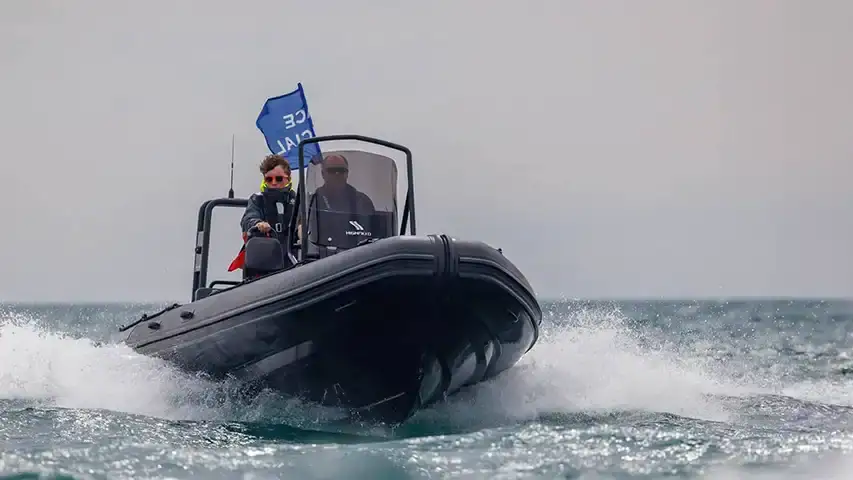
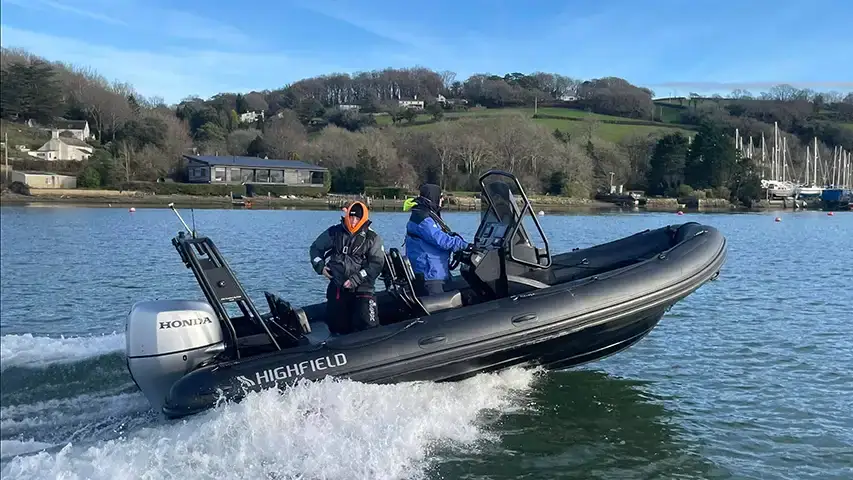
RIB stands for Rigid Inflatable Boat. It’s a motorboat with a solid hull and inflatable tubes around the sides.

That short definition explains the name. It doesn’t yet explain why the design exists, or why it matters so much in modern boating.

This article breaks down the term itself, where it came from, and how it relates to similar acronyms you’ll encounter while researching a RIB purchase.

The Meaning, Word by Word

Each word in “Rigid Inflatable Boat” describes a real, physical part of the vessel.

Rigid refers to the hull. It’s a solid structure, usually GRP (fibreglass) or aluminium, built the same way a conventional boat’s hull is built.

Inflatable refers to the tubes. These are air-filled chambers, called sponsons, fitted around the boat’s perimeter above the waterline.

Boat is simply the vessel itself, the combination of both elements working together.

Put together, the name is refreshingly literal. It describes exactly what you’re looking at: a rigid hull, wrapped in inflatable tubes.

Is RIB Also Written as R.I.B.?

Both forms exist in print. “RIB” without periods has become the standard in modern usage, including throughout the marine industry and in most manufacturer literature.

You’ll occasionally see “R.I.B.” in older documents or formal naval contexts, but it means exactly the same thing.

RIB vs RHIB: Same Acronym Family, Different Context

You’ll often see a related term: RHIB, or Rigid-Hulled Inflatable Boat. It describes the same core design.

The difference is mostly about who uses the term, not how the boat is built.

Military, coast guard and commercial operators tend to say RHIB. Leisure boaters and most manufacturers say RIB.

We cover every practical difference, including size and equipment trends between the two, in our dedicated guide: RIB vs RHIB: Meaning and Differences.

Comparison RHIB vs RIB @ RIBs ONLY - Home of the Rigid Inflatable Boat
Same R(H)IB concept. Completely different hulls and construction – © 2026 – Tom Bettle

Why the Name Matters for Buyers

Understanding the acronym isn’t just trivia. It tells you what to expect structurally, which affects everything from maintenance to resale value.

A “rigid” hull means the boat handles like a conventional planing boat at speed.

An “inflatable” tube system means that boat also carries reserve buoyancy and shock absorption a hard-hull boat simply doesn’t have.

That combination is the entire reason RIBs exist. Our complete guide, What Is a Rigid Inflatable Boat?, explains how the two parts work together in far more depth.

Where the Name Comes From

The term emerged alongside the design itself, in the 1960s at Atlantic College in Wales (which is now grown remarkably).

Early builders needed a way to describe a lifeboat that was neither a fully rigid hull nor a fully inflatable dinghy.

“Rigid Inflatable Boat” described the hybrid precisely, and the name stuck.

Now you know what RIB stands for, why the name matters, and what makes these boats different from conventional motorboats.


Frequently Asked Questions

Is RIB an official technical term or just a nickname?
It’s a genuine technical classification, used throughout the marine industry, by manufacturers, surveyors and regulatory bodies alike.

Do all RIBs have the word “RIB” in their model name?
No. Most manufacturers use their own model names. “RIB” describes the boat category, not a specific brand or product line.

Is a RIB the same thing people call an “inflatable boat”?
Not quite. A fully inflatable boat lacks a rigid hull entirely. Our guide RIB vs Inflatable Boat: What Is the Difference? explains the distinction in full.


Related reading: What Is a Rigid Inflatable Boat? · RIB vs RHIB: Meaning and Differences · How Does a RIB Work?

RIB vs Inflatable Boat: What is the Difference?

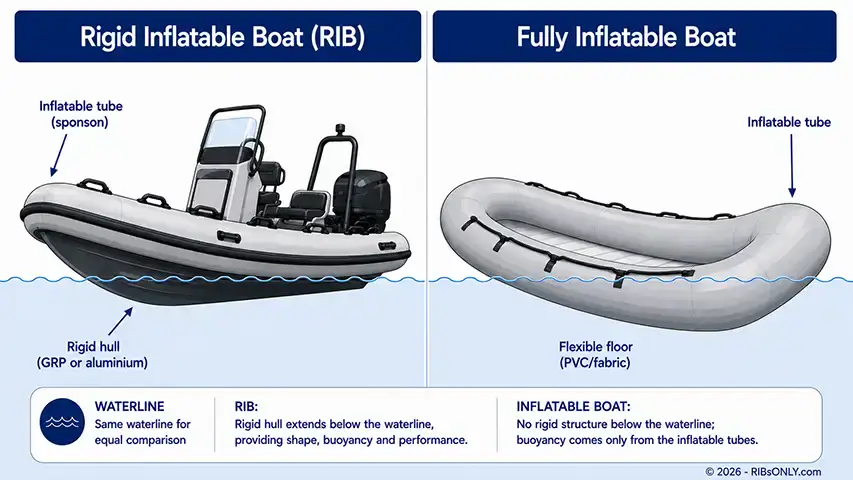
Diagram comparing a Rigid Inflatable Boat hull to a fully inflatable boat floor @ RIBs ONLY - Home of the Rigid Inflatable Boat

Types Explained

At first glance, a RIB and a fully inflatable boat can look almost identical.

Both have air-filled tubes around the sides. Both feel soft to the touch when you step aboard.

The similarity ends there.

Underneath the tubes, these are fundamentally different vessels, built for different purposes, at different price points and performance levels.

The Core Difference: What’s Under the Tubes

A RIB (Rigid Inflatable Boat) has a solid hull beneath its tubes, typically made from GRP or aluminium.

This hull provides the structural strength to plane at speed and hold a straight course in rough water.

A fully inflatable boat has no rigid hull at all.

Its floor is flexible, often made from the same PVC or rubberised fabric as the tubes, sometimes reinforced with a slatted or air-floor system for rigidity underfoot.

This single structural difference explains almost everything else that separates the two boat types.

Performance: Speed, Handling and Sea-Keeping

A RIB’s rigid hull lets it plane, meaning it lifts and rides on top of the water at speed rather than pushing through it.

This dramatically increases achievable speed and improves handling in a chop.

A fully inflatable boat, lacking that rigid structure, generally stays at lower speeds and performs best in calm, sheltered water.

It simply isn’t built to punch through waves the way a RIB can.

Our full technical breakdown of hull performance lives in How Does a RIB Work?, which explains planing behaviour in more depth.

Weight, Portability and Storage

Inflatable boats win decisively here.

They deflate, fold and pack into a bag small enough for a car boot or even a large backpack. Setup takes minutes, and storage requires almost no space at all.

RIBs cannot deflate or fold. They need a trailer, a berth or dry storage, and take up permanent, fixed space.

Engine Power and Capability

Because a RIB’s hull can handle much greater stress, it also accommodates far larger outboard engines.

A small RIB might run a 15 – 40 hp outboard; larger leisure RIBs commonly carry 100 – 300 hp or more.

The other ones are generally limited to smaller outboards, often under 15 hp – or even none at all – simply because the flexible structure cannot handle greater thrust safely.

Price and Typical Use Cases

Inflatable boats are considerably cheaper, making them popular as dinghies, small tenders or occasional-use leisure craft for calm water.

RIBs cost more to buy and maintain, but deliver genuine performance: faster cruising speeds, better rough-water behaviour and the ability to serve as a primary boat, not just a tender.

Rescue services, dive operators and serious leisure boaters choose RIBs precisely because a fully inflatable boat can’t meet their performance demands.

Durability and Lifespan

A RIB’s rigid hull typically outlasts an inflatable boat’s flexible floor by a wide margin, often decades versus several years of regular use.

Tubes on both boat types face similar UV and wear factors, covered in detail in PVC vs Hypalon/CSM RIB Tubes, but the RIB’s hull adds structural longevity an inflatable boat cannot match.

Which One Should You Choose?

Choose a fully inflatable boat if portability, low cost and occasional calm-water use matter most.

Choose a RIB if you want genuine performance, rough-water capability, and a boat that can serve as your primary vessel for years.

Our complete RIB Buying Guide walks through this decision in more detail, alongside sizing and budget considerations.


Frequently Asked Questions

Can an inflatable boat be upgraded into a RIB?
No. The rigid hull is a fundamental part of a RIB’s construction from the build stage, not an add-on.

Are RIBs harder to maintain than inflatable boats?
Not necessarily harder, but different. RIBs require hull and tube maintenance; inflatable boats require only fabric and floor-system care.

Is a RIB safer than a fully inflatable boat?
Generally yes, in open or rough water, thanks to the rigid hull’s stability and performance. See our full breakdown in Are Rigid Inflatable Boats Safe?.


Related reading: What Is a Rigid Inflatable Boat? · What Does RIB Stand For? · How Does a RIB Work? · RIB Tube Cleaning: How to Clean and Protect Your Tubes


Highfield: Attach a Handle on Hypalon Step-by-Step

Highfield Boat Maintenance DIY

Attaching a handle or patch to a Hypalon (CSM) inflatable boat tube requires precision, proper technique, and the right tools.

This blog post fits right into our how-to series and DIY posts.

This guide walks through the standard procedure professional technicians use to secure Hypalon accessories onto inflatable tubes.

Required Tools and Materials

Before starting the installation, ensure all necessary equipment is on hand:

  • Materials:
    • Hypalon handle or patch accessory
    • Two-part Hypalon adhesive (2-component contact cement)
    • 3/4-inch blue painter’s masking tape
    • Rigid cardboard (for creating a support template)
    • Technical acetone
    • Clean, lint-free rags
  • Tools:
    • Buffing wheel or abrasive sanding pad
    • Directional marker or pencil
    • Heat gun or heat reactivation tool
    • Plastic or bone boning tool / seam roller
    • Glue application brush

Step-by-Step Installation Process

Continue Reading →

How Fast Can a RIB Go? RIB Top Speed Explained

It's a joy to go wide open throttle on a calm sea @ RIBs ONLY - Home of the Rigid Inflatable Boat
It’s a joy to go wide open throttle on a calm sea  – © Iceman Images – Anthony Hadaway

When a RIB is Posted Online, People Often Ask About Its Top Speed

Top speed is the number every RIB brochure leads with, yet it’s also the most misleading figure unless you understand the conditions behind it.

The same hull can produce very different top speed results depending on load, water conditions and engine setup.

This guide explains what genuinely determines top speed, realistic ranges by boat size, and why the number on a spec sheet rarely tells the whole story.

What Determines Top Speed

Top speed results from several factors combining, not from horsepower alone. And keep in mind that every hull has its speed limits.

Power-to-weight ratio. A lighter hull with a given engine achieves higher top speed than a heavier hull with the same power. This is why aluminium and lightweight GRP construction can meaningfully affect top speed figures.

Hull design. Deadrise angle, hull length and overall shape all affect how efficiently a boat converts engine power into speed. Our guide Best RIB for Rough Water explains how deadrise specifically affects performance in waves, which also relates directly to top speed potential.

Propeller selection. The wrong propeller pitch for a given engine and hull combination can leave meaningful top speed unrealised, or overload the engine trying to reach it.

Load. Passengers, fuel and equipment all reduce top speed, sometimes significantly on smaller, lighter hulls where the load represents a larger proportion of total weight.

Water conditions. Top speed figures are almost always achieved in flat, calm water. Genuine chop reduces achievable top speed considerably, for safety and comfort reasons as much as raw capability.

Realistic Top Speed by Boat Size

These figures represent typical achievable top speed under favourable, flat-water conditions with a moderate load. Actual results vary considerably by specific hull, engine and setup.

RIB LengthTypical EngineApproximate Top Speed
3,5 – 5 mSingle 40 – 90 hp30 – 40 knots
5 – 6,5 mSingle 90 – 150 hp35 – 50 knots
6,5 -9 mTwin outboards45 – 55 knots
9 m+Twin/triple, 300 hp+50 – 65+ knots

Indicative numbers © 2026 Medianaut, Nautical News Media

Performance-focused models with lightweight construction and optimised hull design can exceed these general ranges considerably.

Why Brochure Top Speed Figures Can Mislead

Manufacturer top speed figures typically reflect ideal, minimal-load, flat-water conditions, often with a light fuel load and minimal passengers. Real-world top speed with a full crew, fuel and equipment is usually meaningfully lower.

This gap matters for buyers comparing models purely on headline speed figures, without accounting for how each manufacturer tested that number.

Speed, Safety and Skill

Achieving genuine top speed safely requires proper training, not just sufficient horsepower. Sea and lake surfaces are rarely perfectly flat, and running at maximum speed in anything beyond calm conditions increases risk considerably.

Our safety guide, Are Rigid Inflatable Boats Safe?, covers the skipper’s role in matching speed to conditions responsibly.

Top Speed and Fuel Consumption Trade-offs

Pushing toward top speed significantly increases fuel consumption, often disproportionately compared with the speed gained. Our companion guide, RIB Fuel Consumption Explained, covers where the genuinely efficient cruising point typically sits, well below outright top speed.


Frequently Asked Questions

Do lighter RIBs always achieve higher top speed?
Generally yes, for a given engine, since less weight means less power needed to reach planing speed and beyond.

Does hull material affect top speed?
Indirectly, through weight. A lighter hull, whether aluminium or lightweight GRP construction, can support a higher top speed for equivalent power.

Is top speed a good way to compare different RIBs?
Only with caution. Testing conditions, load and propeller setup all affect the figure significantly, so context matters as much as the number itself.


Related reading: What Is a Rigid Inflatable Boat? · How to Choose an Outboard for a RIB · RIB Fuel Consumption Explained · Best RIB for Rough Water


Highfield Sport 900 Powered by Twin Hondas BF250 V6

Highfield Sport 900 Action Video

The Highfield Sport 900 redefines large-capacity rigid inflatable boats.

Building on a tough aluminum hull, it merges rugged durability with upscale family cruising.

A deep 26-degree deadrise ensures exceptional tracking through aggressive waves.

This powerful twin outboard setup delivering up to 600 hp offer formidable speed.

The deck design of the Highfield Sport 900 optimizes passenger comfort and practical functionality.

The layout comfortably accommodates 19 people alongside integrated sunbeds and a console cabin.

Generous fuel capacity supports long offshore runs without frequent refueling stops.

However, the boat requires heavy-duty transport gear and confident maneuvering.

In conclusion, the Highfield Sport 900 delivers impressive build quality and long-distance versatility.

It suits serious boaters who demand genuine seaworthiness alongside luxury touches.


This video was published on the e-Ribbing. com YouTube channel.

Watch more Highfield boats in action: click here.

Proud to share that Highfield is a good Friend of RIBs ONLY.

Proud to share that Honda Marine is a Friend of RIBs ONLY.


The Global Manufacturer List brings 200+ active RIB brands together, structured through featured companies, overview lists, and direct contact via socials and email.


Specs

Continue Reading →
×