How to Test a Used Outboard

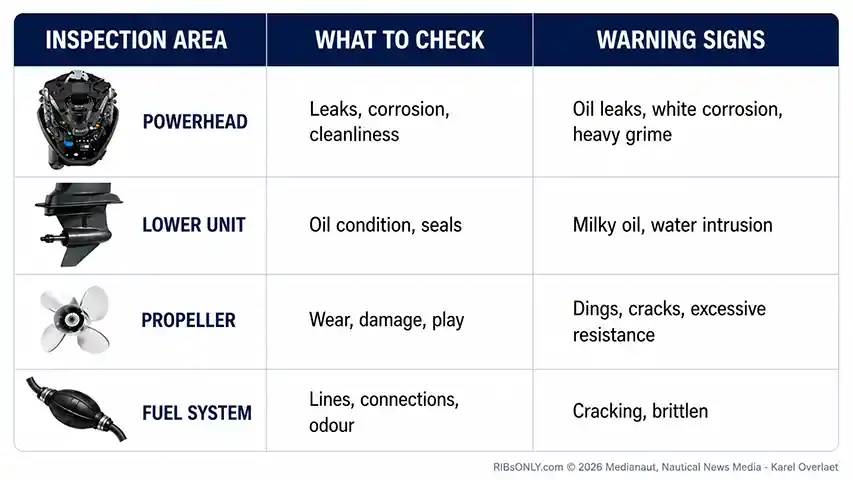
How to test a used outboard diagram @ RIBs ONLY - Home of the Rigid Inflatable Boat
Powerhead and propeller image © Honda Marine

A Practical Checklist for Assessing Outboard Condition Before You Buy

The outboard is often the single most expensive component to replace on a used RIB, making thorough testing essential. A well-maintained engine can run reliably for many years, while a neglected one can fail expensively soon after purchase.

This guide covers the practical checks you can perform yourself before deciding whether an outboard is worth buying.

Why Outboard Condition Matters So Much

Engine replacement or major repair can cost a substantial fraction of the entire boat’s value in some cases.

Unlike the hull, outboards have moving parts subject to wear, corrosion, and mechanical fatigue over time and use.

Our guide How to Choose an Outboard for a RIB covers selection criteria relevant when comparing a used engine against a new equivalent.

Checking Engine Hours and Service History

Ask for the engine’s total hours if available, along with a complete service history and receipts.

Regular servicing at manufacturer-recommended intervals is a strong positive indicator of how the engine has been treated. Gaps in service history, or no records at all, warrant more cautious inspection and potentially a lower offer.

Compare stated hours against visible wear; a low-hour engine with heavy visible wear may indicate inaccurate reporting.

Visual Inspection of the Powerhead

Check for oil leaks, corrosion, or discolouration around the powerhead, cowling, and mounting bracket.

White, chalky corrosion (particularly on aluminium components) suggests prolonged saltwater exposure without adequate flushing or maintenance.

Look inside the cowling for cleanliness; a well-maintained engine is typically reasonably free of built-up grime and debris.

Checking the Lower Unit and Propeller

Inspect the propeller for dings, cracks, or significant wear, all of which affect performance and indicate usage patterns.

Check lower unit oil for a milky appearance, which indicates water intrusion, a potentially serious and costly problem.

Spin the propeller by hand where safely possible, feeling for unusual resistance, grinding, or excessive play.

Starting and Running the Engine

Start the engine cold if possible; a healthy engine should start promptly without excessive cranking or hesitation. Listen for unusual knocking, ticking, or grinding sounds, particularly at idle and during acceleration.

Check that the engine reaches and holds a stable idle without stalling or surging unexpectedly. Monitor smoke colour, since excessive blue or white smoke can indicate internal wear or fuel system issues.

Testing Under Load: The Sea Trial

A stationary test tells you only so much; a proper sea trial reveals how the engine performs under actual load.

Our guide RIB Sea Trial Checklist covers the full range of checks worth performing during an on-water test.

Check acceleration response, ability to reach and hold planing speed, and any hesitation or power loss under load.

Checking Trim and Tilt Function

Test the power trim and tilt mechanism through its full range, checking for smooth, consistent movement without jerking.

Slow or unresponsive trim function can indicate hydraulic fluid issues or a failing trim motor, both repairable but worth noting.

Fuel System Considerations

Check fuel lines, primer bulb, and connections for cracking, brittleness, or fuel odour suggesting leaks. Ethanol-related fuel system degradation is common on engines that have sat with old fuel for extended periods.

A fuel system that’s been neglected may need cleaning or component replacement even on an otherwise sound engine.

Getting a Professional Compression Test

A compression test, performed by a qualified mechanic, provides objective data on internal engine health. Significant variance between cylinders can indicate internal wear that visual inspection alone won’t reveal.

For higher-value purchases, this small additional cost is a worthwhile investment before finalising the deal.

Making a Confident Decision

Combine visual inspection, a cold start test, and a proper sea trial for a well-rounded assessment of engine condition.

For significant purchases, a mechanic’s inspection and compression test add valuable objective confirmation before committing.

Our Buying a Used RIB: Complete Inspection Guide places outboard testing within the full pre-purchase process.


Frequently Asked Questions

How many hours is considered high for a used outboard?
This varies by engine and maintenance quality, but well-maintained engines can reliably exceed 1.000 hours.

Is milky lower unit oil always serious?
It indicates water intrusion, which can cause significant internal damage if left unaddressed, so treat it as a genuine concern.

Can I test an outboard without a sea trial?
A stationary check reveals some issues, but a sea trial under real load is essential for a complete assessment.

Is a compression test necessary for every used outboard purchase?
Not always essential for lower-value engines, but strongly recommended for significant purchases where certainty matters most.


Related reading: What Is a Rigid Inflatable Boat? · How to Choose an Outboard for a RIB · RIB Sea Trial Checklist · How to Inspect a RIB Transom · Buying a Used RIB: Complete Inspection Guide

Best RIB Brands: How to Evaluate a Manufacturer

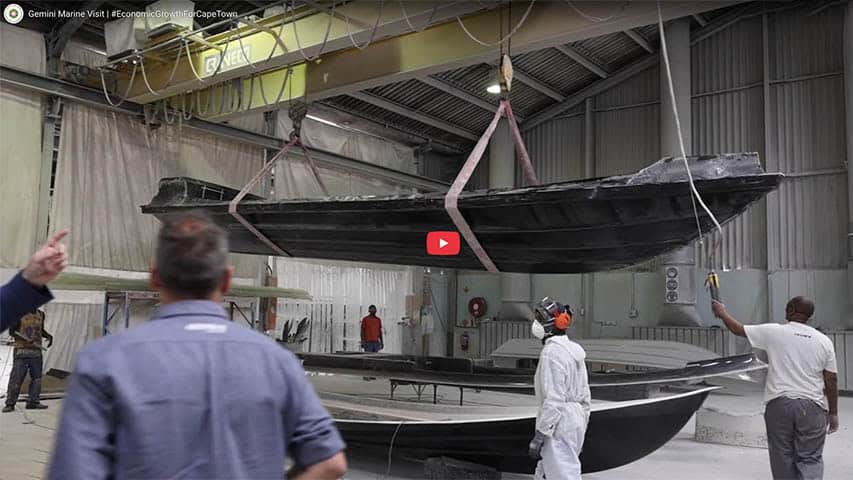
Economic Growth for CapeTown at Gemini Marine @ RIBs ONLY - Home of the Rigid Inflatable Boat
At the GEMINI shipyard in South Africa – © Gemini marine

What Actually Separates a Reputable RIB Manufacturer From the Rest

Choosing a RIB brand involves more than comparing specifications and price; the builder’s reputation genuinely affects long-term ownership experience.

Build quality, parts availability, warranty support, and resale value all connect directly back to the manufacturer behind the boat.

This guide explains what to evaluate when assessing any RIB manufacturer, rather than ranking specific brands directly.

We won’t publish a list of the “best RIBs” here. Read why. Why a Top 10 of “the Best RIB” Makes No Sense.

Why Manufacturer Reputation Matters

A well-regarded manufacturer typically means better build consistency, more reliable warranty support, and stronger long-term parts availability.

Lesser-known or newer manufacturers aren’t necessarily worse, but they carry more uncertainty around long-term support and resale value.

Understanding how to evaluate a manufacturer helps you make an informed decision regardless of brand recognition alone.

Manufacturing Heritage and Experience

Manufacturers with decades of experience have typically refined their construction processes through extensive real-world feedback.

Our guide History of the Rigid Inflatable Boat explains how many established manufacturers trace their roots back to rescue or military origins.

This heritage often translates into more conservative, proven engineering choices rather than untested design experimentation.

Newer manufacturers can still produce excellent boats, but longer track records generally carry lower risk for buyers.

Build Quality and Construction Standards

Examine how a RIB builder constructs tubes, seams, and hull-to-tube attachment points, since these areas often reveal quality differences.

Our guide PVC vs Hypalon/CSM RIB Tubes explains material choices that reputable manufacturers typically communicate clearly and transparently.

Request specific information about hull lamination, core materials, and construction methods rather than accepting vague marketing claims.

Certification and Regulatory Compliance

Legitimate manufacturers should readily provide CE certification details and other relevant regulatory compliance documentation upon request.

Our guide How Does a RIB Work? touches on the buoyancy and stability standards that underpin these certification requirements.

Reluctance to provide certification documentation is a meaningful warning sign worth taking seriously during evaluation.

Warranty Terms and After-Sales Support

Compare warranty length and coverage carefully; terms vary significantly between RIB builders and even between product lines.

Research how responsive a manufacturer’s dealer network is to warranty claims and general after-sales support requests.

A strong warranty is only meaningful if backed by genuine, accessible support when issues actually arise.

Parts Availability and Long-Term Support

Established manufacturers typically maintain better long-term parts availability, particularly for tubes, fittings, and hull components.

This matters considerably for repair costs and resale value many years after the original purchase.

Ask current owners or dealers about their experience sourcing parts for older models from the same manufacturer.

Dealer Network and Local Support

A strong, well-distributed dealer network makes servicing, warranty claims, and parts sourcing considerably more convenient over time.

RIB builders with sparse or inconsistent dealer coverage in your region may create practical challenges down the line.

Consider proximity to a reliable dealer as a genuine factor in your manufacturer evaluation, not just an afterthought.

Resale Value and Market Reputation

Manufacturers with strong reputations typically see their boats hold value better in the used market over time.

Our guide PVC vs Hypalon/CSM RIB Tubes explains how tube material and condition specifically influence this resale value picture.

Research used listings and completed sales for a given manufacturer to gauge realistic long-term value retention.

Independent Reviews and Owner Feedback

Seek out independent reviews and genuine owner feedback rather than relying solely on manufacturer marketing materials.

Owner forums and community groups often reveal practical, long-term ownership experiences that marketing materials naturally omit.

Patterns across multiple independent sources carry more weight than any single positive or negative review.

Manufacturer evaluation criteria @ RIBs ONLY - Home of the Rigid Inflatable Boat
RIB builders evaluation criteria – RIBsONLY.com – © 2026 Medianaut, Nautical News Media

Making an Informed Manufacturer Choice

Evaluate manufacturers systematically across heritage, build quality, certification, warranty, and dealer support rather than brand recognition alone.

Combine this evaluation with hands-on inspection and, where possible, feedback from existing owners of that specific manufacturer.

Our RIB Buying Guide: How to Choose the Right Boat places manufacturer evaluation within the full purchasing decision process.


Frequently Asked Questions

Where can I find all active RIB brands?
We’ve created the RIB Manufacturer List where you find all brands in one place.

Is there a source with userdata from RIB owners?
Yes, there is and you can find it on this site. See the results of our real life survey of RIB owners with boats more than 10 years old.

Is a newer manufacturer automatically a riskier choice?
Not automatically, but longer track records generally reduce uncertainty around long-term support and parts availability.

How can I verify a manufacturer’s certification claims?
Request specific CE certification documentation directly; legitimate manufacturers should provide this without hesitation.

Does dealer network size really matter for ownership experience?
Yes, considerably. A strong local dealer network simplifies servicing, warranty claims, and parts sourcing significantly.

Where can I find genuine owner feedback about a RIB buider?
Owner forums, community groups like this one, and independent review sites typically offer more balanced feedback than manufacturer marketing.


Related reading: What Is a Rigid Inflatable Boat? · History of the Rigid Inflatable Boat · PVC vs Hypalon/CSM RIB Tubes · Who Invented the RIB? · RIB Buying Guide: How to Choose the Right Boat · Why a Top 10 of “the Best RIB” Makes No Sense


RIB FAQ: The Most Asked Questions

Quick, Clear Answers to the Questions RIB Buyers and Owners Ask Most @ RIBs ONLY - Home of the Rigid Inflatable Boat

Quick, Clear Answers to the Questions RIB Buyers and Owners Ask Most

Some questions come up again and again, whether from first-time buyers, curious newcomers, or experienced owners facing a new situation.

This FAQ collects the most common questions about RIBs in one place, with concise answers and links to deeper guides.

Use it as a quick-reference starting point, then follow the linked guides for more detailed explanations.


General Understanding

What is a Rigid Inflatable Boat (RIB)?
A Rigid Inflatable Boat, almost always shortened to RIB, is a motorboat built around two very different structures. A solid hull sits beneath the waterline. Inflatable tubes wrap around the sides above it: What is a Rigid Inflatable Boat (RIB).

What does RIB stand for?
RIB stands for Rigid Inflatable Boat, combining a solid hull with inflatable tubes around the sides: What Does RIB Stand For?

Why do RIBs have inflatable tubes?
Tubes provide buoyancy, stability, and impact protection alongside the rigid hull, combining strengths of both boat types: Why Do RIBs Have Inflatable Tubes?

What’s the difference between a RIB and a regular inflatable boat?
A RIB has a rigid hull for performance and handling; a standard inflatable lacks this rigid structure entirely:
RIB vs Inflatable Boat: What is the Difference?

Is RIB the same as RHIB?
RHIB (Rigid Hull Inflatable Boat) and RIB are generally interchangeable terms, though RHIB is more common in military and commercial contexts: RIB vs RHIB: Meaning and Differences


Safety Questions

Are RIBs safe?
Yes, generally very safe, thanks to their stability and reserve buoyancy, when operated within their design category and properly maintained: Are Rigid Inflatable Boats Safe?

Can a RIB sink?
It’s extremely difficult due to multi-chamber tube construction and hull buoyancy, though not technically impossible under extreme circumstances: Can a RIB Sink?

What safety equipment do I need on a RIB?
This depends on your jurisdiction and intended use; our guide Essential Safety Equipment for a RIB covers the full breakdown.

What’s a kill cord and why does it matter?
It’s a safety lanyard that cuts the engine if the helmsman is displaced, preventing dangerous runaway boat scenarios:  Essential Safety Equipment for a RIB.


Buying Questions

How much does a RIB cost?
Prices vary enormously by size, brand, and engine; our guide How Much Does a RIB Cost? breaks down the key factors.

What size RIB do I need?
This depends on intended use, typical passenger numbers, and storage constraints; see our guide What Size RIB Do I Need?.

Should I buy new or used?
Both are viable; used offers value but requires careful inspection, covered in our guide Buying a Used RIB: Complete Inspection Guide.

What should I check before buying a used RIB?
Tubes, transom, engine hours, and a proper sea trial are essential; see our guide Buying a Used RIB: Complete Inspection Guide.


Materials and Construction Questions

PVC or Hypalon: which is better?
Neither is universally better; it depends on climate and budget. Our guide PVC vs Hypalon/CSM RIB Tubes explains the trade-offs.

Aluminium or fibreglass hull: which should I choose?
Both have merits depending on priorities; see our guide Aluminium vs Fibreglass RIB for a full comparison.

How long do RIB tubes last?
Typically 8–20 years depending on material and climate; see our guide PVC vs Hypalon/CSM RIB Tubes for specifics.


Ownership and Maintenance Questions

How much does it cost to own a RIB?
Beyond purchase price, expect insurance, storage, fuel, and maintenance costs; see our guide RIB Ownership Costs.

Can I leave my RIB in the water?
It depends on tube material, climate, and hull type; our guide Can You Leave a RIB in the Water? covers this in detail.

How often should I service my RIB?
Engine servicing is typically annual or hours-based; our guide RIB Maintenance Schedule covers the full timeline.

How do I store my RIB for winter?
Proper winterisation protects the engine, tubes, and hull; see our guide RIB Winter Storage Guide.

What happens if I don’t have an insurance?
Without insurance, you are personally responsible for covering the costs of accidents, injuries, property damage, theft, or the total loss of your watercraft. Read all about it in our guide: RIB Insurance Guide.


Performance and Handling Questions

How fast can a RIB go?
This varies enormously by size, hull, and engine; our guide How Fast Can a RIB Go? covers realistic expectations.

What’s the best RIB for rough water?
Deep-V hulls generally perform best; see our guide Best RIB for Rough Water: What Really Matters?.

How do I drive a RIB safely in rough water?
Technique, trim, and speed management matter significantly; see our guide How to Drive a RIB in Rough Water.

Single or twin outboards: which do I need?
This depends on your typical use and risk tolerance; see our guide Single vs Twin Outboards on a RIB.


Where to Go From Here

This FAQ covers the questions asked most often, but every linked guide offers considerably more depth on its specific topic.

Our pillar guide What Is a Rigid Inflatable Boat? remains the best comprehensive starting point for understanding RIBs from the ground up.

If your specific question isn’t answered here, browse our full evergreen guide library covering buying, ownership, safety, and technique.


Frequently Asked Questions

Is this FAQ updated regularly?
Yes, it’s periodically reviewed and expanded as new common questions emerge across the RIBsONLY community.

Can I suggest a question to add to this FAQ?
Yes, feedback helps keep this resource genuinely useful and comprehensive for future readers: Get in Touch.

Where should complete beginners start?
Begin with our pillar guide What Is a Rigid Inflatable Boat? before exploring specific topics in more depth.

Does this FAQ cover professional and commercial RIB use too?
Some questions touch on this, but our guide Professional and Rescue RIBs Explained covers commercial applications more thoroughly.


Related reading: What Is a Rigid Inflatable Boat? · RIB Glossary: 100 Essential Terms · RIB Buying Guide: How to Choose the Right Boat · Buying a Used RIB: Complete Inspection Guide · Essential Safety Equipment for a RIB


SOLAS RIB Requirements Explained

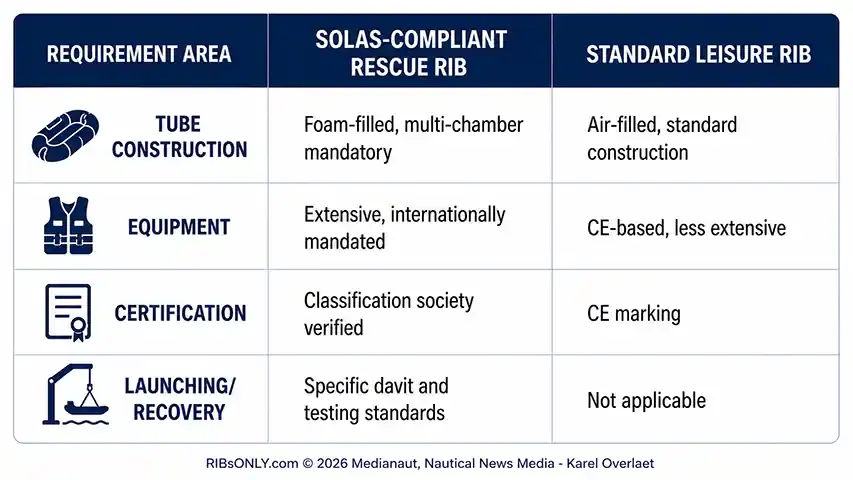
SOLAS-Compliant vs Standard Leisure RIB Requirements @ RIBs ONLY - Home of the Rigid Inflatable Boat

How International Safety Standards Apply to Commercial and Rescue RIBs

SOLAS (Safety of Life at Sea) is one of the most important international maritime safety frameworks, and it directly shapes certain RIB requirements.

While most leisure RIB owners never encounter SOLAS directly, commercial and rescue operators must understand it thoroughly.

This guide explains what SOLAS is, when it applies to RIBs, and what requirements it typically imposes.

What SOLAS Actually Is

SOLAS is an international maritime treaty establishing minimum safety standards for the construction, equipment, and operation of ships.

It’s overseen by the International Maritime Organization (IMO website) and adopted into national law by signatory countries worldwide.

While SOLAS primarily targets larger commercial vessels, certain provisions extend to lifeboats, rescue boats, and associated equipment.

When SOLAS Applies to RIBs

SOLAS requirements typically apply to RIBs used as ship’s lifeboats, rescue boats, or tenders aboard SOLAS-regulated commercial vessels.

Leisure RIBs used for private recreational boating generally fall outside SOLAS’s direct regulatory scope.

Our guide Professional and Rescue RIBs Explained explains how professional applications often intersect with SOLAS-type regulatory frameworks.

Commercial passenger vessels, cargo ships, and certain offshore installations are common contexts where SOLAS-compliant RIBs are required.

Through this link you can watch SOLAS RIBs in action.

Construction Requirements Under SOLAS

SOLAS-compliant rescue boats must meet specific construction standards covering buoyancy, stability, and structural integrity under load.

Multi-chamber, foam-filled tube construction is typically required, ensuring the boat remains functional even with damage to one chamber.

Our guide PVC vs Hypalon/CSM RIB Tubes explains material considerations relevant to this kind of robust, redundant construction.

Equipment Requirements Under SOLAS

SOLAS specifies detailed equipment requirements for rescue boats, covering communication, signalling, and survival equipment carried aboard.

This typically exceeds what’s required or expected on a standard leisure RIB by a significant margin.

Our guide Essential Safety Equipment for a RIB covers leisure-focused equipment requirements, useful context for understanding how much more extensive SOLAS requirements are.

Launching and Recovery Requirements

SOLAS includes specific requirements for how rescue boats must be capable of being launched and recovered, even in adverse conditions.

This affects davit design, boat weight limits, and the overall integration between the RIB and its parent vessel.

These requirements go well beyond what any typical leisure RIB owner would ever need to consider.

Certification and Testing Under SOLAS

SOLAS-compliant rescue boats undergo rigorous testing and certification, verified by classification societies recognised under the treaty framework.

This certification process is considerably more extensive than standard CE marking applied to leisure recreational craft.

Our guide CE Categories for RIBs Explained covers the certification framework relevant to leisure boats, useful for contrast with SOLAS’s stricter commercial standards.

Why Leisure Buyers Should Still Understand SOLAS

Understanding SOLAS helps leisure buyers appreciate the construction standards behind professional-grade RIBs derived from commercial designs.

Some manufacturers market leisure models built on SOLAS-influenced construction principles, carrying over meaningful durability advantages.

Our guide Best RIB Brands: How to Evaluate a Manufacturer explains how manufacturing heritage, including commercial and rescue experience, factors into brand evaluation.

SOLAS and Ongoing Compliance

SOLAS compliance isn’t a one-time certification; commercial operators must maintain ongoing inspection and equipment standards throughout the boat’s service life.

This ongoing compliance burden is one reason commercial RIB operation involves significantly more regulatory oversight than leisure ownership.

Understanding Where You Stand

If you own or operate a leisure RIB privately, SOLAS requirements almost certainly don’t apply to you directly.

If you’re involved in commercial vessel operations, professional rescue services, or ship’s tender provision, SOLAS compliance becomes a genuine requirement.

Our pillar guide What Is a Rigid Inflatable Boat? provides broader context on how RIBs are regulated across different use cases.


Frequently Asked Questions

Do leisure RIB owners need to worry about SOLAS?
Generally no. SOLAS primarily applies to commercial vessels and their associated rescue boats and tenders.

What makes a RIB SOLAS-compliant?
Specific construction, equipment, and certification standards covering buoyancy, redundancy, and launch/recovery capability under adverse conditions.

Is SOLAS the same as CE certification?
No. CE certification applies to recreational craft under EU law; SOLAS is a broader international commercial maritime safety framework.

Can a SOLAS-compliant RIB be used for leisure purposes?
Technically yes, though the added construction standards typically come with a significant cost premium over standard leisure boats.


Related reading: What Is a Rigid Inflatable Boat? · Professional and Rescue RIBs Explained · CE Categories for RIBs Explained · PVC vs Hypalon/CSM RIB Tubes · Best RIB Brands: How to Evaluate a Manufacturer


RIB Glossary: 100 Essential Terminology

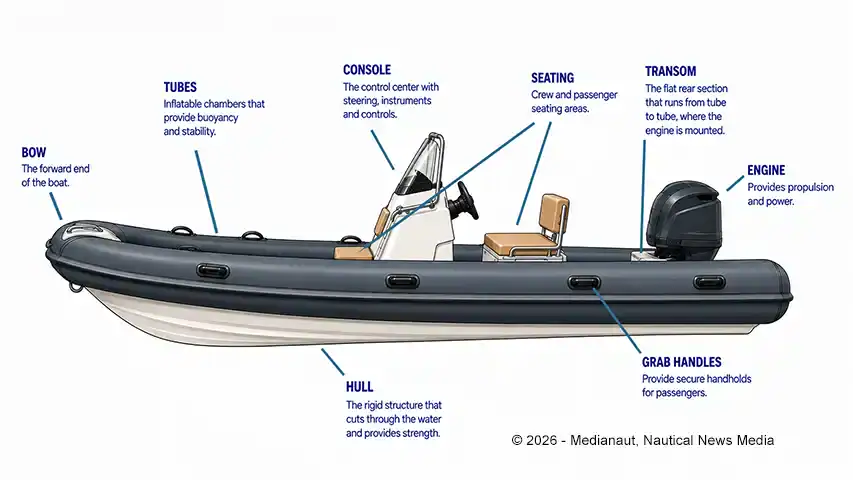
These are RIB anatomy key elements @ RIBs ONLY - Home of the Rigid Inflatable Boat
Terminology © 2026 Medianaut, Nautical News Media

A Comprehensive Reference for RIB Terminology, From Hull to Helm

RIB terminology can be confusing for newcomers, mixing general boating language with terms specific to inflatable and rigid-hull construction.

This glossary collects the essential terms you’ll encounter across manufacturer specifications, reviews, and buying guides.

Use it as a quick reference whenever unfamiliar terminology appears elsewhere on RIBsONLY or in manufacturer documentation.

Hull and Construction Terms

Deadrise — The angle of the hull bottom relative to horizontal, measured in degrees, affecting ride and stability. See our guide RIB Hull Shapes Explained.

Deep-V hull — A hull with a steep deadrise angle, typically 20 degrees or more, favouring rough-water performance. See our guide Deep-V Hull: Advantages and Trade-offs.

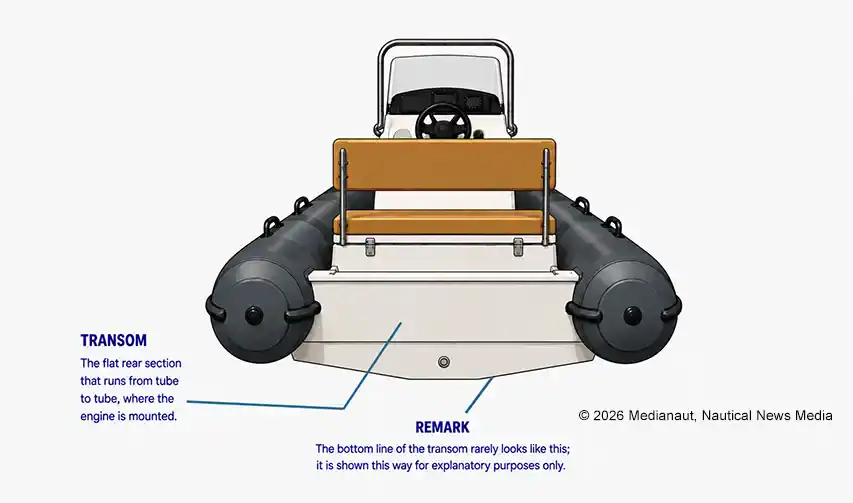
Transom — The flat, vertical structure at the stern where the engine is typically mounted. See our guide How to Inspect a RIB Transom.

These are RIB anatomy key elements @ RIBs ONLY - Home of the Rigid Inflatable Boat
These are RIB anatomy key elements. Read the remark – © 2026 Medianaut, Nautical News Media

Chine — The line where the hull’s side meets its bottom, affecting stability and spray deflection.

Keel — The central structural line running along the hull’s bottom, providing directional stability.

GRP — Glass Reinforced Plastic, commonly known as fibreglass, a common hull material. See our guide Aluminium vs Fibreglass RIB.

Cathedral hull — A multi-sponson hull design offering stability, less common on modern performance RIBs.

Tube and Material Terms

Tubes — The inflatable collar surrounding the hull, providing buoyancy and stability. See our pillar guide What Is a Rigid Inflatable Boat?.

Hypalon/CSM — Chlorosulfonated polyethylene, a durable synthetic rubber used in tube fabric. See our guide PVC vs Hypalon/CSM RIB Tubes.

PVC — Polyvinyl chloride, a common tube fabric offering lower cost but shorter lifespan than Hypalon.

PU — Polyurethane, a tube fabric offering good abrasion resistance and strength, but less commonly used for RIB tubes than Hypalon or PVC.

Chamber — An individual inflatable section of the tube system, with multi-chamber designs offering redundancy.

D-ring — A metal or plastic fitting attached to the tubes, used for rigging lines or securing equipment.

Engine and Propulsion Terms

Outboard — An engine mounted externally on the transom, the most common RIB propulsion method. See our guide How to Choose an Outboard for a RIB.

Inboard — An engine installed inside the hull, typically driving a propeller or waterjet through a separate propulsion system.

Waterjet — A propulsion system using pumped water rather than a propeller. See our guide Waterjet vs Propeller RIB.

Trim — Adjusting the engine angle to affect the boat’s attitude in the water.

Deadman/kill cord — A safety lanyard connecting the helmsman to the engine cut-off switch.

Planing — The state where a boat rides on top of the water rather than displacing through it.

Hybrid propulsion — A system combining electric and combustion power sources. See our guide Hybrid RIBs Explained.

Safety and Regulatory Terms

CE category — A regulatory classification (A, B, C, D) indicating intended operating conditions. See our guide CE Categories for RIBs Explained and What Exactly Do the CE Certifications Stand For.

SOLAS — International maritime safety treaty affecting certain commercial and rescue vessel requirements. See our guide SOLAS RIB Requirements Explained.

EPIRB — Emergency Position Indicating Radio Beacon, a distress signalling device. See our guide Essential Safety Equipment for a RIB.

DSC — Digital Selective Calling, a VHF radio feature enabling one-touch distress alerts.

Broaching — A dangerous sideways turn caused by a following sea pushing the stern unexpectedly.

Buying and Ownership Terms

Deadweight — The total weight capacity a boat can safely carry, including passengers and equipment.

Agreed value policy — An insurance policy paying a pre-set sum on total loss. See our guide RIB Insurance Guide.

Survey — A professional inspection assessing a boat’s condition before purchase. See our guide Buying a Used RIB: Complete Inspection Guide.

Sea trial — An on-water test of a boat’s performance before purchase. See our guide RIB Sea Trial Checklist.

Deadrise transition — The gradual change in hull angle from bow to stern in variable-deadrise hull designs.

Console and Layout Terms

Console — The structure housing the helm, controls, and instruments. See our guide RIB Console Types and Ergonomics.

Jockey seat — A straddle-style seat offering better support at speed than flat bench seating.

Bimini — A folding fabric top providing sun and weather protection.

Sun pad — A cushioned area, often aft, convertible between seating and sunbathing use.

Using This Glossary Effectively

Bookmark this page as a quick reference whenever unfamiliar terminology appears in reviews, specifications, or buying guides. Terms here link directly to more detailed guides covering each concept in far greater depth.

Our pillar guide What Is a Rigid Inflatable Boat? remains the best starting point for understanding how these terms fit together.


Frequently Asked Questions

Is this glossary specific to RIBs, or does it cover general boating terms?
It focuses primarily on RIB-specific terminology, though some general boating terms are included for context.

Will more terms be added over time?
Yes, this glossary is updated periodically as new terminology and technology become relevant to the RIB category.

Can I suggest a term to add?
Yes, feedback and suggestions help keep this reference comprehensive and useful for the RIBsONLY community.

Where should I start if I’m completely new to RIBs?
Begin with our pillar guide What Is a Rigid Inflatable Boat? before diving into specific terminology.


Related reading: What Is a Rigid Inflatable Boat? · RIB Hull Shapes Explained · PVC vs Hypalon/CSM RIB Tubes · RIB Buying Guide: How to Choose the Right Boat · RIB FAQ: The Most Asked Questions


×