What It Really Costs to Own and Run a RIB, Beyond the Purchase Price
The purchase price of a RIB is only the beginning of what ownership actually costs over time. Insurance, storage, fuel, maintenance, and eventual repairs all add up, sometimes exceeding the initial buyer’s expectations.
This guide breaks down the full picture of RIB ownership costs to help you budget realistically.
Purchase Price: The Starting Point, Not the Total
The purchase price covers only the initial acquisition, whether new or used, of the hull and engine.
Our guide How Much Does a RIB Cost? covers the factors driving that initial price across different RIB categories.
Budgeting only for purchase price without planning for ongoing costs is one of the most common new-owner mistakes.
Insurance Costs
Annual insurance premiums vary by boat value, engine power, navigation area, and coverage level chosen.
Our guide RIB Insurance Guide explains what drives these costs and how to choose sensibly.
Budget insurance as a fixed annual cost, reviewed yearly as boat value and usage patterns change.
Storage and Mooring Cost
Storage costs vary enormously depending on method: driveway storage is essentially free, while marina berths can be significant.
Dry stack storage, marina berths, and mooring fees all carry different cost structures worth comparing for your situation.
Winter storage, covered in more detail elsewhere, adds a seasonal cost many first-time owners don’t initially anticipate.
Fuel Cost
Fuel consumption depends heavily on engine size, hull shape, and how the boat is actually used.
Our guide RIB Fuel Consumption Explained breaks down how these factors combine to affect running costs.
Frequent, longer trips at higher speed will meaningfully increase annual fuel costs compared with occasional, shorter outings.
Routine Maintenance Costs
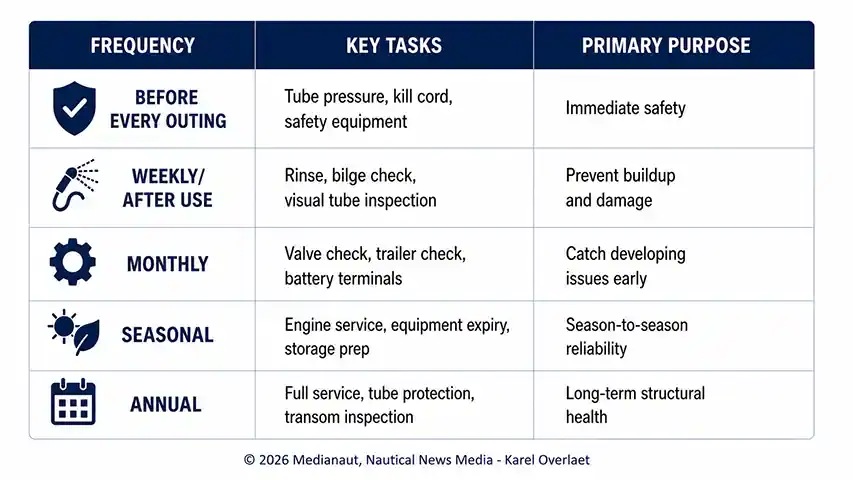
Engine servicing, typically annual or based on running hours, is a predictable recurring cost worth budgeting for. Tube cleaning, protection treatments, and periodic inspection add smaller but genuine ongoing maintenance costs.
Our guide Common RIB Tube Problems and Repairs covers costs associated with tube-specific maintenance and repair.
Trailer maintenance, including bearings, tyres, and lights, is often overlooked but adds up over the ownership period.
Unplanned Repair Costs
Engine repairs, particularly for older or poorly maintained outboards, can represent a significant unplanned expense.
Tube repairs or replacement, especially for punctures or age-related degradation, carry costs that vary by material and extent.
Setting aside a maintenance reserve fund helps absorb these costs without financial strain when they arise.
Depreciation and Resale Value
RIBs, like most boats, depreciate over time, though well-maintained examples retain value better than neglected ones.
Our guide PVC vs Hypalon/CSM RIB Tubes explains how tube material and condition specifically affect resale value.
Factor expected depreciation into your ownership cost calculation, particularly if you plan to sell within a few years.
Building an Annual Ownership Budget
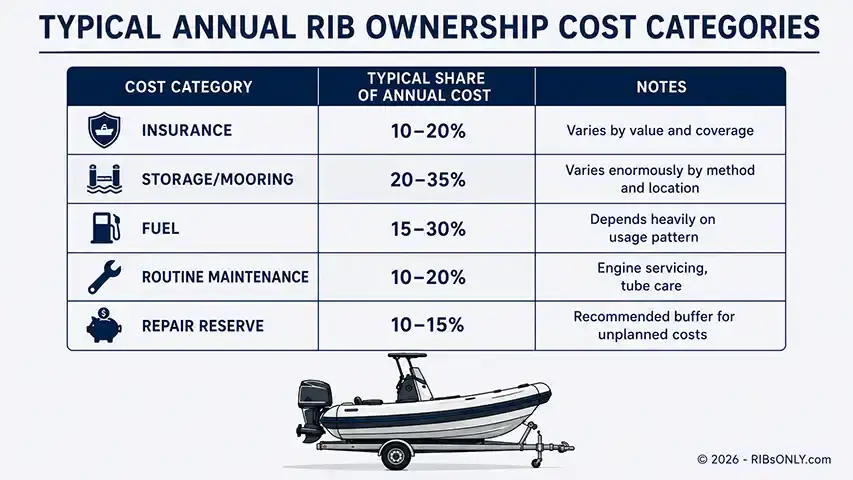
Add insurance, storage, fuel, routine maintenance, and a repair reserve together for a realistic annual cost estimate. This total, not just the purchase price, determines whether RIB ownership genuinely fits your budget long-term.
Revisit this budget annually, since usage patterns, boat age, and local costs all shift over time.
Planning for Realistic Ownership Cost
Budget beyond the purchase price from day one, including insurance, storage, fuel, and a maintenance reserve.
Well-maintained boats generally cost less over time than neglected ones, despite similar purchase prices.
Our RIB Buying Guide: How to Choose the Right Boat helps frame purchase decisions within this fuller cost picture.
Frequently Asked Questions
What’s the biggest hidden cost of RIB ownership?
Storage and mooring costs often surprise new owners most, varying enormously by location and method chosen.
How much should I budget for annual maintenance?
This varies by boat size and age, but routine servicing typically represents 10 to 20 percent of annual ownership cost.
Does fuel cost vary significantly between RIBs?
Yes, considerably, depending on engine size, hull shape, and how frequently and how fast the boat is used.
Should I keep a repair reserve fund?
Yes. Setting aside funds for unplanned repairs helps avoid financial strain when engine or tube issues arise.
Related reading: What Is a Rigid Inflatable Boat? · How Much Does a RIB Cost? · RIB Insurance Guide · RIB Fuel Consumption Explained · Common RIB Tube Problems and Repairs