© Karl Petermichl – Zodiac
Think Twice
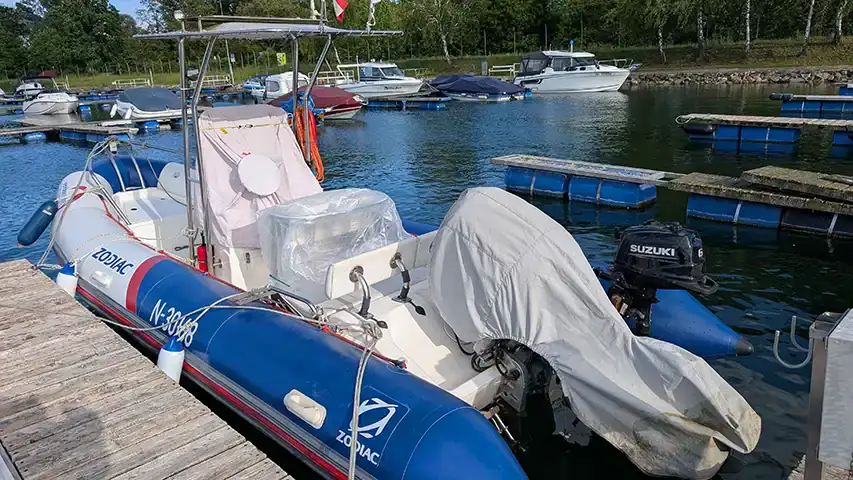
Leaving a RIB in the water is convenient, but it isn’t free of consequences. What happens depends heavily on how long, where, and how the boat is set up.
This guide explains what genuinely changes when you keep a RIB in the water for extended periods, so you can make an informed choice rather than a purely convenient one.
What Happens When a RIB Sits in the Water
A RIB in the water continuously experiences several ongoing effects, some cosmetic, some genuinely consequential.
Osmosis and gelcoat issues can develop on GRP hulls left permanently wet, particularly in warmer water over many months.
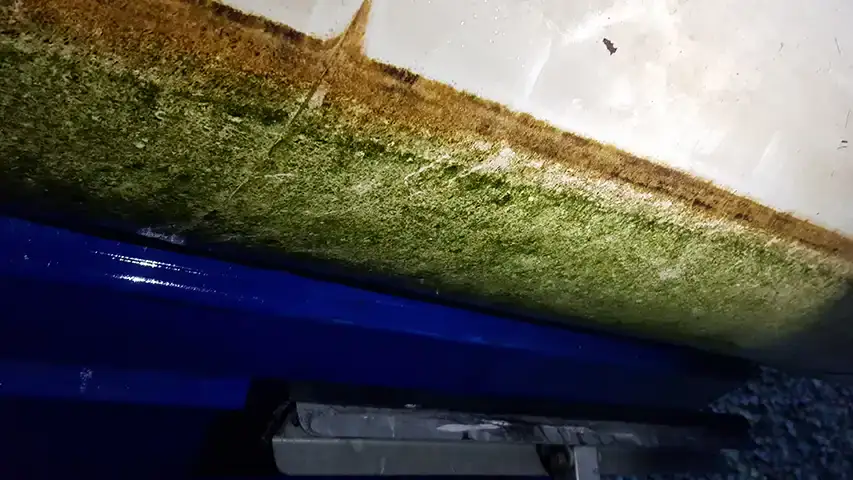
Marine growth accumulates on the hull below the waterline, adding drag and reducing performance until removed.
Galvanic corrosion becomes a real concern for aluminium hulls and metal fittings, especially in marinas with mixed-metal boats nearby.
© Karl Petermichl
Short-Term vs Long-Term Mooring
A few days or even weeks in the water rarely causes serious problems, provided the boat is properly set up with antifouling and a working bilge pump.
Months of continuous mooring change the calculation considerably. This is where marine growth, osmosis risk and corrosion genuinely accumulate, and where the convenience trade-off deserves real scrutiny.
Antifouling: The Baseline Requirement
Any RIB planning to stay for more than a few days needs proper antifouling paint on the hull below the waterline. Without it, marine growth accumulates rapidly, and removal becomes a bigger job the longer it’s left.
Antifouling requirements and suitable products vary depending on hull material and local water conditions, so checking manufacturer guidance for your specific hull is worthwhile before choosing a product.
Bilge Pump Reliability Becomes Critical
A moored RIB depends entirely on a working bilge pump to manage rainwater, spray and any minor seepage. A failed pump on a boat left unattended for days can lead to serious problems.
Check the bilge pump regularly if you’re leaving the boat moored, and consider a battery monitor or float-switch backup for genuine peace of mind during longer absences.
Tube Considerations for Boats Left Moored
Tubes generally tolerate continuous water contact reasonably well, provided the material is in good condition to begin with. Persistent dampness at the waterline can, over time, encourage localised mould or grime buildup that’s worth cleaning regularly.
Our guide How to Clean and Protect RIB Tubes covers the right approach.
When Trailer Storage Makes More Sense
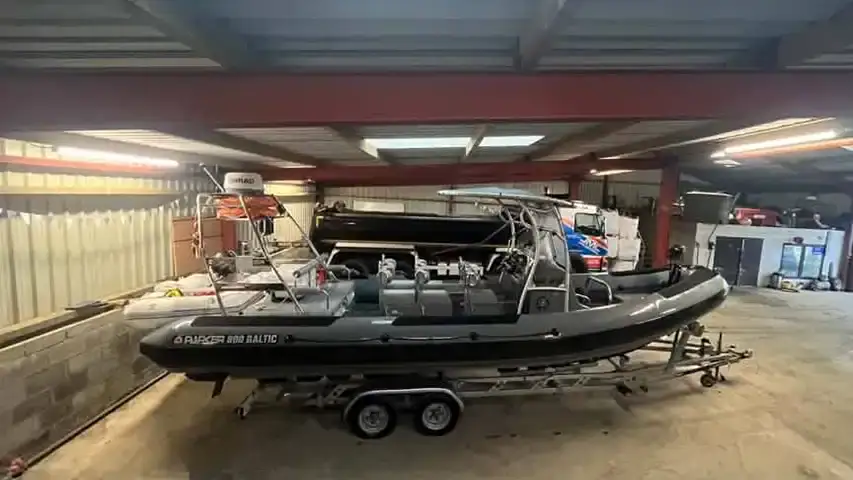
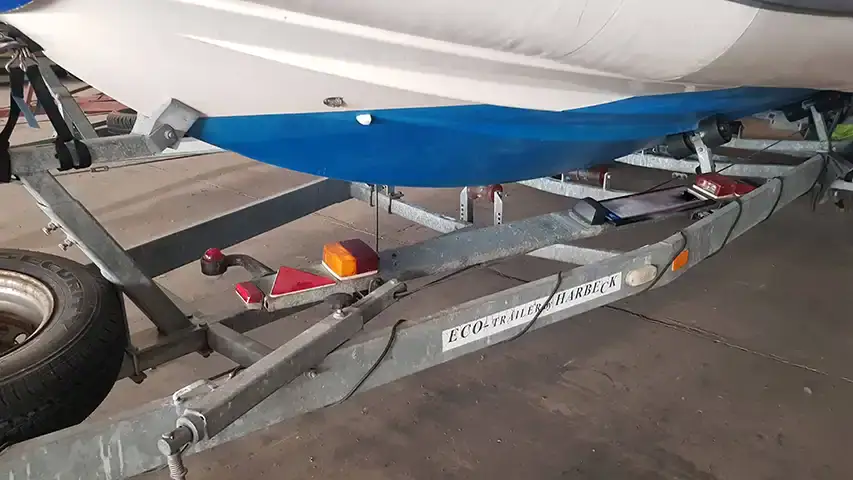
If your RIB won’t be used for extended stretches, trailer or dry storage generally protects the hull, tubes and fittings better than continuous mooring. Our RIB Winter Storage Guide covers the off-season version of this decision in full.
For boats used frequently through a season, the convenience of leaving a RIB in the water often outweighs the added maintenance, provided antifouling and bilge checks are kept up consistently.
Frequently Asked Questions
Is it safe to leave a RIB in the water overnight occasionally?
Yes, generally, provided the bilge pump works and weather conditions are reasonable.
Does leaving a RIB in the water void any warranty?
Check your specific manufacturer’s terms, as some warranties specify maximum recommended mooring periods without haul-out.
How often should a moored RIB’s hull be checked for growth?
Roughly every 4–6 weeks during warm months, more often in areas with fast-growing marine fouling.
Related reading: What Is a Rigid Inflatable Boat? · RIB Winter Storage Guide · How to Clean and Protect RIB Tubes · PVC vs Hypalon/CSM RIB Tubes