A Sinking RIB is Very Rare
It’s one of the most searched questions about Rigid Inflatable Boats, and for good reason.
If a tube is just air, what happens when it fails?
The honest answer: a RIB can sink, but it takes far more than most people assume.
This article explains exactly what, why, and how rarely it actually happens in practice.
The Short Answer
A properly maintained RIB, built to a recognised standard, is extremely difficult to sink.
Multiple independent air chambers, combined with a buoyant hull, mean the boat typically survives damage that would sink a comparable hard-hull vessel outright.
Sinking a RIB usually requires a combination of failures happening at once, not a single puncture or leak.
Swamping Is Not the Same as Sinking
These two words get confused constantly, and the distinction matters.
Swamping means the boat fills with water on deck or in the cockpit, while the tubes and hull retain enough buoyancy to keep it afloat, just low in the water and difficult to control.
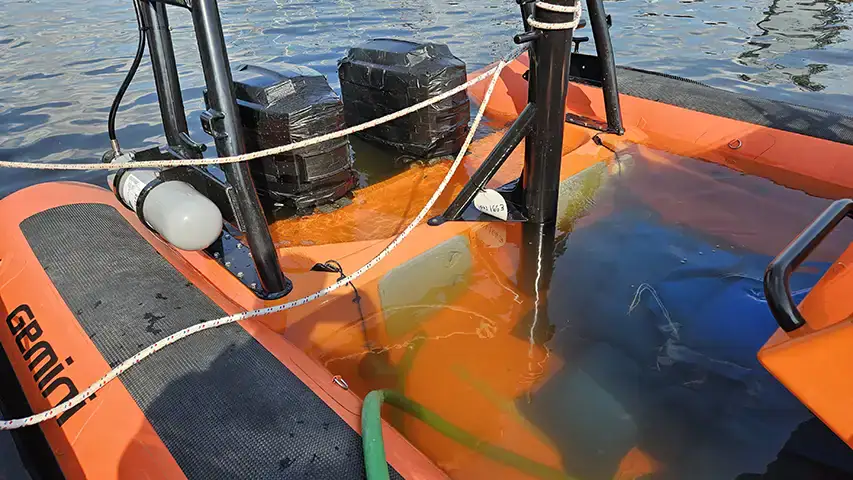
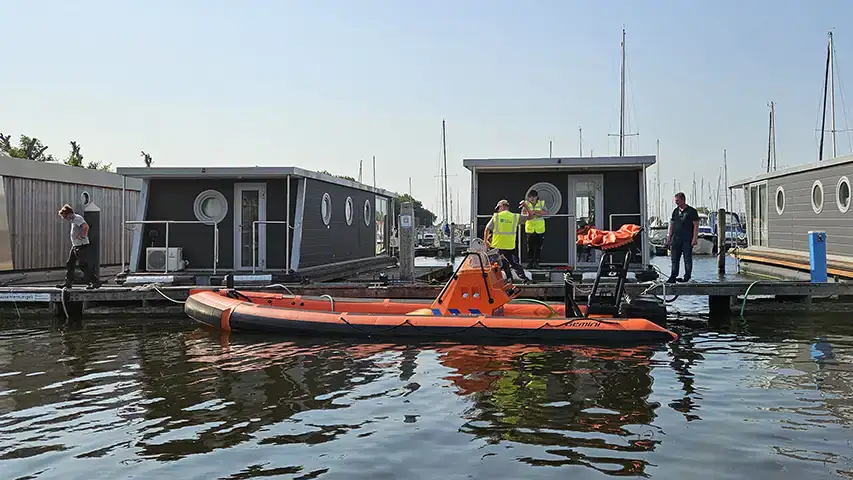
Sinking means the boat loses enough total buoyancy to go under the surface entirely.
Most dramatic-looking RIB incidents, including the ones people describe as “nearly sinking,” are actually swamping events. The boat stays afloat, if unpleasantly, and remains recoverable.
Why Multi-Chamber Tubes Make Sinking So Difficult
Most RIB tubes are divided into three to seven separate, sealed air chambers rather than one continuous tube.
We explain this design in full in Why Do RIBs Have Inflatable Tubes?, but the safety implication deserves its own focus here.
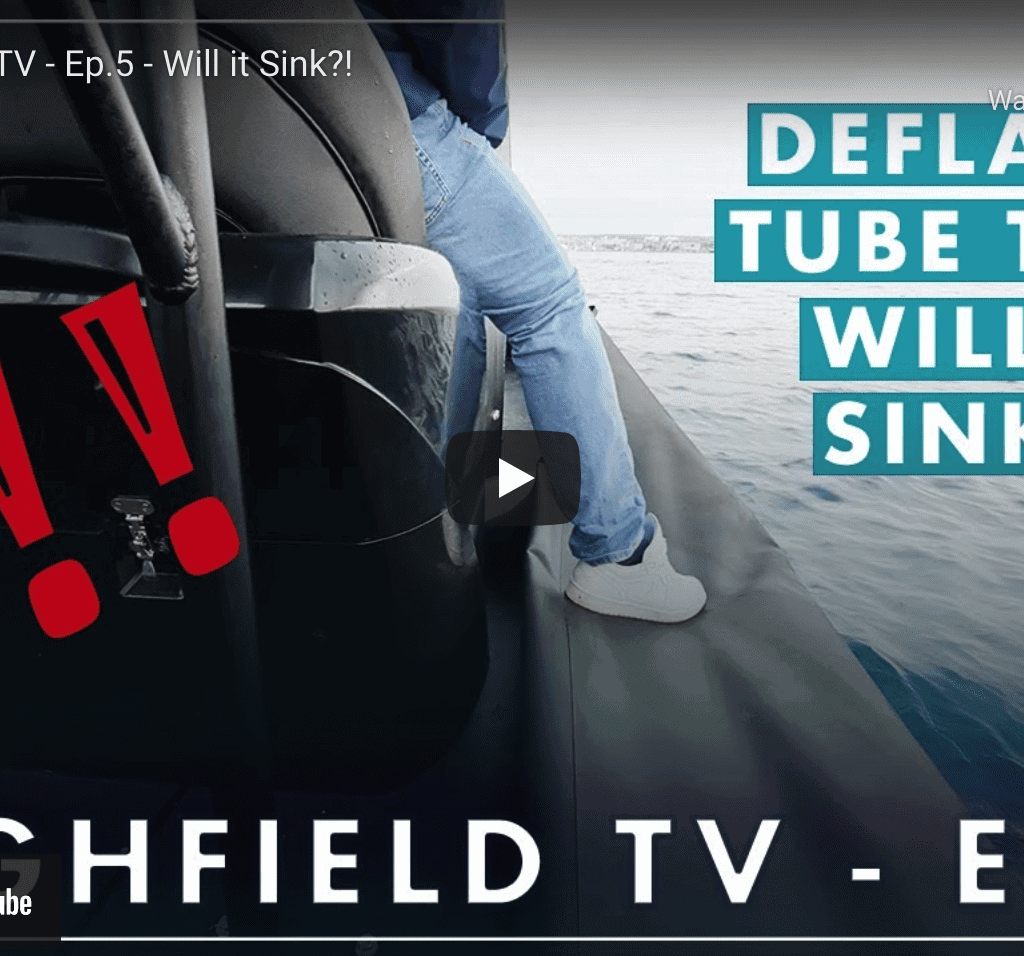
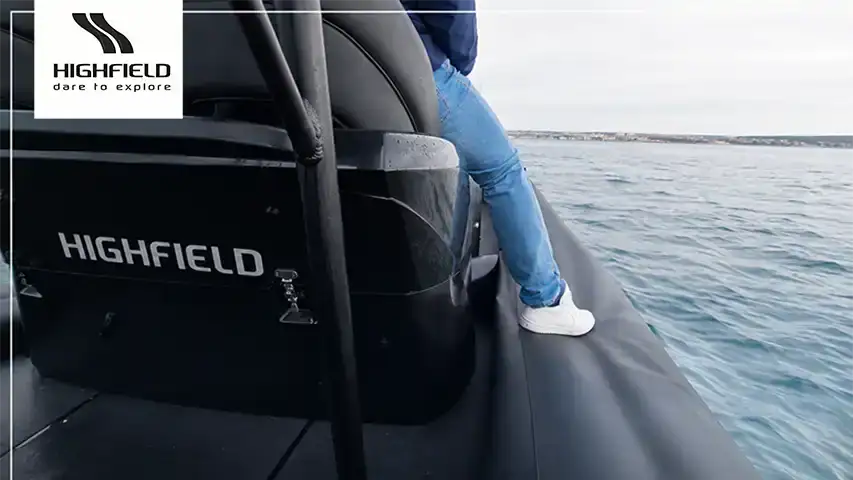
A single puncture only affects the chamber it occurs in. The remaining chambers stay fully inflated and continue providing buoyancy, even if one section goes completely flat.
For a RIB to lose all tube buoyancy, multiple chambers would need to fail simultaneously or in very quick succession. In practice, that scenario is rare, and almost always linked to serious, sustained damage rather than routine wear or a single sharp object.
The Hull Also Contributes Buoyancy
Tubes aren’t the only thing keeping a RIB afloat.
Many GRP hulls include foam-filled sections built into the structure specifically to add buoyancy, independent of the tubes entirely.
This means that even in an extreme scenario involving total tube failure, a foam-cored hull can still keep the boat from fully sinking, though it would sit very low and be unsafe to operate.
Aluminium hulls generally don’t rely on foam buoyancy in the same way, since the hull material itself doesn’t require it for structural reasons.
Our comparison, Aluminium vs Fibreglass RIB, covers this difference in more practical detail.
What Would Actually Need to Happen
To genuinely sink a well-built RIB, several things typically need to go wrong together:
- Multiple tube chambers failing at the same time, from major impact damage rather than a single puncture.
- A significant hull breach, allowing water to enter faster than it can drain or be pumped out.
- Heavy fixed weight on board, particularly a large outboard engine, pulling the stern down once buoyancy is compromised.
- No self-bailing capability, or a self-bailing system that’s blocked or overwhelmed.
- Continued water ingress with no attempt to reach shore, beach the boat, or call for assistance.
Remove any one of these factors, and the outcome usually changes from “sinking” to “seriously damaged but recoverable.”
Self-Bailing Cockpits: An Extra Layer of Protection
Many RIBs, particularly rescue and offshore leisure models, feature self-bailing cockpits. The deck sits above the waterline, with drainage holes that let water flow out automatically rather than pooling inside the boat.
This design means that even significant water coming aboard in rough conditions drains away continuously, rather than accumulating and adding dangerous weight.
It’s one of several design features borrowed directly from the RIB’s rescue-boat origins, which we cover in What Is a Rigid Inflatable Boat?.
Real-world Testing Backs This Up
Rescue services don’t take buoyancy claims on faith.
Every RIB destined for lifeboat or coastguard service undergoes extensive testing designed specifically to answer this exact question under extreme conditions.
We cover this testing directly, including footage of RIBs deliberately pushed to their limits, in our companion article Are Rigid Inflatable Boats Safe?.
The results consistently show boats absorbing damage that would be catastrophic for a hard-hull vessel of similar size.
What This Means for Owners
None of this is a reason for complacency. It’s a reason to maintain tubes properly, rather than assume the multi-chamber design makes damage irrelevant.
- Inspect all chambers regularly for pressure loss, not just the ones that look obviously damaged.
- Repair small punctures or seam issues promptly, before they worsen under continued use.
- Never assume one soft chamber is harmless; investigate the cause rather than simply re-inflating and moving on.
- Understand your specific boat’s buoyancy design, including whether the hull includes foam flotation.
Our full inspection guidance, including exactly how to check chamber condition on a used or existing RIB, is covered in Buying a Used RIB: Complete Inspection Guide.
Frequently Asked Questions
Can a single puncture sink a RIB?
Extremely unlikely. Multi-chamber construction means a single puncture typically causes a localised loss of buoyancy, not a full sinking.
What’s more dangerous, tube failure or hull damage?
Hull damage is generally more serious, since it can allow direct water ingress that tubes alone cannot fully compensate for, particularly combined with a heavy engine.
Do all RIBs have foam-filled hulls?
No. It varies by manufacturer and model. Some GRP hulls include foam buoyancy sections; others rely primarily on the tubes and hull shape alone.
Is an older RIB more likely to sink than a new one?
Age alone isn’t the deciding factor. Maintenance history, tube condition and prior repair quality matter far more than the boat’s calendar age.
Should I worry about my RIB sinking during normal use?
No, provided tubes are properly maintained and chambers are checked regularly. Sinking incidents almost always involve significant, compounding failures rather than routine wear.
Related reading: Are Rigid Inflatable Boats Safe? · Why Do RIBs Have Inflatable Tubes? · What Is a Rigid Inflatable Boat? · Buying a Used RIB: Complete Inspection Guide