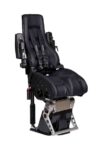
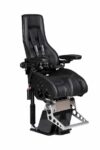
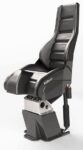
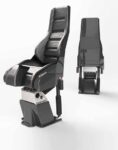
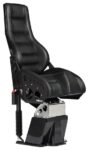
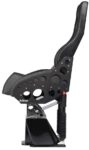
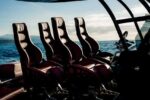
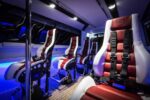
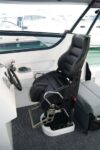
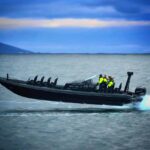
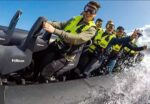
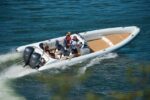
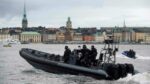
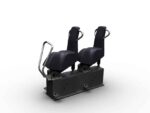
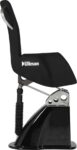
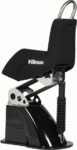
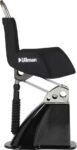
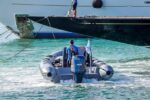
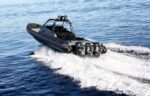
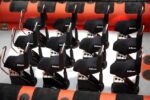
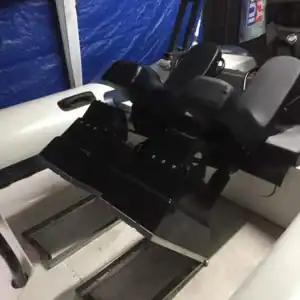
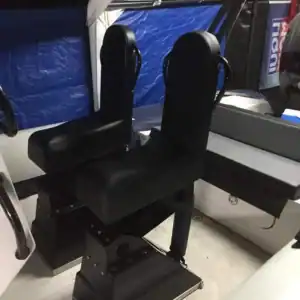
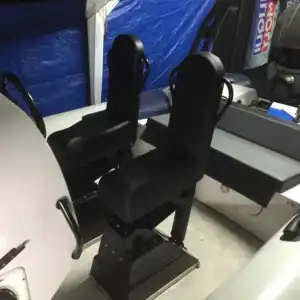
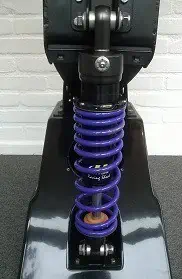
Anyone who rides the rough seas in a RIB knows the added value of shock mitigation seats. They reduce the risk of injury and make you less tired. There are many brands nowadays.
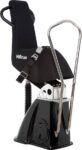
Ullman Dynamics, a Sweden based company, is top of mind amongst many of my ribbing and powerboating friends. These Ullman Shock Mitigation Seats are offered in 3 categories: jockey seats, bucket seats and bolster seats.
Hope you enjoy the photos. Click on the photo to enlarge.
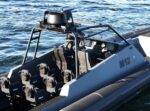
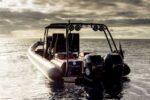
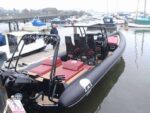
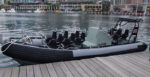
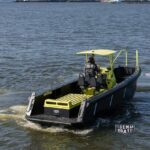
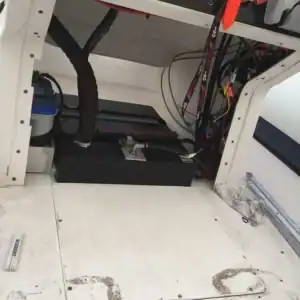
Some RIB owners like to modify or improve their boat like this Roughneck 636.
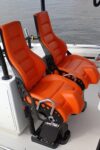
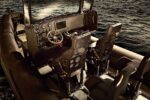
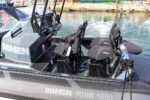
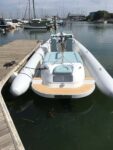
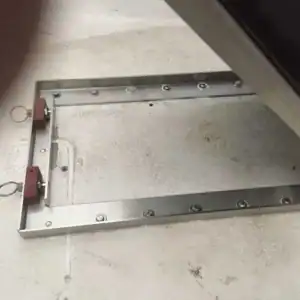
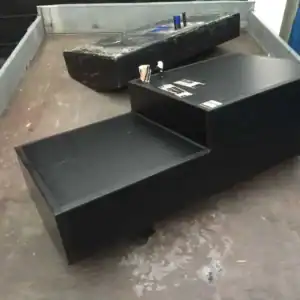
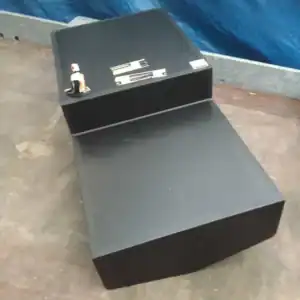
These are photos of my friend Pascale, proud owner of a Roughneck 636 VFI Leisure from 2009. The engine is a Mercury Fourstroke 150 hp from 2012.
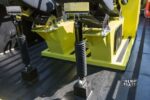
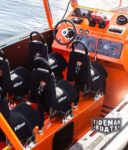
His mods are installing two mitigating seats, a larger fuel tank (80 to 120 l), refurbishing the seat in the back and made it more convenient to open and close it with 2 gas pumps.
Click on the image to enlarge or see the slideshow.
In the video “Sealegs Amphibious Vessel Training with Pete Bethune”, adventurer and conservationist Pete Bethune demonstrates how to operate a Sealegs amphibious Rigid Inflatable Boat. The Sealegs is a RIB that can transform into a land vehicle, allowing it to easily navigate between water and land.
Bethune begins by showing the various features of the Sealegs, including the retractable wheels, the hydraulic system that lowers and raises the wheels, and the joystick control for maneuvering the vessel. He then takes the Sealegs for a spin on both land and water, showcasing its versatility and ease of use.
Throughout the video, Bethune emphasizes the importance of safety and responsible operation of the Sealegs. He discusses the need to wear life jackets, follow local laws and regulations, and be mindful of the environment when operating the vessel.
Overall, the video provides a comprehensive introduction to the Sealegs amphibious vessel and highlights its potential as a tool for exploration, conservation, and recreation.
The People and Institutions Credited With Creating the Modern RIB
The question of who invented the RIB doesn’t have a single, simple answer, but several names and institutions stand out clearly. So it’s not very clear who invented the RIB.
Innovation rarely happens in isolation, and the RIB’s development involved contributions from multiple people over several years.
This guide covers the individuals and institutions most widely credited with creating and popularising the modern RIB.
Facts about who invented the Rigid Inflatable Boat (RIB).
The UK Origins of the RIB Concept
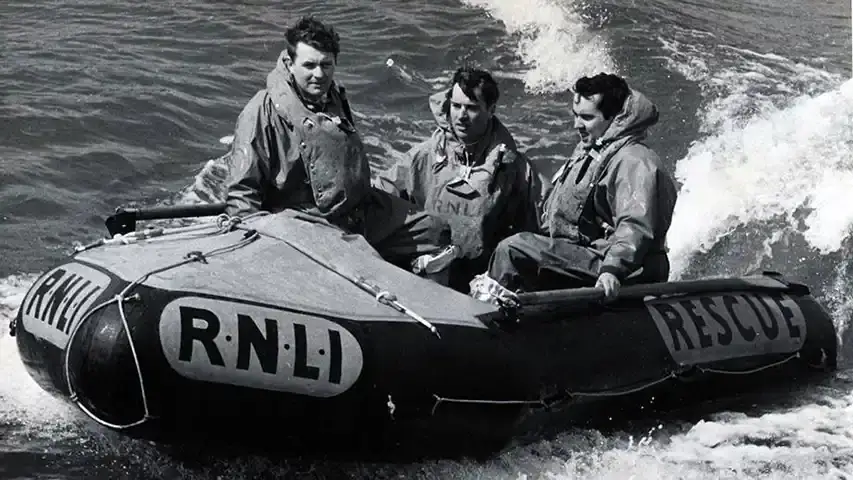
Most historical accounts trace the RIB’s origins to the United Kingdom during the 1960s, particularly around university and rescue circles.
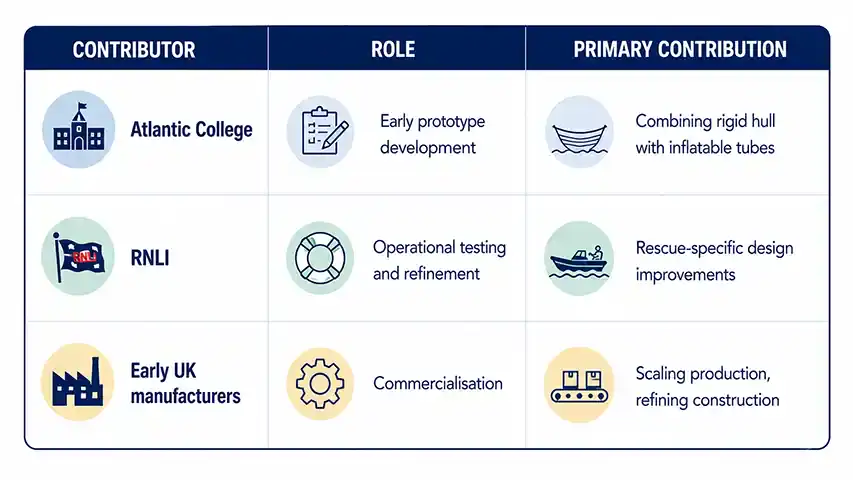
Atlantic College in Wales is frequently credited as a key site of early RIB development, driven by lifeboat crew needs.
Students and instructors at the college worked on combining a rigid hull with inflatable tubes to improve rescue boat performance.
Several individuals associated with Atlantic College and the UK lifeboat community are credited with pioneering early RIB designs.
Their work focused on practical rescue requirements: launching quickly through surf, remaining stable, and resisting swamping in rough seas.
This collaborative, problem-driven approach shaped the RIB’s fundamental design philosophy from its earliest development stages.
Documentation from this era is limited, and precise individual credit is sometimes debated among maritime historians.
The Role of the RNLI and Lifeboat Institutions
The Royal National Lifeboat Institution (RNLI) played a significant role in adopting and refining early RIB designs for operational rescue use. Their operational feedback helped refine hull shape, tube construction, and overall durability under genuinely demanding rescue conditions.
This institutional involvement helped transform an experimental concept into a proven, operationally reliable rescue boat design.
Is there a single person credited with inventing the RIB? No single individual is universally credited; the RIB emerged from collaborative development at Atlantic College and within UK rescue circles.
What role did Atlantic College play in RIB development? It’s widely recognised as a key site of early prototype development, driven by lifeboat crew operational needs.
Why is the RNLI significant in RIB history? Their operational testing and feedback helped refine early RIB designs into a proven, reliable rescue boat format.
When did commercial RIB manufacturing begin? Following successful rescue adoption, UK-based manufacturers began commercialising RIB designs through the 1970s and beyond.
This video gives you an impression of an Powerboat Level 2 course, showing the practical skills required to handle a powerboat safely and confidently (RYA website).
The training covers boat handling, manoeuvring, navigation and essential safety procedures. Participants also practise coming alongside, mooring, man-overboard recovery and controlling a powerboat at speed.
Designed for both newcomers and boaters looking to sharpen their skills, the course combines practical experience with essential knowledge. The goal is clear: to develop safer, more confident and increasingly independent powerboat drivers.
Frequently Asked Question
Which RYA course is right for me? Use the Course Finder to find the course that best matches your experience, goals and boating needs.
I would also recommend OLM (OLM Perfectionnement Mer Formée), led by Olivier Consorti. He offers specialised training focused on handling boats in rough seas.
To provide the best experiences, we use technologies like cookies to store and/or access device information. Consenting to these technologies will allow us to process data such as browsing behavior or unique IDs on this site. Not consenting or withdrawing consent, may adversely affect certain features and functions.
Functional
Always active
The technical storage or access is strictly necessary for the legitimate purpose of enabling the use of a specific service explicitly requested by the subscriber or user, or for the sole purpose of carrying out the transmission of a communication over an electronic communications network.
Preferences
The technical storage or access is necessary for the legitimate purpose of storing preferences that are not requested by the subscriber or user.
Statistics
The technical storage or access that is used exclusively for statistical purposes.The technical storage or access that is used exclusively for anonymous statistical purposes. Without a subpoena, voluntary compliance on the part of your Internet Service Provider, or additional records from a third party, information stored or retrieved for this purpose alone cannot usually be used to identify you.
Marketing
The technical storage or access is required to create user profiles to send advertising, or to track the user on a website or across several websites for similar marketing purposes.