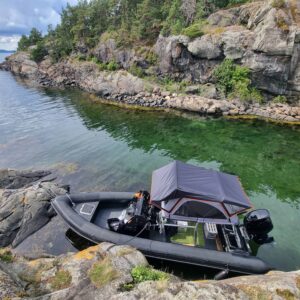
Buying a Used RIB: The Complete Inspection Guide
A used Rigid Inflatable Boat can be the smartest purchase in boating, or the most expensive mistake you make this year.
The difference almost always comes down to inspection.
A hard-hull boat hides its problems in the gelcoat and the bilge.
A RIB hides half its problems inside inflatable tubes you cannot see through.
Most buyers don’t know what to look for, and most sellers know that too.
This article explains what actually matters when you inspect a used RIB, and why.
For the exact checks, the specific questions to ask, and the walk-away thresholds, we’ve put everything into one practical resource.
📘 Get the Full Checklist Free
Looking for a Used RIB? Your Ultimate RIB Buyer’s Checklist is a free, 23-page guide published by Medianaut, Nautical News Media for RIBsONLY.com.
It was written by eleven contributors from across the RIB industry:
Adam Younger, Andy Squirrell, Arjen Maan, Fraser Mackie, Mike Tilley, Petter Martens, René Haar, Robin Kilroy, Roy Andersen, Tim De Rick and Tom Bettle.
It contains the full point-by-point inspection sequence, the exact questions to ask a seller, and clear thresholds for when to walk away.
Download the free checklist PDF now.
No inbox spam, just the guide. Print it, bring it to the viewing.
Why a Used RIB Needs a Different Approach
A hard-hull boat ages mostly in one material, at a fairly predictable rate. A RIB ages in two materials, at two very different speeds.
The hull, whether GRP or aluminium, degrades slowly. The tubes degrade faster, and far less predictably.
UV exposure, storage conditions and repair history all shape how a specific set of tubes has aged, regardless of the boat’s registered year.
This means the calendar age of a used RIB tells you far less than it would for an equivalent hard-hull boat.
Two identical models from the same year can be in completely different condition, depending purely on how they were kept.
The eleven contributors behind our checklist have inspected, surveyed, sold and operated RIBs professionally for decades between them.
Their combined experience is what separates a confident purchase from a costly guess.
Before You Even View the Boat
A short round of questions, asked before you travel, saves wasted trips and reveals sellers who avoid detail.
Ask for the hull identification number, the full service history, and a clear answer on when the tubes were last inspected or repaired. Ask directly why the boat is being sold, and whether it has ever been swamped or involved in a collision.
Vague or evasive answers to any of these are a warning sign before you’ve even left the driveway. Our checklist includes the exact wording we recommend using, and how to read between the lines of a seller’s response.
You’ll also want to confirm the boat’s CE category matches your intended use. Our separate guide, CE Categories for RIBs Explained, covers what each rating actually permits on the water.
The Tubes: Where Most Used RIBs Are Won or Lost
This is the single most important part of any used-RIB inspection, and the part buyers most often get wrong.
Tube condition depends on material. PVC and Hypalon/CSM age at genuinely different rates, and knowing which one you’re looking at changes what a fair asking price should be.
Our detailed comparison, PVC vs Hypalon/CSM RIB Tubes, explains the realistic lifespan of each.
Beyond material, there are specific visual, tactile and pressure-based checks that reveal a tube’s true condition, well before it visibly fails.
Chalking, seam behaviour, chamber firmness and patch history all tell a different part of the story, and each needs a different test.
Getting this section wrong is the single most common way used-RIB buyers overpay, or inherit an expensive repair within months of purchase.
📘 This Is the Part You Can’t Afford to Guess
The full checklist walks through every tube check step by step, including the overnight pressure test most buyers never think to run, and the exact seam and chamber inspection sequence surveyors use.
Download the free checklist PDF now.
Hull, Transom and Engine: Three More Areas That Matter
Beyond the tubes, three structural areas deserve close attention before you make an offer.
The hull behaves differently depending on material. GRP and aluminium each have their own failure signs, covered in full in Aluminium vs Fibreglass RIB.
The transom absorbs every ounce of engine thrust the boat produces. It is one of the few areas where a visual check alone is not enough, and where a specific mechanical test genuinely matters.
The engine tells its real condition through service history far more than through hours on the clock.
Our guide How to Choose an Outboard for a RIB explains what realistic hours and documentation should mean for your budget.
Each of these areas has clear pass/fail signals, which we lay out in full, checklist-style, in the downloadable guide.
The Sea Trial: Never Skip It
No dockside inspection, however thorough, replaces watching the boat perform under load.
Engine behaviour, hull handling and tube response all show themselves differently in motion than at rest.
A seller who resists a proper sea trial is telling you something important, whether they intend to or not.
Our checklist includes the specific things to listen and feel for during a test run, at idle, cruising speed and wide-open throttle.
When to Walk Away
Some findings aren’t negotiation points. They’re reasons to look elsewhere entirely.
The full checklist sets out clear thresholds for tubes, hull and transom, so you don’t have to guess where that line sits under pressure at a viewing.
Negotiating with Confidence
Every issue you find has a cost attached, and that cost belongs in the negotiation.
A precise, quote-backed number is far harder for a seller to dismiss than a vague objection.
Our guide includes guidance on turning inspection findings into fair, defensible price adjustments.
When in Doubt, Call a Surveyor
This guide, and the checklist behind it, will catch the vast majority of issues a buyer needs to know about.
Some findings, particularly hull delamination or structural transom damage, genuinely need a qualified marine surveyor’s professional judgement.
Their fee is small compared with the cost of an undisclosed structural problem.
Don’t Walk Into a Viewing Unprepared
Everything in this article points to one conclusion: a used RIB rewards buyers who know exactly what to check, and punishes those who don’t.
Looking for a Used RIB? Your Ultimate RIB Buyer’s Checklist puts the full inspection sequence, the right questions, and clear walk-away thresholds in your hands, for free.
23 pages. Eleven contributors. Written for exactly the moment you’re standing next to a boat, deciding whether to buy it.
📘 Download the Free Ultimate RIB Buyer’s Checklist.
Frequently Asked Questions
How old is too old for a used RIB?
Age alone is not the deciding factor. A well-maintained 15-year-old RIB with recent tubes can be a better buy than a neglected 5-year-old boat.
Can RIB tubes be replaced instead of repaired?
Yes. Full tube replacement is common and, on an otherwise sound hull, often the right long-term investment.
Should I buy a used RIB without a sea trial?
No. A sea trial reveals engine, steering and hull-behaviour issues that a dockside inspection simply cannot show.
Is a private sale riskier than buying from a dealer?
Not necessarily, but private sales usually come with less warranty protection, which makes thorough inspection even more important.
Related reading: What Is a Rigid Inflatable Boat? · RIB Buying Guide · How Much Does a RIB Cost? · Are Rigid Inflatable Boats Safe?
This essential 23-page expert guide is published by Medianaut, Nautical News Media.