The Complete Checklist for Safe Rib Ownership and Operation
Safety equipment on a RIB is often treated as an afterthought, bought once and rarely reviewed again. Yet the right equipment, properly maintained and actually accessible, is what turns an emergency into a manageable situation.
This guide covers what’s legally required, what’s strongly recommended, and how conditions and location change the answer.
Legally Required vs Recommended Equipment
Legal minimums depend on your country, your boat’s CE category, and how far offshore you plan to go.
Coastal and inland requirements are typically lighter than offshore requirements, which assume longer response times if something goes wrong.
Treat legal minimums as a floor, not a target. Most experienced RIB owners carry more than the law demands.
Always check your national maritime authority’s current requirements, since these are periodically updated and vary by jurisdiction.
Personal Safety Equipment
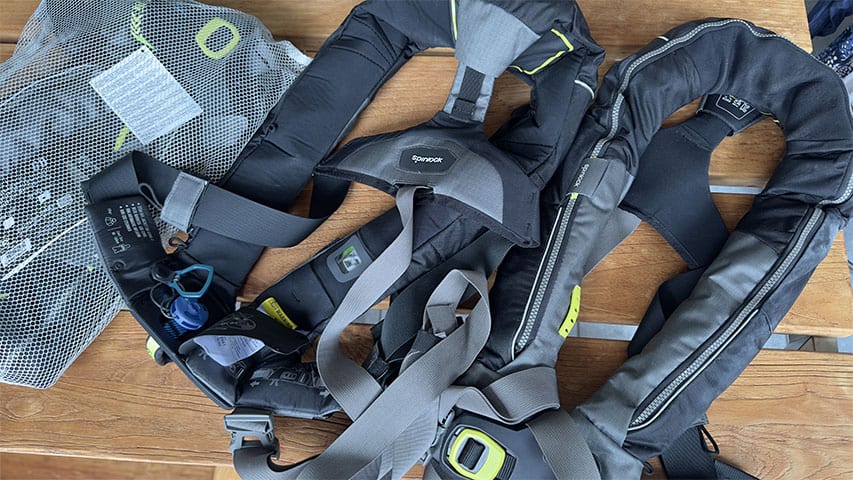
A properly fitted lifejacket for every person aboard is the single most important item on any boat.
Automatic inflation lifejackets are preferred for RIB use, since they work even if the wearer is unconscious.
A kill cord (engine cut-off lanyard) must be worn by the helmsman at all times while underway. This single piece of equipment prevents runaway boat scenarios, one of the most dangerous incidents in small-boat boating. Consider a spare kill cord stored onboard, since a lost or damaged cord otherwise ends the trip.
Onboard Safety Equipment
A fire extinguisher rated for marine use should be mounted within easy reach of the helm position.
A manual bilge pump or bailer provides backup if the electric bilge pump fails or loses power.
Visual distress signals (flares or an electronic equivalent) alert nearby vessels and rescue services in an emergency.
A well-stocked first aid kit, checked and restocked regularly, belongs on every RIB regardless of trip length.
An anchor with adequate rode allows you to hold position if the engine fails near a hazard.
Navigation and Communication Equipment
A VHF radio, ideally fixed-mount with DSC capability, is the primary means of calling for help at sea.
Mobile phones are not a reliable backup; coverage disappears quickly once you’re a few miles offshore.
A GPS chartplotter or a reliable backup app helps you navigate and share your exact position if needed. Be sure to have all paper charts of your navigation area on board as well.
A magnetic compass provides a low-tech backup that works even if all electronics fail simultaneously.
An EPIRB or Personal Locator Beacon is strongly recommended for any offshore or remote-water operation.
Equipment for Specific Conditions
Offshore trips warrant additional equipment: life raft, more extensive flares, and more robust communication redundancy.
Cold-water operation calls for thermal protection, since immersion in cold water incapacitates swimmers within minutes.
Night operation requires functioning navigation lights and a reliable torch or headlamp for every crew member.
Start with your jurisdiction’s legal minimum, then add equipment based on where and how far you actually boat.
A boat used only on sheltered inland water needs less than one regularly running five miles offshore.
Re-evaluate your equipment list whenever your typical trip profile changes, not just when you buy the boat.
Our RIB Buying Guide covers how intended use should influence equipment planning from the moment of purchase.
Frequently Asked Questions
Is a life raft necessary on a RIB? For coastal and inland use, generally no. For offshore passages beyond quick rescue range, a life raft is strongly recommended.
How often should I replace flares? Most flares expire after three to four years. Check the printed date and replace before it lapses, not after.
Do I need a VHF radio if I have a mobile phone? Yes. Mobile coverage is unreliable offshore, and VHF DSC allows rescue services to locate you precisely and quickly.
What’s the most commonly missing safety item on RIBs? A properly worn kill cord and an in-date fire extinguisher are the two items most often overlooked or neglected.
Size is the single decision that shapes almost everything else about owning a RIB.
Get it right, and the boat fits your life for years.
Get it wrong, and you’ll either outgrow it within a season or struggle with a boat too demanding for your actual needs.
This guide walks through sizing the practical way: by passengers, use case, towing capability and storage reality, rather than by what looks impressive at a boat show.
Why Size Matters More Than It First Appears
A RIB’s length affects far more than how many people fit on board.
It determines rough-water capability, fuel consumption, trailer weight, storage requirements and even which marinas or slipways you can realistically use.
Buyers who focus purely on passenger count often overlook these knock-on effects, then discover them the hard way after purchase.
Size by Passenger Count and Typical Use
Length
Typical Capacity
Best Suited For
2,5 – 3,5 m
2 – 4 people
Compact tender, yacht dinghy, occasional light use
3,5 -5 m
4 – 6 people
Day trips, watersports towing, family outings
5 – 6,5 m
6 – 8 people
Regular family boating, moderate offshore capability
6,5 – 9 m
8 – 12 people
Serious leisure, offshore cruising, dive charter use
These figures reflect typical CE-rated capacity for the segment, not absolute maximums. Always confirm the specific certification plate for any individual boat.
Occasional calm-water use. A compact 3 – 4 metre RIB covers short trips, swimming stops and light fishing without the cost and complexity of a larger boat.
Regular family day boating. The 4 – 6 metre range remains the most popular leisure segment for good reason. It balances capacity, cost and manageable trailering.
Serious offshore or rough-water use. Boats from 6 metres upward generally offer the length, weight and hull volume needed to handle open water confidently. Our guide Best RIB for Rough Water: What Really Matters? explains exactly why length matters so much in challenging conditions.
Diving, fishing or charter work. Deck space and load capacity often matter more than outright length here. A 6 -7 metre RIB with a wide beam can outperform a longer, narrower model for these purposes.
Towing and Storage: The Practical Reality Check
Size decisions don’t happen in isolation. Your vehicle, driveway and storage situation all impose real limits worth checking before you fall in love with a specific model.
Confirm your tow vehicle’s rated towing capacity against the boat, trailer and fuel weight combined, not just the boat alone.
Measure your driveway, garage or storage unit against the trailered length and height, including any bimini or console.
Check local slipway and marina restrictions if you plan to launch regularly rather than store the boat in the water.
Consider whether you can physically manoeuvre a larger trailer alone, or whether you’ll always need a second person.
Many buyers who choose a boat one size larger than needed find towing and storage become the daily friction point, not the boat’s on-water performance.
Longer hulls generally handle waves more comfortably, for a simple physical reason: a longer waterline crosses more of a wave’s wavelength at once, reducing pitching motion.
This doesn’t mean bigger is automatically better for every buyer.
A well-designed 5-metre RIB with the right deadrise angle can outperform a poorly designed 7-metre boat in genuine rough conditions.
Hull design matters alongside raw length, which is why our Best RIB for Rough Water guide covers both factors together.
How Size Affects Engine Choice and Running Costs
Larger RIBs need proportionally more horsepower to achieve similar performance, which directly affects fuel consumption and engine cost.
A 4-metre RIB might run comfortably on a single 40hp outboard, while a 7-metre model may require twin 150 hp engines to match that performance-to-weight ratio.
List your typical passenger count, not your absolute maximum for one busy weekend.
Identify your primary use case: calm water, family day boating, or serious offshore use.
Confirm your tow vehicle’s capacity against realistic combined weight.
Measure your actual storage space, including height and turning clearance.
Cross-check your shortlist against the engine power and running costs it will require.
Once size is settled, our complete RIB Buying Guide covers every remaining decision, from hull material through to final budget.
Frequently Asked Questions
Is it better to buy slightly bigger than I need, just in case? Not necessarily. Oversizing adds real, ongoing costs in towing, storage and fuel that often outweigh occasional extra capacity.
What size RIB is best for a first-time owner? Most first-time owners do well in the 4 – 6,5 metre range, balancing manageable towing and handling with genuine day-boating capability.
Does a bigger RIB always handle rough water better? Generally yes, but hull design matters just as much as length. A well-designed smaller RIB can outperform a poorly designed larger one.
How much does size affect resale value? Popular size segments, particularly 4 – 6 metres, tend to hold value well due to strong ongoing demand from a wide buyer pool.
Rigid Inflatable Boats Explained: The Complete Guide
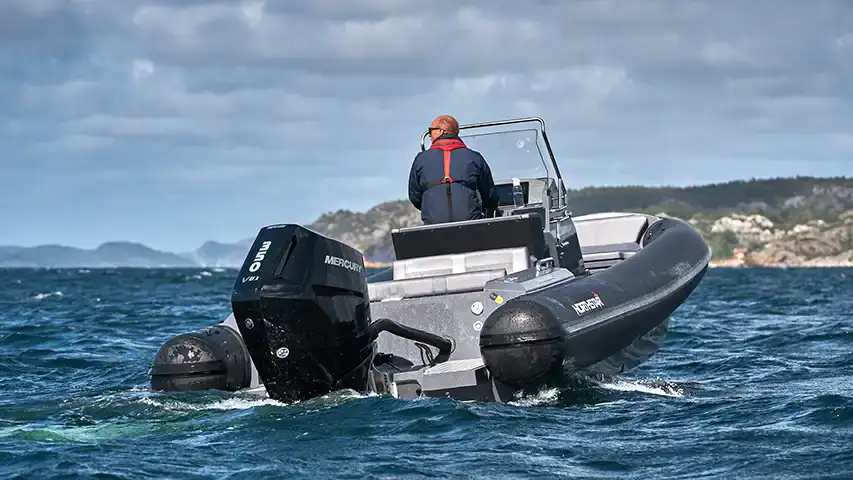
A Rigid Inflatable Boat, almost always shortened to RIB, is a motorboat built around two very different structures.
A solid hull sits beneath the waterline. Inflatable tubes wrap around the sides above it.
That combination is not a gimmick. It is the reason RIBs dominate rescue fleets, naval operations, diving centres and increasingly, private leisure boating worldwide.
This guide answers the question completely, in plain language, with the technical depth a buyer, owner or enthusiast actually needs.
It draws on RIBsONLY’s own dedicated coverage of the sector since 2008, including hands-on reviews, manufacturer contacts and reader questions collected over more than 15 years.
Quick Answer: What is a RIB?
A Rigid Inflatable Boat (RIB) is a lightweight, high-performance motorboat with a solid hull and inflatable tubes around the sides. The rigid hull delivers speed and handling. The buoyant tubes add stability, reserve buoyancy and protection alongside.
That single sentence explains the concept. The rest of this guide explains why it works so well, and where its limits lie.
What Does RIB Mean? What About RHIB?
RIB stands for Rigid Inflatable Boat, sometimes written Rigid-Hulled Inflatable Boat. Both terms describe the same basic design.
A separate, fully detailed breakdown of the terminology lives in our dedicated article, What Does RIB Stand For?
You will also see the acronym RHIB, mainly in military, coast guard and commercial contexts.
RHIB and RIB describe the same core concept in almost every practical sense. The difference is mostly one of vocabulary, sector and vessel size rather than construction.
Larger RHIBs used by navies and coast guards often carry heavier engines, armour options and specialised electronics.
Smaller leisure RIBs prioritise comfort, fuel economy and ease of trailering instead.
Every RIB, regardless of size or brand, shares a common anatomy. Understanding these parts makes every later section of this guide easier to follow.
The hull. A rigid structure, usually deep-V shaped, built from GRP (fibreglass), aluminium or occasionally other composites.
The tubes. Inflatable collars, called sponsons, fitted around the hull’s perimeter and filled with air under controlled pressure.
The transom. The reinforced rear structure that carries the outboard or inboard engine mounting.
The console. The steering position, which ranges from a simple centre console to a fully enclosed helm.
Seating and deck layout. Ranging from simple bench seats to jockey seats designed for rough-water impact absorption.
Chambers within the tubes. Most RIB tubes are divided into 3 to 7 separate air chambers for redundancy.
That last point matters more than most buyers realise, and we return to it in the safety section below.
How the Hull and Tubes Work Together
The rigid hull cuts through waves and provides directional stability at speed. Alone, however, a narrow rigid hull without side buoyancy would be tender and prone to rolling.
The inflatable tubes solve that problem. They sit above the waterline at rest and only touch the water more actively when the boat heels or meets a wave.
At that moment, the tubes provide additional buoyancy exactly where it is needed. This self-correcting effect is what gives RIBs their famous stability in a turn and their forgiving behaviour in a chop.
The tubes also absorb impact energy when coming alongside another vessel, a jetty or a person in the water.
That cushioning role explains why RIBs are the default choice for rescue and diving operations, where repeated close-quarters contact is routine.
Our companion article, How Does a RIB Work?, goes deeper into hull hydrodynamics, planing behaviour and tube pressure management for readers who want the full technical picture.
Why RIBs Have Inflatable Tubes At All
It is a fair question. Why not simply build a narrow, fast fibreglass boat without tubes?
The short answer: buoyancy, stability and forgiveness. Tubes add flotation exactly where a hard-chine boat is weakest, at the sides.
They let designers build a narrower, faster hull without sacrificing stability. They also turn hard collisions into soft ones, protecting both the boat and the people near it.
We explore this design logic, including the historical alternatives that were tried and abandoned, in Why Do RIBs Have Inflatable Tubes?
Advantages and Limitations of a RIB
No boat type is perfect for every use case. A fair, balanced view helps buyers set realistic expectations.
Advantages
Excellent stability at rest and underway, even in a beam sea.
High speed-to-weight ratio compared with equivalent hard-hull boats.
Forgiving, cushioned contact with docks, other vessels and swimmers.
Strong reserve buoyancy, since tubes remain inflated even if the boat takes on water.
Lightweight construction, which suits trailering and smaller outboards.
Limitations
Tubes require periodic maintenance, inspection and eventual replacement.
UV exposure and abrasion gradually degrade tube material over years, not months.
Interior space is reduced compared with a hard-hull boat of the same length.
Puncture risk exists, though modern multi-chamber tubes limit real-world consequences.
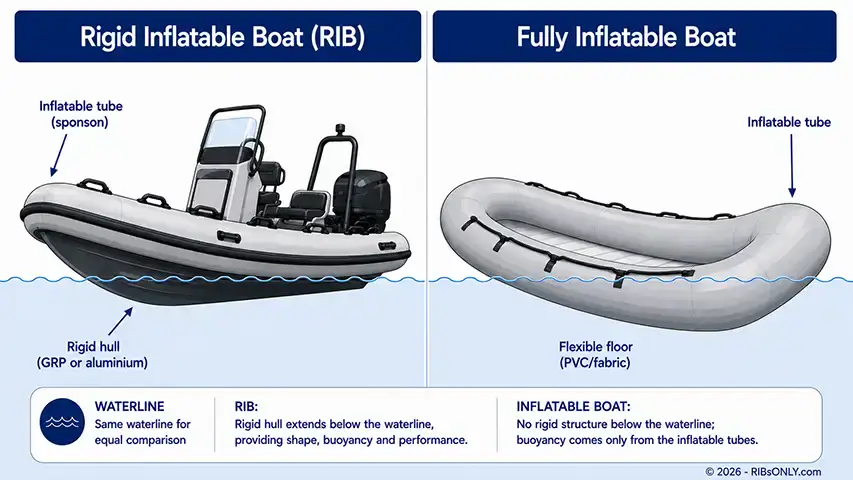
Many buyers confuse RIBs with fully inflatable boats. The confusion is understandable, since both use inflatable tubes for buoyancy.
The construction underneath, however, is fundamentally different.
A fully inflatable boat has a flexible floor and hull, often made from PVC or a similar coated fabric over an inflatable or slatted structure. It packs down small, deploys quickly and suits light, low-speed use.
A RIB replaces that flexible floor with a rigid, load-bearing hull. This single change transforms performance.
A RIB can plane at speed, hold a straight course in a chop and carry a far larger outboard than an equivalent inflatable boat.
9 m+: Commercial, rescue, military and superyacht-tender territory.
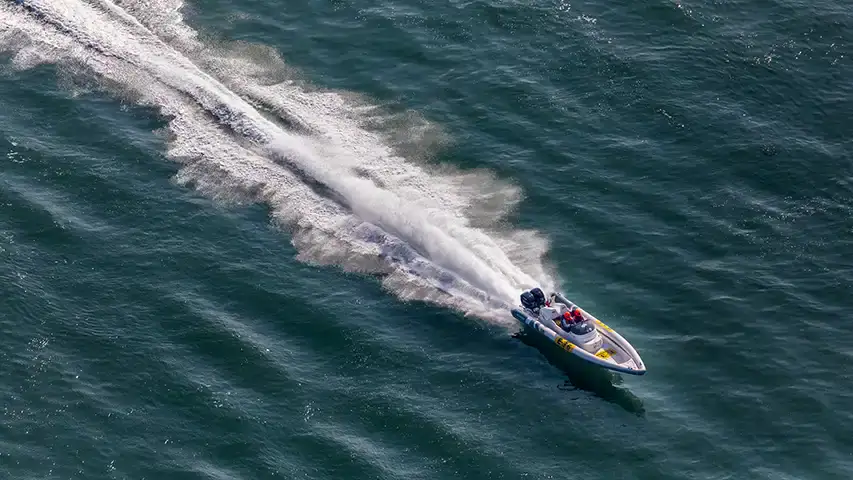
Speed depends heavily on hull design, weight and power, but well-matched leisure RIBs commonly cruise in the 25 – 35 knots range, with performance models exceeding 50 knots and more.
RIBs earned their reputation in the harshest environment there is: open-water search and rescue. That heritage still shapes how RIBs behave today. Multi-chamber tube construction means a single puncture rarely causes a dangerous loss of buoyancy.
The rigid hull, combined with a deep-V or variable deadrise shape, sheds spray and maintains directional control in a genuine chop.
Well-designed seating absorbs impact energy that would otherwise transfer directly into a skipper’s spine.
None of this makes a RIB immune to bad decisions, overloading or poor maintenance.
Real safety depends on equipment, training and honest boat selection as much as on design.
We unpack every relevant factor, backed by real incident patterns rather than assumptions, in our dedicated safety article Are Rigid Inflatable Boats Safe? and address the specific, frequently searched question Can a RIB Sink? directly.
For buyers specifically targeting challenging conditions, our guide Best RIB for Rough Water: What Really Matters? breaks down deadrise angle, tube diameter, weight distribution and hull length in practical terms.
The RIB’s versatility explains its spread across such different sectors.
Leisure boating. Day trips, watersports towing, family boating and coastal cruising.
Search and rescue. Lifeboat services worldwide rely on RIBs for their speed, stability and crew safety in extreme conditions.
Military and coastguard. RHIBs handle boarding operations, patrol duties and special forces insertion.
Superyacht tenders. Compact, fast RIBs ferry guests and equipment between yacht and shore.
Diving and commercial charter. Low freeboard, stable platforms and strong load capacity suit dive operations closely.
Each sector places different demands on the same basic design, which explains the huge variation in RIB specification and price across the market.
Costs, Maintenance and Lifespan
Purchase price is only the starting point. Tubes typically need replacement every 10 to 15 years depending on material, climate and use, though careful owners regularly exceed this.
Engines, storage, insurance and antifouling all add to the real cost of ownership over time.
The RIB concept emerged in the 1960s at Atlantic College in South Wales.
Instructors and students experimented with fitting a rigid hull beneath inflatable tubes to build a faster, more seaworthy lifeboat.
That early work directly influenced the RNLI‘s Atlantic 21 lifeboat class. It proved the design’s rescue credentials in some of the world’s roughest coastal waters.
From that rescue origin, the design spread steadily into military, commercial and eventually leisure boating, as manufacturers refined hull shapes, tube materials and engine options.
Today’s RIB market spans everything from compact tenders to serious offshore performance craft.
But the core engineering logic has changed remarkably little since those first Atlantic College prototypes.
Frequently Asked Questions
What does RIB actually stand for? RIB stands for Rigid Inflatable Boat, a motorboat combining a solid hull with inflatable side tubes.
Is a RIB the same as a RHIB? Yes, in almost all practical respects. RHIB is more common in military and commercial contexts, RIB in leisure boating.
Can a RIB’s tubes be punctured? Yes, but multi-chamber construction means a single puncture rarely causes the boat to lose usable buoyancy.
Are RIBs safe in rough water? RIBs were originally developed for rescue work in rough water and generally handle chop better than comparable hard-hull boats, though outcome still depends on skipper skill, equipment and boat size.
How long do RIB tubes last? Typically 10 to 15 years, depending on tube material, UV exposure and maintenance, with Hypalon/CSM generally outlasting PVC.
Are RIBs suitable for beginners? Yes, smaller RIBs are widely used as first boats thanks to their forgiving stability, though proper training remains essential regardless of boat type.
Sources and Editor-in-Chief
Karel Overlaet, editor in chief of RIBsONLY.com, founded and owns Medianaut, Nautical News Media (est. 2003).
The RIBsONLY.com editorial team has provided dedicated coverage of the Rigid Inflatable Boat industry since 2008, drawing on more than 15 years of specialist expertise.
This includes manufacturer contact, owner interviews and hands-on model reviews published throughout our archive.
Hull material shapes a RIB’s ride, weight, durability and even its resale market, often more than buyers expect before comparing the two side by side.
Aluminium and fibreglass (also known as GRP) each have genuine strengths, and neither is objectively superior across every use case.
This guide compares both materials honestly, covering the trade-offs that matter once you’re standing on the dock deciding between two real boats.
Construction: How Each Hull is Built
GRP (fibreglass) hulls are built by laying layers of glass fibre and resin into a mould, sometimes with a foam or balsa core for added stiffness and buoyancy. This process allows complex, smoothly curved hull shapes and consistent quality across production runs.
Aluminium hulls are typically welded from marine-grade aluminium plate and extrusions, a process closer to traditional metal boatbuilding. This construction method favours simpler, often more angular hull shapes, though modern techniques increasingly allow more refined forms.
Ride Quality and Noise
This is one of the most noticeable differences owners report after switching between the two materials.
Fibreglass hulls (GRP) flex slightly under load, which helps absorb some vibration and impact energy. Combined with the resin matrix’s natural damping properties, this generally produces a quieter, smoother-feeling ride, particularly at speed in a chop.
Aluminium hulls are stiffer and transmit more vibration and slap noise through the structure, especially in choppy conditions. Many owners describe aluminium RIBs as noticeably louder underway, though hull design and construction quality significantly affect how pronounced this difference feels in practice.
Weight and Performance
Aluminium can offer a genuine weight advantage in certain configurations, particularly for larger hulls, since it achieves structural strength with thinner material than fibreglass (GRP) requires for equivalent rigidity.
This weight advantage can translate into better power-to-weight ratios, marginally improved fuel efficiency, or the ability to run a smaller engine for equivalent performance.
The practical difference varies considerably by specific hull design and size, and isn’t universal across every model comparison.
Durability and Impact Resistance
Aluminium’s standout advantage is impact resistance.
It dents rather than cracks under significant impact, and dents can often be repaired without the structural concerns that accompany GRP damage (fibreglass).
This resilience explains aluminium’s popularity in commercial, rescue and working environments where hull impacts are routine.
Fibreglass (GRP) performs excellently under normal use but is more vulnerable to cracking or delamination under significant impact, particularly if a core material is compromised by water intrusion following damage.
Well-built GRP hulls are robust, but repairs after serious impact are typically more involved and costly than aluminium dent repair.
Corrosion and Long-term Maintenance
GRP (fibreglass) doesn’t corrode in the way metal does, though gelcoat can fade, chalk or develop osmosis blisters over many years without proper care.
Aluminium requires attention to galvanic corrosion, particularly around fittings, fasteners and areas where dissimilar metals meet. Saltwater use demands proper anode maintenance and attentive care around any electrical connections. Well-maintained aluminium hulls resist corrosion effectively, but neglect carries real consequences over time.
Repair Complexity
Minor aluminium dents are often straightforward for a competent welder to address, and welding repairs, while requiring specific skills, are widely available in most boating regions.
GRP (fibreglass) repairs require gelcoat matching, resin work and, for structural damage, careful attention to core material condition.
Cosmetic GRP repairs are generally accessible; structural repairs benefit strongly from professional expertise.
Resale Value and Market Preference
Resale patterns vary considerably by region and market segment.
In many leisure markets, GRP remains the more commonly traded material, benefiting from broader buyer familiarity and typically stronger aesthetic resale appeal.
Aluminium holds strong resale value in commercial, rescue and working-boat markets, where its durability credentials directly translate into buyer confidence.
Checking local market trends for your specific region and intended resale timeline is worthwhile before treating either material as the automatically “safer” resale choice.
Cost Comparison
Pricing varies significantly by manufacturer, size and specification, making broad generalisations risky.
That said, aluminium construction, particularly for smaller hulls, can carry a cost premium related to labour-intensive welding processes, while GRP benefits from more standardised mould-based production at scale for popular models.
Larger aluminium hulls sometimes narrow or reverse this gap, given the material efficiency advantages at bigger sizes.
Always compare specific, equivalent models rather than assuming one material is universally cheaper.
Which Should You Choose?
Choose fibreglass (GRP) if ride comfort, noise levels and broad leisure-market resale familiarity matter most to your priorities.
Choose aluminium if impact resistance, repairability after damage, and proven performance in demanding or commercial-adjacent use matter more than ride refinement.
Many rescue services, commercial operators and serious offshore users choose aluminium specifically for its durability under repeated hard use.
Many leisure buyers choose GRP (fibreglass) specifically for the smoother, quieter experience it typically delivers.
Our complete RIB Buying Guide places this decision alongside sizing, tube material and engine choice for a full picture of what matters most to you.
Frequently Asked Questions
Is aluminium always heavier than fibreglass (GRP)? Not necessarily. Aluminium can achieve strength with thinner material, sometimes producing lighter hulls than GRP at equivalent sizes, though this varies by specific design.
Which material is better for saltwater use? Both perform well in saltwater with proper maintenance. Aluminium requires attentive corrosion management; GRP requires attentive gelcoat and core care.
Do aluminium RIBs really sound louder underway? Generally yes, due to the material’s stiffness transmitting more vibration, though hull design and construction quality significantly affect how noticeable this is.
Is one material objectively safer than the other? No. Both materials, properly built and maintained, deliver excellent safety records across leisure, commercial and rescue applications worldwide.
Tube material is one of the most consequential specifications on any RIB, yet it’s often reduced to a single line in a brochure.
The choice between PVC and Hypalon/CSM affects lifespan, appearance, repair cost and resale value for as long as you own the boat.
This guide explains what each material actually is, how they perform over years of real use, and which one makes sense for your specific climate and budget.
What PVC Tubes Are Made of
PVC (polyvinyl chloride) tube fabric consists of a woven polyester base coated with layers of PVC on both sides. It’s the same broad material family used in many industrial and marine fabric applications, refined for marine tube construction.
PVC is manufactured through a heat-welding process, which allows for strong, relatively straightforward seam construction.
This contributes to its lower manufacturing cost compared with Hypalon/CSM.
What Hypalon/CSM Tubes Are Made of
Hypalon is a trade name for chlorosulfonated polyethylene (CSM), a synthetic rubber compound originally developed by DuPont.
Most of today’s “Hypalon” tubes use CSM from various manufacturers, since DuPont discontinued the original Hypalon brand, though the name persists throughout the industry.
CSM tubes are typically glued rather than heat-welded, a more labour-intensive process that contributes to higher manufacturing cost. The material itself offers superior resistance to UV radiation, ozone and many chemicals compared with standard PVC.
Durability and Lifespan: The Core Difference
This is where the two materials diverge most significantly.
PVC typically lasts 8 – 12 years under moderate climate conditions with reasonable care. In hot, high-UV climates, that lifespan can shorten considerably, sometimes to 5–8 years, as UV exposure accelerates degradation.
Hypalon/CSM typically lasts 12 – 20 years, and well-maintained examples in favourable conditions have been known to exceed this considerably. Its superior UV and ozone resistance makes it the preferred choice for boats used in consistently sunny climates or stored outdoors year-round.
These figures assume reasonable maintenance and storage. Neglected tubes of either material will fail sooner; well-cared-for tubes of either material can outperform these general ranges.
PVC degradation signs include a chalky, powdery surface residue, visible stiffening or brittleness, and eventual cracking, particularly along fold lines and high-flex areas.
Hypalon/CSM degradation signs include surface fading and a slightly rougher texture over many years, though the material tends to remain flexible for much longer before showing PVC’s characteristic brittleness.
PVC tubes are generally easier and cheaper to repair, using PVC-specific adhesives and patch kits widely available even to boat owners themselves for minor repairs.
Hypalon/CSM repairs typically require specialised adhesives and, for anything beyond minor patching, professional application.
This adds cost but reflects the material’s more demanding bonding chemistry.
Both materials benefit significantly from regular cleaning and UV-protectant treatment, which meaningfully extends service life regardless of which material you own.
Climate arguably matters more than any other factor in this decision.
Hot, high-UV regions (Mediterranean, Middle East, Australia, southern US) generally favour Hypalon/CSM, where its superior UV resistance directly translates into meaningfully longer service life.
Temperate, lower-UV regions (northern Europe, UK, Pacific Northwest) see PVC perform much closer to its Hypalon counterpart in relative terms, making the cost saving harder to argue against.
Boats stored under cover or indoors, regardless of climate, see both materials last considerably longer, sometimes narrowing the practical difference between them.
Which Should You Choose?
Choose PVC if you’re working with a tighter budget, live in a temperate climate, or plan to own the boat for a shorter period before upgrading.
Choose Hypalon/CSM if you live in a consistently sunny, high-UV climate, plan long-term ownership, or prioritise maximum resale value and minimal long-term tube-related expense.
Neither choice is wrong. Both materials, properly maintained, deliver many years of safe, reliable service.
Our complete RIB Buying Guide covers this decision alongside every other factor that shapes the right purchase.
Frequently Asked Questions
Can PVC tubes be upgraded to Hypalon later? Full tube replacement is possible on many hulls, effectively allowing a material upgrade, though this represents a significant expense best planned in advance.
Is Hypalon always the “better” material? Not universally. It offers superior longevity and UV resistance, but at meaningfully higher cost. PVC remains a perfectly sound choice for many climates and ownership timelines.
How can I tell which material my RIB’s tubes are made from if I’m not sure? Check manufacturer documentation first. If unavailable, the tube’s texture, seam construction (welded seams suggest PVC, glued seams suggest Hypalon) and overall feel can offer clues, though professional confirmation is more reliable for a significant purchase decision.
Does tube material affect insurance or resale value? Tube material itself rarely affects insurance directly, but it can meaningfully influence resale value, particularly for older boats where remaining tube lifespan becomes a real buyer consideration.
To provide the best experiences, we use technologies like cookies to store and/or access device information. Consenting to these technologies will allow us to process data such as browsing behavior or unique IDs on this site. Not consenting or withdrawing consent, may adversely affect certain features and functions.
Functional
Always active
The technical storage or access is strictly necessary for the legitimate purpose of enabling the use of a specific service explicitly requested by the subscriber or user, or for the sole purpose of carrying out the transmission of a communication over an electronic communications network.
Preferences
The technical storage or access is necessary for the legitimate purpose of storing preferences that are not requested by the subscriber or user.
Statistics
The technical storage or access that is used exclusively for statistical purposes.The technical storage or access that is used exclusively for anonymous statistical purposes. Without a subpoena, voluntary compliance on the part of your Internet Service Provider, or additional records from a third party, information stored or retrieved for this purpose alone cannot usually be used to identify you.
Marketing
The technical storage or access is required to create user profiles to send advertising, or to track the user on a website or across several websites for similar marketing purposes.