How to Choose an Outboard for a RIB

Which outboard to choose @ RIBs ONLY - Home of the Rigid Inflatable Boat
A collection of outboards ©  Siggy Nowak via Pixabay

Choose the Outboard carefully

The engine is the single most expensive component on most RIBs, and the decision with the biggest long-term impact on safety, performance and running costs.

Get it wrong, and even a beautifully built hull disappoints on the water.

This guide walks through horsepower selection, single versus twin configurations, and the practical trade-offs that matter once you’re comparing real options rather than spec sheets.

Start With the Manufacturer’s Recommended Range

Every RIB hull has a manufacturer-specified horsepower range, tested for that specific hull shape, weight and transom strength. This range isn’t a marketing suggestion.

It reflects genuine engineering limits.

Fitting an engine below the recommended minimum leaves the boat underpowered, sluggish to plane, and potentially unsafe in a following sea.

Fitting one above the maximum risks transom stress, handling problems and, in many jurisdictions, invalidates insurance or certification entirely.

Always confirm this range directly from the manufacturer’s documentation or CE plate, never from a general size-to-power assumption.

How Horsepower Affects Real-World Performance

Within the recommended range, more horsepower generally means faster planing, better acceleration and more confident handling when fully loaded. It also means higher fuel consumption and greater purchase cost.

Buyers often default to the maximum recommended horsepower, assuming more is simply better. In practice, the right choice depends on typical loading and use:

  • Light, occasional use with few passengers. Mid-range horsepower within the recommended band usually suffices, keeping costs and fuel consumption reasonable.
  • Regular full-capacity use, watersports towing, or offshore trips. Higher horsepower within the range provides safer margins when the boat is genuinely loaded.

Single vs Twin Outboards

This decision affects cost, redundancy, fuel consumption and handling in ways worth understanding before you commit.

Single outboard advantages include lower purchase price, simpler maintenance and typically better fuel economy for the same total horsepower. The clear disadvantage is a complete loss of propulsion if that engine fails.

Twin outboards provide genuine redundancy. If one engine fails, the other gets you home. Twins also allow differential thrust for tighter low-speed manoeuvring, valued by many owners docking in tight marinas.

The trade-off is cost. Twin configurations typically cost considerably more upfront, add weight, and increase maintenance and fuel expenses compared with a single engine of equivalent combined horsepower.

We break it down in our article Single vs Twin Outboards on a RIB.
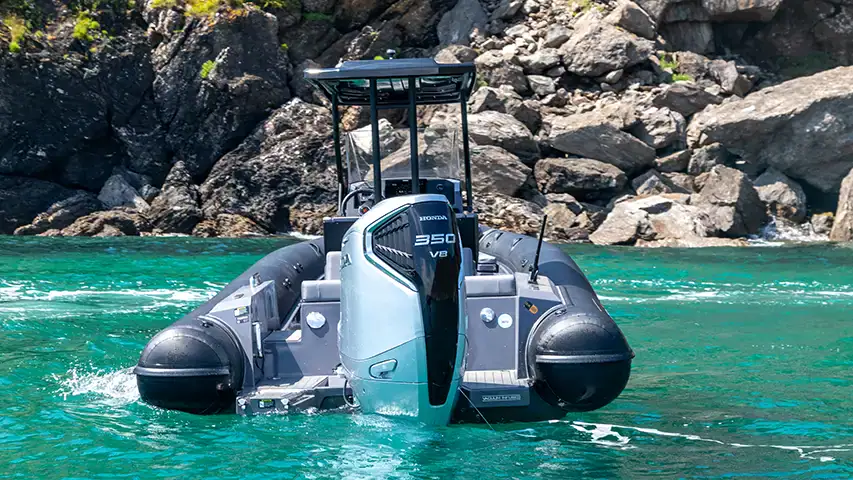
Single outboard RIB @ RIBs ONLY - Home of the Rigid Inflatable Boat
Single outboard RIB ) © 2026 – Northstar

Twin outboard RIB @ RIBs ONLY - Home of the Rigid Inflatable Boat
Twin outboard installation – © Adam Younger

Redundancy matters most for offshore use, remote cruising, or commercial and charter operations where reliability is non-negotiable. For coastal day boating close to help, a well-maintained single engine is often entirely sufficient.

Two-Stroke vs Four-Stroke: A Quick Note

Modern outboards are overwhelmingly four-stroke, offering better fuel economy, lower emissions and quieter operation than older two-stroke designs.

Two-stroke outboards still exist in the used market and offer a lighter weight advantage, but expect higher fuel consumption and stricter emissions restrictions in many regions.

For most buyers today, particularly when purchasing new, four-stroke is the practical default.

New, Used or Refurbished: Weighing the Options

New outboards carry full manufacturer warranty and the latest fuel-efficiency and reliability improvements, at the highest purchase cost.

Used outboards can offer significant savings, but engine hours and documented service history matter enormously. An outboard with high hours but meticulous servicing often outperforms a low-hours engine that sat neglected.

Refurbished outboards, professionally reconditioned by a dealer or specialist, can bridge the gap, offering some warranty assurance at a lower price than new.

Whichever route you choose, our Buying a Used RIB: Complete Inspection Guide covers exactly how to assess a used outboard’s real condition before committing.

Weight, Transom Strength and Correct Installation

Every RIB’s transom is engineered for a specific weight range.

Fitting an engine heavier than the transom was designed for, even within the horsepower range, can cause long-term structural stress.

Correct mounting height and trim angle also affect performance significantly, sometimes more than horsepower itself.

A poorly mounted engine, even a powerful one, delivers disappointing performance and increases fuel consumption.

Professional installation, or at minimum professional verification of an existing installation, protects both performance and safety.

Matching Engine Choice to Boat Size

Engine requirements scale directly with hull size and weight. As a rough guide, based on typical manufacturer recommendations:

RIB LengthTypical Horsepower Range
2,5 – 3,5 m15 – 40 hp
3,5 – 5 m40 – 90 hp
5 – 6,5 m90 – 150 hp
6,5 – 9 m150 – 300 hp, often twin installation
9 m+Twin or triple, 300 hp+
Horsepower breakdown diagram – © 2026 Medianaut, Nautical News Media

For a complete sizing decision that considers passengers, use case and towing alongside engine requirements, see our guide What Size RIB Do I Need?.


Frequently Asked Questions

Can I fit a more powerful engine than the manufacturer recommends?
No. Exceeding the recommended maximum risks transom damage, handling problems and can invalidate insurance or certification.

Is a twin-engine setup worth the extra cost for leisure use?
It depends on use case. Offshore or remote boating benefits significantly from the redundancy; coastal day boating close to assistance often doesn’t require it.

How do I know if a used outboard is in good condition?
Check documented service history, inspect the lower unit for water intrusion, and always arrange a sea trial before purchase.

Does engine weight affect a RIB’s handling?
Yes, significantly. Correct weight and mounting height affect planing behaviour, fuel efficiency and overall handling more than most buyers expect.


Related reading: What Is a Rigid Inflatable Boat? · RIB Buying Guide · What Size RIB Do I Need? · Buying a Used RIB: Complete Inspection Guide · Single vs Twin Outboards on a RIB

How Much Does a RIB Cost?

How Much Does a RIB Cost @ RIBs ONLY - Home of the Rigid Inflatable Boat
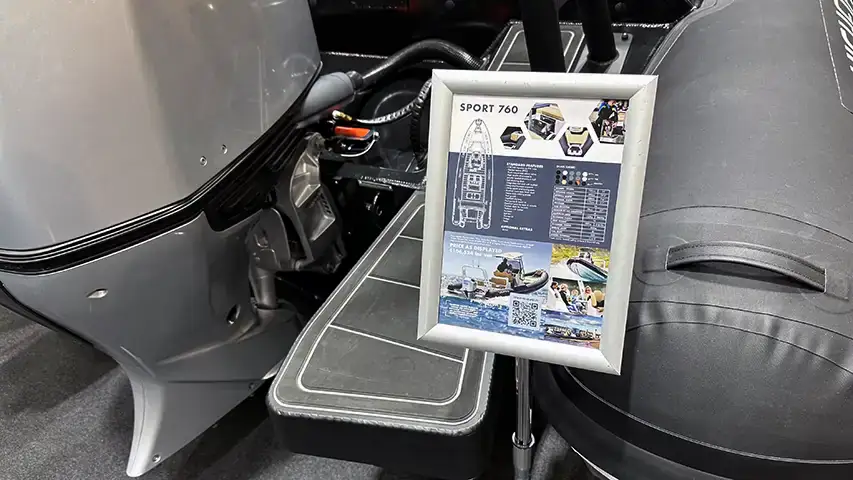
A detailed price display like all should be – © 2023 Medianaut, Nautical News Media

What Determines the Cost?

RIB prices vary enormously, from a few thousand for a small used tender to well over € 500.000 for a large, fully equipped offshore model.

That range makes generic pricing advice almost useless without context.

This guide breaks costs down by realistic segment, covers both new and used pricing, and lists the ongoing expenses buyers consistently underestimate before their first season.

New RIB Prices by Size Segment

Size SegmentTypical New Price Range*Notes
2,5 – 4 m tenders€ 5.000 – € 20.000Excludes larger outboards; basic equipment
4 – 6 m leisure€ 20.000 – € 70.000The most competitive, widest-choice segment
6 – 9 m performance/offshore€ 70.000 – € 300.000Twin outboards common; higher-spec tubes
9 m+ luxury/commercial€ 250.000+Custom builds, commercial certification common
*Note: figures below reflect general market ranges at the time of writing and vary by region, brand, specification and market conditions.
Always confirm current pricing directly with dealers or sellers for any specific model.

© 2026 Medianaut, Nautical News Media

You can contact active RIB manufacturers worldwide through the comprehensive RIB Manufacturer Directory at RIBManufacturerList.com.

These ranges assume a boat sold with at least one engine included.

Bare-hull pricing, sold without an engine, sits noticeably lower but requires factoring in engine cost separately.

Some manufacturers produce maxi RIBs with price tags exceeding 1 million euro. Watch these extraordinary boats in this article: Maxi RIBs for Maxi Wallets: the 15+ Meter Range.

Used RIB Prices: What Realistically Changes

Used pricing depends heavily on age, tube condition, engine hours and documented maintenance history, far more than on the boat’s original list price alone.

As a rough guide, well-maintained used RIBs typically sell for 30 – 50% below equivalent new pricing within the first 5 – 7 years, with steeper discounts common as tubes approach replacement age.

A boat with recently replaced tubes and a low-hours, well-serviced engine can command a meaningfully higher price than an older example in similar cosmetic condition.

This is precisely why inspection matters more for RIBs than for many hard-hull boats.

Our companion guide, Buying a Used RIB: Complete Inspection Guide, explains exactly what to check before making an offer, alongside a free downloadable checklist.

What Drives Price Differences Within the Same Segment

Two RIBs of identical length can differ enormously in price. Several factors explain why:

Hull material. Aluminium and GRP (fibreglass) command different price points depending on brand positioning and regional market preferences.

Tube material. Hypalon/CSM tubes typically add cost over PVC, reflected in both new and resale pricing. See PVC vs Hypalon/CSM RIB Tubes for the durability trade-off behind that price gap.

Engine configuration. Twin outboards significantly increase both purchase price and ongoing fuel and maintenance costs compared with a single engine of similar total horsepower.

Brand and build quality. Established manufacturers with strong resale reputations command a premium over lesser-known brands, even at similar specifications.

Equipment level. Electronics, seating upgrades, bimini tops, and trailer inclusion all add to the final price, sometimes substantially.

Ongoing Costs Buyers Commonly Underestimate

The purchase price is just the beginning. A realistic ownership budget includes several recurring costs.

  • Insurance. Varies by boat value, region, engine power and intended use; typically a modest annual percentage of insured value.
  • Storage or mooring. Dry storage, marina berths or driveway trailer storage all carry different, location-dependent costs.
  • Annual servicing. Engine servicing, antifouling where applicable, and general upkeep add up meaningfully year over year.
  • Tube maintenance and eventual replacement. A cost most new buyers forget until it arrives, typically after 10 – 15 years depending on material and climate.
  • Fuel. Twin outboards or high-horsepower configurations can make fuel a genuinely significant running cost for frequent users.

Our full guide to How to Choose an Outboard for a RIB covers how engine choice specifically affects both upfront and ongoing costs.

Bare Hull vs Package Pricing

Many manufacturers sell RIBs as a “package,” bundling hull, engine, trailer and basic equipment into one price.

Others sell the hull separately, letting buyers choose their own engine and equipment.

Package pricing is usually simpler and can include manufacturer discounts on the bundled engine.

Buying separately gives more control, particularly for buyers wanting a specific engine brand or an engine they already own from a previous boat.

How to Budget Realistically for Your First RIB

  1. Set a total budget that includes boat, engine (if separate), trailer and immediate safety equipment.
  2. Add a realistic annual figure for insurance, storage and servicing before committing.
  3. Factor in a contingency for used-boat inspection findings, if buying secondhand.
  4. Confirm CE category and any certification requirements relevant to your planned use.
  5. Compare like-for-like across hull material, tube material and engine configuration, not just headline price.

Our complete RIB Buying Guide walks through the full decision process, from use case through to final shortlist, alongside pricing considerations.


Frequently Asked Questions

Is it cheaper to buy a RIB with or without an engine?
Package deals often include manufacturer discounts on the engine, but buying separately can suit those with specific engine preferences or existing equipment.

Why do two similar-looking RIBs sell for very different prices?
Differences in tube material, hull material, engine configuration, brand reputation and equipment level all affect price significantly, even at the same length.

How much does it cost to replace RIB tubes?
Costs vary by size and material, but tube replacement represents a meaningful expense worth budgeting for as a boat approaches 10–15 years old.

Do RIBs hold their value well?
Well-maintained RIBs from established manufacturers generally hold value reasonably well, particularly when tube condition and service history are well documented.


Related reading: What Is a Rigid Inflatable Boat? · RIB Buying Guide · Buying a Used RIB: Complete Inspection Guide · PVC vs Hypalon/CSM RIB Tubes


RIB Buying Guide: How to Choose the Right Boat

RIB Buying Guide: How to Choose the Right Boat @ RIBs ONLY - Home of the Rigid Inflatable Boat
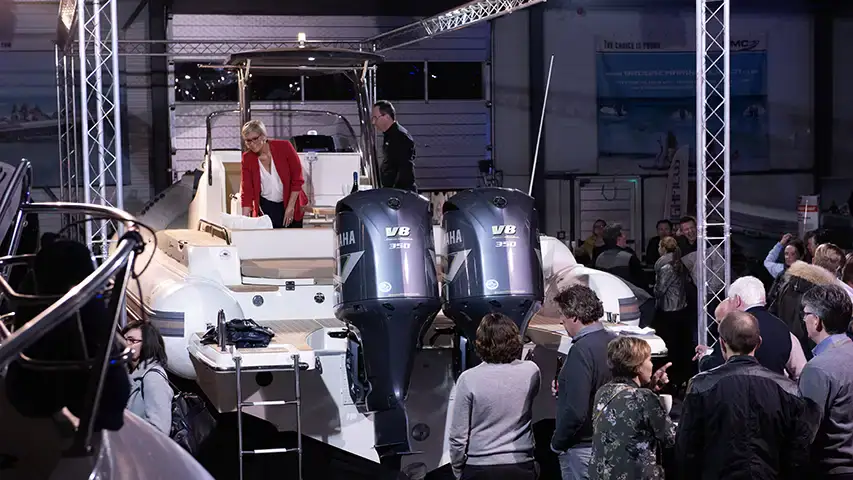
A huge Capelli at Brugge Marine Center – © 2028 – Medianaut, Nautical News Media

If It’s Your First RIB, This is the Buying Guide for You

Buying a Rigid Inflatable Boat (RIB) is easy to get wrong, not because RIBs are complicated, but because the market is enormous.

Hundreds of manufacturers, dozens of hull materials and tube specifications, and sizes ranging from 2.5 to over 12 metres all compete for your attention at once.

This guide cuts through that noise.

It walks through the decisions that actually matter, in the order they should be made, so you arrive at a shortlist that fits your real needs rather than a marketing brochure.

Start With Use Case, Not With Boats

The single biggest mistake buyers make is browsing models before answering what the boat is actually for. Use case determines almost every other decision that follows.

Ask yourself honestly:

  • Will this be mainly day trips, watersports, fishing, diving, or serious offshore use?
  • How many people need to be carried comfortably and safely, most of the time?
  • What sea conditions will the boat realistically encounter, not on your best day, but on a typical one?
  • Will the boat live on a trailer, a mooring, or in dry storage?

Answering these four questions first turns an overwhelming market into a manageable shortlist. Every section below builds on these answers. It is a solid buying guide.

Choosing the Right Size

Lots of RIB models to choose from @ RIBs ONLY - Home of the Rigid Inflatable Boat
A RIB group heading out together – © Northern Exposure Rescue

Size affects capacity, trailering, storage, fuel consumption and rough-water capability all at once.

Undersizing leaves you outgrowing the boat within a season.

Oversizing creates ongoing costs and handling challenges that outweigh the benefits.

As a general guide:

  • 2.5 – 4 m: Tenders and compact day boats, ideal for 2 – 4 people and light use.
  • 4 – 6 m: The most popular leisure segment, suited to families and regular day boating.
  • 6 – 9 m: Serious leisure and offshore-capable RIBs, typically with twin outboards.
  • 9 m+: Commercial, rescue and superyacht-tender territory, beyond most private budgets.

This dedicated guide, What Size RIB Do I Need?, breaks this down further by passenger count, towing capability and realistic budget bands.

Choosing the Right Hull Material

Hull material affects weight, ride quality, resale value and long-term maintenance, but not in the way many first-time buyers expect.

GRP (fibreglass) remains the most common choice, offering a smooth, quiet ride and strong resale recognition across most markets.

Aluminium hulls are lighter in some configurations and highly resistant to impact damage, which explains their popularity in commercial and rescue fleets.

Neither material is objectively “better.”

The right choice depends on your priorities around noise, weight, impact resistance and typical resale market in your region.

Our full comparison, Aluminium vs Fibreglass RIB, covers the real ownership trade-offs in depth.

Choosing the Right Tube Material

Tubes are not a minor spec line. Material choice directly affects lifespan, appearance over time and total cost of ownership.

PVC tubes are more affordable and perform well in moderate climates, but degrade faster under intense, constant UV exposure.

Hypalon/CSM tubes cost more upfront but resist UV and chemical damage significantly better, particularly in hot, sunny regions or heavy commercial use.

If you live somewhere with strong year-round sun, or plan to keep the boat for over a decade, tube material deserves as much attention as hull material.

Our detailed breakdown is in PVC vs Hypalon/CSM RIB Tubes.

FactorPVCHypalon/CSM
Typical lifespan8 – 12 years12 – 20 years
UV resistanceModerateHigh
Upfront costLower30 – 50 % higher
Repair methodHeat-welded, DIY-friendlyGlued, often professional

Comparison of PVC and Hypalon RIB tube materials essential in the buying guide – © 2026 Medianaut, Nautical News Media – Karel Overlaet

Choosing the Right Engine

Engine choice shapes performance, fuel cost and resale value more than almost any other decision.

Underpowering a RIB makes it sluggish and unsafe in a following sea.

Overpowering wastes money and can strain the hull and transom unnecessarily, leading to costly repairs.

Key questions to resolve before choosing:

  • What is the manufacturer’s recommended horsepower range for this specific hull?
  • Single or twin outboards, and does your intended use justify the extra cost and complexity of twins?
  • New, used or refurbished engine, and what does that mean for warranty and reliability?

Our complete guide, How to Choose an Outboard for a RIB, walks through horsepower selection, single vs twin configurations and realistic engine budgets.

New vs Used: Which Should You Buy?

Both paths make sense, depending on budget and risk tolerance.

New RIBs come with full warranty coverage, the latest tube materials and no unknown history. You pay a premium for that certainty.

Used RIBs offer significant savings, sometimes 30 – 50% below new pricing for boats just a few years old, but require careful inspection to avoid inheriting expensive problems.

If you’re considering a used purchase, our companion resource, Buying a Used RIB: Complete Inspection Guide, covers exactly what to check before handing over money, alongside a free downloadable inspection checklist (direct download link).

Setting a Realistic Total Budget

The purchase price is only the starting point.

A realistic budget includes several ongoing and one-time costs buyers commonly underestimate.

  • Engine, if not already included in the boat’s asking price.
  • Trailer, storage or mooring fees, depending on where the boat will live.
  • Insurance, which varies significantly by boat value, region and intended use.
  • Annual servicing, antifouling and eventual tube maintenance or replacement.

Our full cost breakdown, covering both new and used RIBs across different size segments, is available in How Much Does a RIB Cost?

Matching Boat to Skill Level

Be honest about experience, not aspiration.

A smaller, more forgiving RIB let’s a new boater build genuine confidence before stepping up to something larger or more powerful.

RIBs are widely regarded as excellent first boats, thanks to their forgiving stability, but that reputation assumes appropriate sizing and proper training.

Our safety guide, Are Rigid Inflatable Boats Safe?, covers the skipper’s role in that equation in detail.

A Practical Shortlist Process

Once you’ve worked through use case, size, materials, engine and budget, building a shortlist becomes far simpler:

  1. List 3-5 models that match your size and use-case answers.
  2. Confirm hull and tube material specifications for each.
  3. Check manufacturer-recommended engine range against your budget.
  4. Arrange viewings and, where possible, sea trials for your top choices.
  5. If considering used boats, apply the full inspection checklist before making an offer.

And that’s your personal buying guide.


Frequently Asked Questions

What’s the biggest mistake first-time RIB buyers make?
Choosing a boat based on appearance or a single feature, without first defining use case, size and realistic budget.

Should beginners buy new or used?
Either can work well. New removes uncertainty around history and condition; used offers better value if properly inspected.

How much should I budget beyond the boat’s price?
Plan for engine, trailer or storage, insurance and annual servicing, typically adding meaningfully to the headline purchase price.

Is a bigger RIB always a better choice?
No. Oversized boats create unnecessary cost, handling challenges and storage demands relative to actual use.


Related reading: What Is a Rigid Inflatable Boat? · What Size RIB Do I Need? · Buying a Used RIB: Complete Inspection Guide · How to Choose an Outboard for a RIB · How Much Does a RIB Cost?


Can a RIB Sink?

Swamping Is Not the Same as Sinking @ RIBs ONLY - Home of the Rigid Inflatable Boat
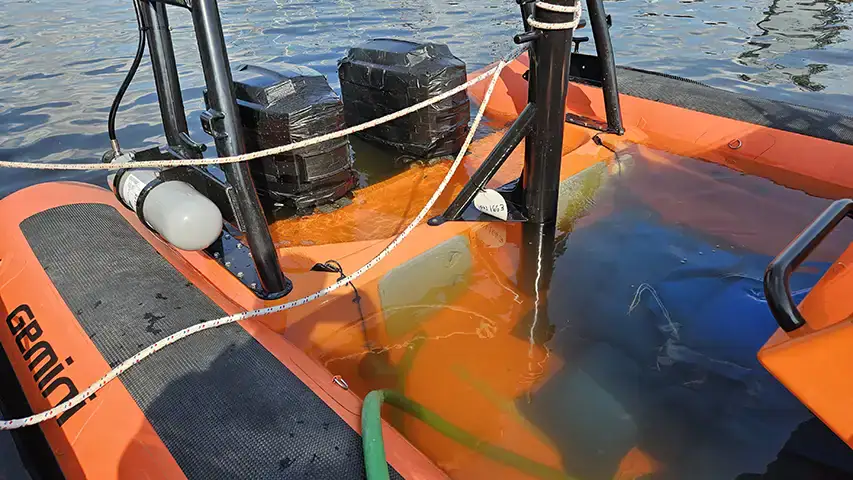
Part of the SOLAS testing: swamping a Gemini RIB – © Novi Marine

A Sinking RIB is Very Rare

It’s one of the most searched questions about Rigid Inflatable Boats, and for good reason.

If a tube is just air, what happens when it fails?

The honest answer: a RIB can sink, but it takes far more than most people assume.

This article explains exactly what, why, and how rarely it actually happens in practice.

The Short Answer

A properly maintained RIB, built to a recognised standard, is extremely difficult to sink.

Multiple independent air chambers, combined with a buoyant hull, mean the boat typically survives damage that would sink a comparable hard-hull vessel outright.

Sinking a RIB usually requires a combination of failures happening at once, not a single puncture or leak.

Swamping Is Not the Same as Sinking

These two words get confused constantly, and the distinction matters.

Swamping means the boat fills with water on deck or in the cockpit, while the tubes and hull retain enough buoyancy to keep it afloat, just low in the water and difficult to control.

Swamping Is Not the Same as Sinking @ RIBs ONLY - Home of the Rigid Inflatable Boat
Part of the SOLAS testing: swamping a Gemini RIB was successful – it still floats – © Novi Marine

Sinking means the boat loses enough total buoyancy to go under the surface entirely.

Most dramatic-looking RIB incidents, including the ones people describe as “nearly sinking,” are actually swamping events. The boat stays afloat, if unpleasantly, and remains recoverable.

Why Multi-Chamber Tubes Make Sinking So Difficult

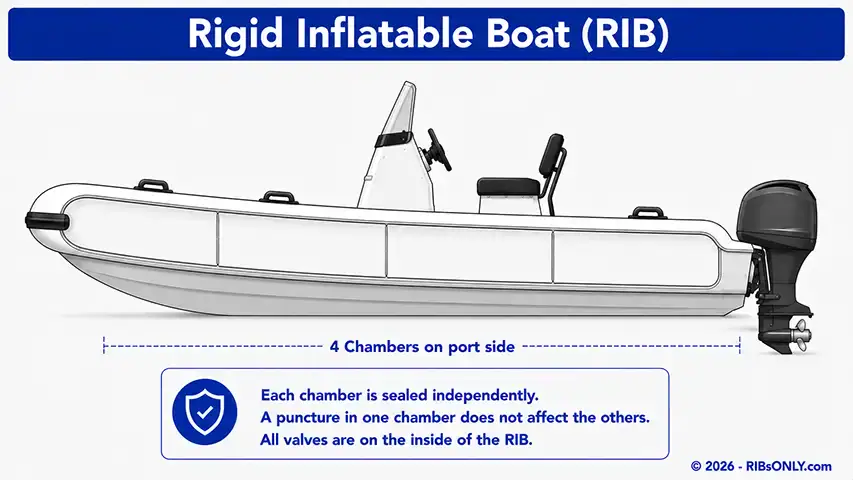
Most RIB tubes are divided into three to seven separate, sealed air chambers rather than one continuous tube.

We explain this design in full in Why Do RIBs Have Inflatable Tubes?, but the safety implication deserves its own focus here.

A single puncture only affects the chamber it occurs in. The remaining chambers stay fully inflated and continue providing buoyancy, even if one section goes completely flat.

For a RIB to lose all tube buoyancy, multiple chambers would need to fail simultaneously or in very quick succession. In practice, that scenario is rare, and almost always linked to serious, sustained damage rather than routine wear or a single sharp object.

The Hull Also Contributes Buoyancy

Tubes aren’t the only thing keeping a RIB afloat.

Many GRP hulls include foam-filled sections built into the structure specifically to add buoyancy, independent of the tubes entirely.

This means that even in an extreme scenario involving total tube failure, a foam-cored hull can still keep the boat from fully sinking, though it would sit very low and be unsafe to operate.

Aluminium hulls generally don’t rely on foam buoyancy in the same way, since the hull material itself doesn’t require it for structural reasons.

Our comparison, Aluminium vs Fibreglass RIB, covers this difference in more practical detail.

What Would Actually Need to Happen

To genuinely sink a well-built RIB, several things typically need to go wrong together:

  • Multiple tube chambers failing at the same time, from major impact damage rather than a single puncture.
  • A significant hull breach, allowing water to enter faster than it can drain or be pumped out.
  • Heavy fixed weight on board, particularly a large outboard engine, pulling the stern down once buoyancy is compromised.
  • No self-bailing capability, or a self-bailing system that’s blocked or overwhelmed.
  • Continued water ingress with no attempt to reach shore, beach the boat, or call for assistance.

Remove any one of these factors, and the outcome usually changes from “sinking” to “seriously damaged but recoverable.”

Self-Bailing Cockpits: An Extra Layer of Protection

Many RIBs, particularly rescue and offshore leisure models, feature self-bailing cockpits. The deck sits above the waterline, with drainage holes that let water flow out automatically rather than pooling inside the boat.

This design means that even significant water coming aboard in rough conditions drains away continuously, rather than accumulating and adding dangerous weight.

It’s one of several design features borrowed directly from the RIB’s rescue-boat origins, which we cover in What Is a Rigid Inflatable Boat?.

Real-world Testing Backs This Up

Rescue services don’t take buoyancy claims on faith.

Every RIB destined for lifeboat or coastguard service undergoes extensive testing designed specifically to answer this exact question under extreme conditions.

We cover this testing directly, including footage of RIBs deliberately pushed to their limits, in our companion article Are Rigid Inflatable Boats Safe?.

The results consistently show boats absorbing damage that would be catastrophic for a hard-hull vessel of similar size.

What This Means for Owners

None of this is a reason for complacency. It’s a reason to maintain tubes properly, rather than assume the multi-chamber design makes damage irrelevant.

  • Inspect all chambers regularly for pressure loss, not just the ones that look obviously damaged.
  • Repair small punctures or seam issues promptly, before they worsen under continued use.
  • Never assume one soft chamber is harmless; investigate the cause rather than simply re-inflating and moving on.
  • Understand your specific boat’s buoyancy design, including whether the hull includes foam flotation.

Our full inspection guidance, including exactly how to check chamber condition on a used or existing RIB, is covered in Buying a Used RIB: Complete Inspection Guide.


Frequently Asked Questions

Can a single puncture sink a RIB?
Extremely unlikely. Multi-chamber construction means a single puncture typically causes a localised loss of buoyancy, not a full sinking.

What’s more dangerous, tube failure or hull damage?
Hull damage is generally more serious, since it can allow direct water ingress that tubes alone cannot fully compensate for, particularly combined with a heavy engine.

Do all RIBs have foam-filled hulls?
No. It varies by manufacturer and model. Some GRP hulls include foam buoyancy sections; others rely primarily on the tubes and hull shape alone.

Is an older RIB more likely to sink than a new one?
Age alone isn’t the deciding factor. Maintenance history, tube condition and prior repair quality matter far more than the boat’s calendar age.

Should I worry about my RIB sinking during normal use?
No, provided tubes are properly maintained and chambers are checked regularly. Sinking incidents almost always involve significant, compounding failures rather than routine wear.


Related reading: Are Rigid Inflatable Boats Safe? · Why Do RIBs Have Inflatable Tubes? · What Is a Rigid Inflatable Boat? · Buying a Used RIB: Complete Inspection Guide


How Does a RIB Work?

A RIB in planing behaviour @ RIBs ONLY - Home of the Rigid Inflatable Boat
A RIB on plane – © 2026 – Northstar

This is How!

A RIB works by combining two separate systems into one boat: a rigid, planing hull below, and a flexible, buoyant tube structure above.

Neither part alone would perform nearly as well as the two working together.

This article explains exactly how that combination functions, from the physics of planing to the practical role each tube chamber plays underway.

The Hull: How It Achieves Speed

At rest, or at low speed, the hull sits deep in the water like any displacement boat.

As speed increases, water pressure beneath the hull increases too. Past a certain speed, that pressure becomes strong enough to lift most of the hull clear of the water.

This is called planing. Once planing, the boat rides on a much smaller wetted surface area.

Drag drops sharply, and speed increases dramatically for the same engine power.

This is the same basic principle that lets any hard-hull motorboat plane, and a RIB’s rigid hull is essential to making it happen efficiently.

The deadrise angle, essentially how sharp the V-shape is, determines how the hull handles waves. A sharper deadrise cuts through chop more smoothly but sacrifices some stability at rest.

Our guide Best RIB for Rough Water: What Really Matters? explains this trade-off for real buying decisions.

The Tubes: How They Add Stability Underway

While the hull provides speed, the tubes provide the stability that keeps a narrow, fast hull from rolling.

At cruising speed in calm water, the tubes barely touch the surface.

Their role becomes active the moment the boat heels, whether from a turn, a wave, or shifting weight on board.

As the boat leans to one side, that side’s tube compresses into the water.

Compressed air inside the tube resists further compression, pushing back against the heel and helping right the boat.

This happens automatically, continuously and without any input from the skipper.

Why Multiple Air Chambers Matter

Cutaway diagram of RIB tube air chambers and valve system @ RIBs ONLY - Home of the Rigid Inflatable Boat
RIB cutaway showing the tube’s chambers – © 2026 Medianaut, Nautical News Media – Karel Overlaet

Most RIB tubes are divided into between three and seven separate, sealed air chambers, rather than one continuous tube.

This matters enormously for safety.

If one chamber is punctured or damaged, only that section loses pressure. The remaining chambers continue providing buoyancy and stability, keeping the boat safely afloat and manoeuvrable.

We explain the real-world safety implications of this design in full in Are Rigid Inflatable Boats Safe? and Can a RIB Sink?.

Tube Pressure: Why It’s Carefully Managed

RIB tubes are inflated to a specific pressure range, typically measured in PSI or millibar, set by the manufacturer for that particular boat.

Correct pressure matters for two reasons. Underinflated tubes flex too much, reducing stability and increasing drag. Overinflated tubes become rigid and brittle, increasing the risk of seam damage under impact.

Pressure also changes with temperature.

Tubes inflated in cool morning air can become noticeably firmer once the sun heats them through the day, which is why experienced owners check pressure regularly rather than only at haul-out.

How Hull Material Affects Overall Behaviour

The hull’s material, GRP or aluminium, doesn’t change the basic planing principle, but it does affect weight, flex and noise underway.

GRP hulls tend to flex slightly and absorb some vibration, producing a quieter ride.

Aluminium hulls are stiffer and often lighter for a given size, but can transmit more noise and vibration through the structure.

Our full comparison, Aluminium vs Fibreglass RIB, covers how this affects real-world ownership beyond the physics.

Putting It All Together

A RIB works because its two systems solve two different problems simultaneously.

The rigid hull delivers speed through efficient planing.

Tubes provide overall stability @ RIBs ONLY - Home of the Rigid Inflatable Boat
Tubes provide overall stability  – © Iceman Images – Anthony Hadaway

The inflatable tubes deliver stability, reserve buoyancy and impact absorption the hull alone cannot provide.

Neither system is redundant.

Remove the rigid hull, and you lose planing performance entirely, leaving a fully inflatable boat instead.

Remove the tubes, and you lose the stability and safety margin that makes RIBs so trusted in demanding conditions.

Our complete overview of this design, including its history and applications, is covered in What Is a Rigid Inflatable Boat?.


Frequently Asked Questions

Why do RIBs feel more stable than similar-sized hard-hull boats?
The tubes add buoyancy exactly where a hard-hull boat is weakest, at the sides, without adding significant hull width or weight.

Does tube pressure need checking every time before use?
Not strictly every time, but regular checks are important, since temperature and minor leaks both affect pressure over time.

Can a RIB plane with only one working tube chamber?
Usually yes. Planing depends primarily on the hull, so tube damage affects stability and buoyancy more than outright planing ability.


Related reading: What Is a Rigid Inflatable Boat? · Why Do RIBs Have Inflatable Tubes? · Aluminium vs Fibreglass RIB · RIB Buying Guide · Buying a Used Rigid Inflatable Boat? Free Download!


×