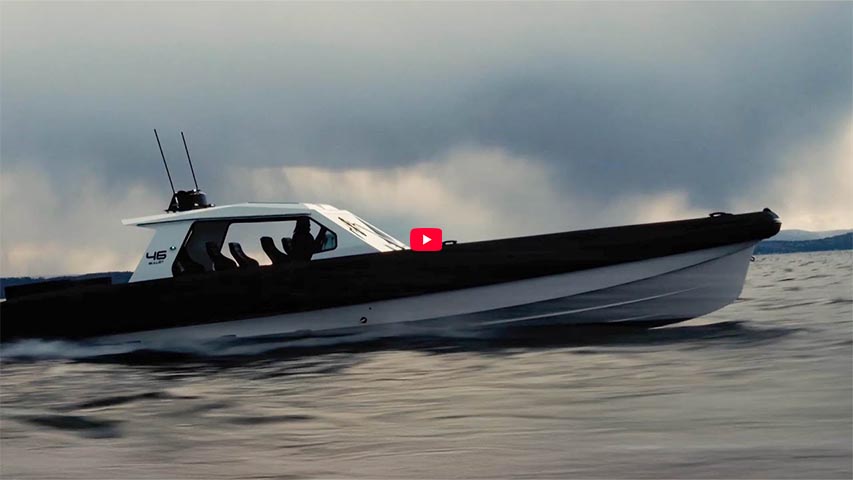
Clear Explication of Surface Drives vs Submerged
At Norway’s Goldfish Yard, Commercial Director Jørgen explains that performance boating is all about managing friction.
Surprisingly, the torpedo and propeller cause more drag than the hull itself.
Maximizing top speed requires a surface-piercing setup to minimize underwater resistance.
However, these systems demand more skill during harbor maneuvers. You must balance pure efficiency against ease of operation.
Mastering the Launch
Accelerating a surface-drive boat often leads to cavitation, which creates vibrations. Jørgen insists this is not dangerous for the engine.
Think of it like a sports car without launch control. You cannot simply floor the throttle from a standstill.
Drivers must apply power progressively to maintain propeller grip. Using specialized blades is also vital to prevent mechanical failure.
Choosing Your Adventure
Configuration depends entirely on your mission. Submerged propellers are ideal for heavy loads and frequent shuttling. They offer reliable traction and simpler handling for guests.
In contrast, surface installations excel during long, high-speed ocean crossings.
These setups require at least two engines for safety. Your choice defines whether you prioritize utility or ultimate offshore efficiency.
This video gives you now more insight in the surface drives vs submerged discussion.
This video was published on the Goldfish Boat AS YouTube channel.
You can find here more videos of this interesting Norwegian brand and the tech-talk by clicking here.