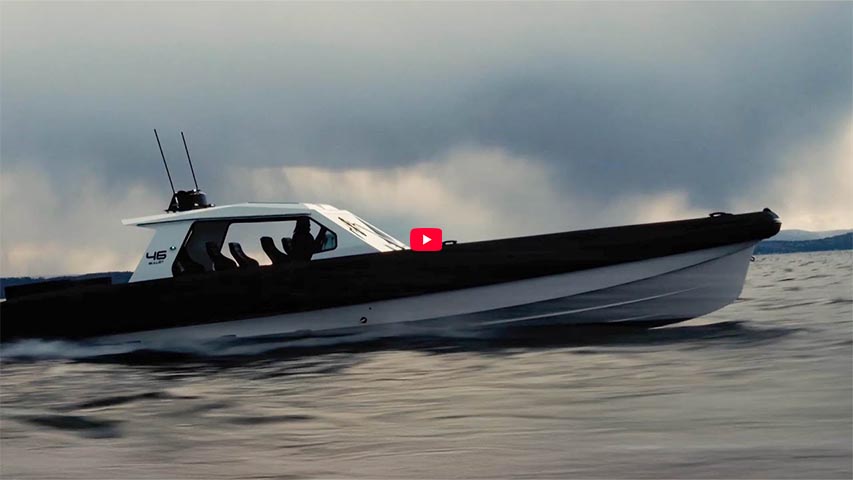
The Rig Components for Optimal Behavior
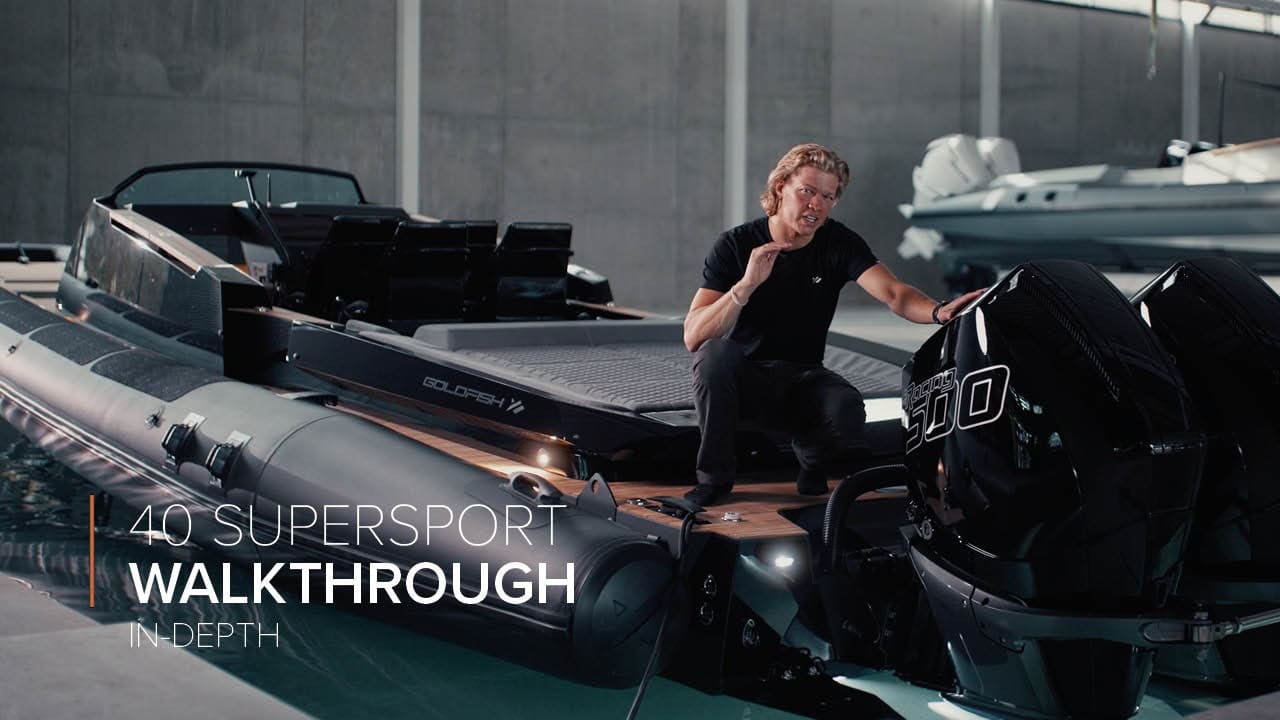
Commercial Director Jørgen’s insights on outboard rigging at the Goldfish yard in Son.
Balance and Performance
Achieving balance between engine characteristics, gear reduction, and the propeller is vital for high-performance boats. Without a precise setup, a boat with 1200 horsepower might fail to plane. With the correct configuration, however, it can reach 70 knots.
Engine Options and Mapping
Goldfish primarily utilizes Mercury engines, specifically the 400R and 500R models. The Verado series focuses on smooth, silent operation for comfort.
Conversely, the “R” models are performance-oriented with higher revs. Software mapping ultimately determines these specific behavioral traits.
See the comparison table below.
Tie-bar Configurations
Tie-bars connect the engines to ensure they always move in parallel.
A rear tie-bar offers a stiffer construction for increased power output. However, a front tie-bar allows users to trim engines individually during malfunctions or when hitting obstacles.
Gear Reduction and Lower Units
Gear reduction slows the propeller to ensure it maintains a proper grip in the water.
Customers must choose between prioritizing rapid acceleration or high top speeds. The “R Sport” drive represents Mercury’s most aggressive underwater housing for surface rigging.
A correct use of the Rig components get the best our of your RIB.
This video was published on the Goldfish Boat AS YouYube channel.
Got more to share about this remarkable Norwegian brand.
Comparison
| Feature | Mercury Verado (300/400) | Mercury Racing (400R/500R) |
| Primary Focus | Silence and Smoothness | High RPM and Performance |
| Mapping | Comfort-oriented | Performance-oriented |
| Ideal Use | Cruising and Leisure | High-speed Adventures |
| Gearcase | HD Gearcase | Sport Master / R Sport Drive |