A Practical Timeline for Keeping Your RIB in Reliable Condition
Consistent maintenance is what separates a RIB that lasts decades from one that develops expensive problems within a few years. Most maintenance tasks are simple, but they only work if performed on a predictable, regular schedule.
This guide provides a practical maintenance timeline covering the tasks that matter most across a typical ownership year.
Why a Maintenance Schedule Matters
Reactive maintenance, fixing problems only after they appear, is almost always more expensive than preventive maintenance.
A written or digital schedule helps ensure tasks aren’t forgotten, particularly for less frequent but important checks.
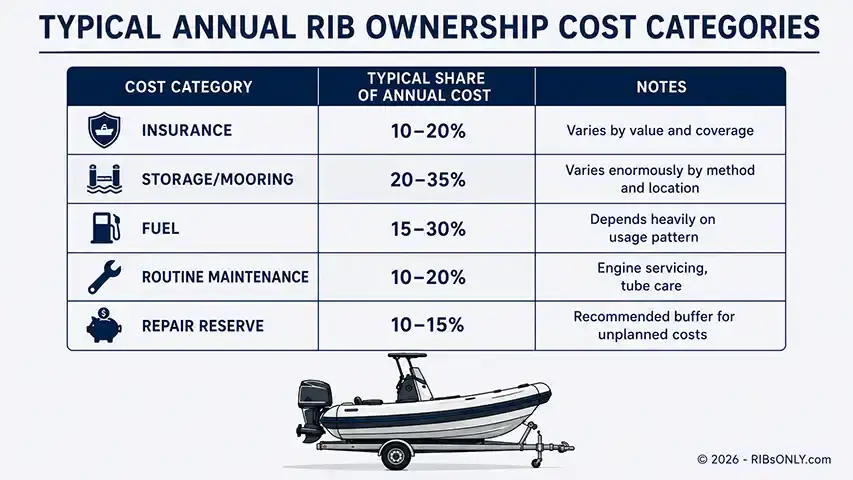
Our guide RIB Ownership Costs explains how consistent maintenance genuinely reduces total long-term ownership expense.
Before Every Outing
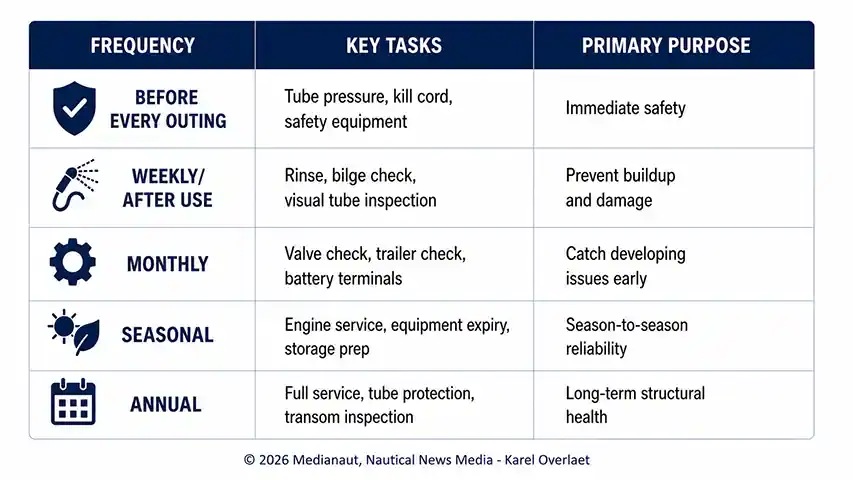
Check tube pressure visually and by hand before launching, since pressure changes with temperature and time.
Confirm the kill cord is present, functional, and worn correctly by the helmsman before getting underway.
Check fuel level, engine oil (if applicable), and that all required safety equipment is aboard and accessible.
Our guide Essential Safety Equipment for a RIB covers what should be checked and present before every trip.
Weekly or After Each Use
Rinse the boat with fresh water after saltwater use, paying particular attention to fittings and metal hardware.
Check the bilge for water accumulation and confirm the bilge pump is functioning correctly.
Inspect tubes visually for any new damage, abrasion, or signs of chafing against the trailer or dock.
Monthly Checks
Inspect tube valves for proper sealing and check overall tube pressure more thoroughly than a quick pre-launch check.
Check trailer tyres, lights, and coupling if the boat is regularly trailered between outings.
Our guide How to Trailer a RIB Safely covers trailer-specific maintenance in more detail.
Inspect battery terminals and connections for corrosion, particularly important during heavier-use periods.
Seasonal Maintenance (Start and End of Season)
At the start of the season, perform a full engine service or confirm recent servicing before returning to regular use.
Check all safety equipment expiry dates: flares, fire extinguisher pressure, and lifejacket inflation mechanisms.
Our guide Essential Safety Equipment for a RIB covers equipment-specific check frequencies in more detail.
At the end of the season, prepare the boat for storage, addressing any issues noticed during the year before they worsen.
Our guide RIB Winter Storage Guide covers the specific steps involved in proper seasonal lay-up.
Annual Maintenance Tasks
Schedule a full engine service annually, or based on running hours, whichever comes first according to manufacturer recommendations.
Our guide How to Choose an Outboard for a RIB touches on the servicing considerations relevant to different engine types.
Deep-clean and protect tubes with a UV-protectant treatment, extending material life regardless of PVC or Hypalon construction.
Our guide How to Clean and Protect RIB Tubes covers this process in detail.
Inspect the transom thoroughly for any signs of stress, flex, or degradation accumulated over the year’s use.
Our guide How to Inspect a RIB Transom covers this inspection process step by step.
Multi-Year Maintenance Considerations
Every few years, consider a more thorough tube inspection, checking seams, valves, and overall material condition closely.
Our guide Common RIB Tube Problems and Repairs covers issues that typically develop over several years of use.
Battery replacement, trailer bearing service, and steering system inspection are typically needed on a multi-year, rather than annual, cycle.
Building Your Own Maintenance Log
Keep a simple log of completed maintenance, dates, and any issues noticed, useful for both planning and resale value.
A documented maintenance history is a genuine selling point when the time eventually comes to sell the boat.
Making Maintenance a Habit, Not an Afterthought
Build these checks into your normal boating routine rather than treating them as separate, easily postponed chores.
Consistent, modest maintenance effort over time produces meaningfully better outcomes than sporadic, reactive attention.
Our RIB Ownership Costs guide explains how this consistency translates into genuine long-term savings.
Frequently Asked Questions
How often should I service my RIB’s engine?
Follow manufacturer recommendations, typically annually or based on running hours, whichever threshold comes first.
Do I need to check tube pressure before every trip?
Yes. Pressure changes with temperature, and a quick check takes only a moment before launching.
What’s the most commonly neglected maintenance task?
Safety equipment expiry dates, particularly flares and fire extinguisher pressure checks, are frequently overlooked.
Does keeping a maintenance log really matter?
Yes. It helps you stay consistent and adds genuine value when you eventually decide to sell the boat.
Related reading: What Is a Rigid Inflatable Boat? · RIB Winter Storage Guide · How to Clean and Protect RIB Tubes · Common RIB Tube Problems and Repairs · RIB Ownership Costs