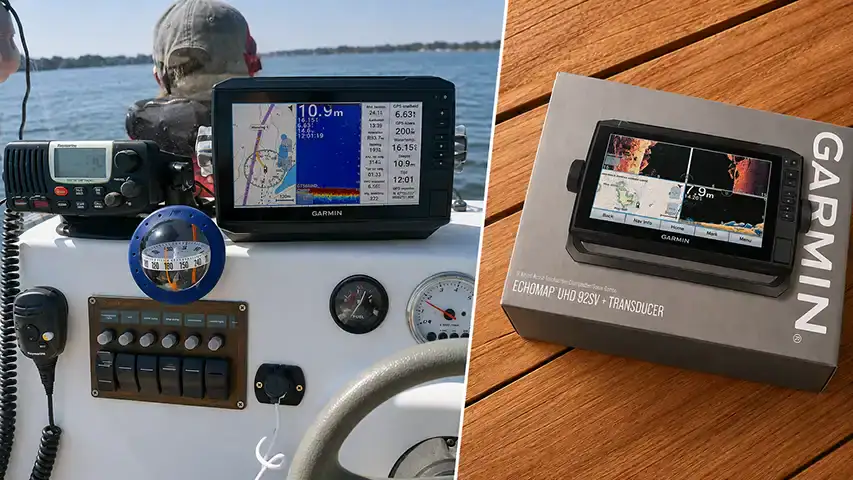
What Electronics Actually Matter for Safe, Confident RIB Operation
Modern RIB electronics range from simple, essential safety tools to elaborate multifunction systems rivaling small ships.
Understanding what’s genuinely useful versus what’s optional helps you spend wisely and avoid unnecessary complexity.
This guide covers the core navigation and electronics categories relevant to most RIB owners, regardless of budget.
Always keep paper charts of your cruising area on board as a backup. They don’t rely on battery power.
Core Navigation Electronics
A GPS chartplotter is the backbone of modern marine navigation, showing position, charts, and route information in real time. Standalone handheld GPS units offer a useful, portable backup if the primary fixed system fails or loses power.
A magnetic compass remains valuable as a fully independent backup that requires no power source whatsoever.
Our guide Essential Safety Equipment for a RIB covers how navigation equipment fits into broader safety planning.
Depth Sounders and Fish Finders
A depth sounder alerts you to shallow water before it becomes a grounding risk, particularly valuable in unfamiliar areas. Combined fish finder and depth sounder units serve double duty for anglers, showing bottom structure alongside depth data.
For RIBs operating in variable or poorly charted water, a depth sounder is a genuinely practical safety tool.
VHF Radio and Communication
A fixed-mount VHF radio with DSC (Digital Selective Calling) capability is the primary communication tool for emergencies at sea. DSC allows one-touch distress alerts that transmit your exact position to rescue services automatically.
Handheld VHF units serve as useful backups, particularly if the fixed unit loses power or is damaged.
Our guide Essential Safety Equipment for a RIB explains why VHF radio outperforms mobile phones for offshore communication.
AIS: Automatic Identification System
AIS transceivers show nearby vessel traffic and broadcast your own position to other AIS-equipped boats and shore stations. This significantly improves situational awareness in busy shipping lanes, poor visibility, or crowded coastal water.
Receive-only AIS units are cheaper and show traffic without broadcasting your position, a reasonable compromise for many leisure boaters. Transmitting AIS is increasingly valuable for larger or more frequently offshore RIBs, improving your visibility to other vessels.
Multifunction Displays
Multifunction displays (MFDs) combine chartplotter, radar, depth, and engine data into a single integrated screen. This reduces console clutter and allows quick cross-referencing between different data sources during operation.
The trade-off is added cost and complexity; a single failed display can take multiple functions offline simultaneously. For simpler boating needs, separate standalone units can offer more redundancy at a lower combined cost.
Radar for RIBs
Radar remains less common on smaller RIBs but becomes valuable for boats regularly operating in fog or poor visibility. It allows detection of other vessels, landmasses, and weather systems well beyond visual range.
Radar adds meaningful cost and power draw, generally justified only for larger RIBs or serious offshore use.
Autopilot Systems
Autopilot systems maintain heading or follow a programmed route, reducing helmsman fatigue on longer passages. This is more common on larger RIBs and commercial applications than on typical leisure day boats.
For short trips and coastal day boating, autopilot is a genuine convenience rather than a necessity.
Power and Redundancy Considerations
Electronics depend entirely on a reliable power supply; a failing battery can take out navigation and communication simultaneously. Consider a dedicated house battery separate from engine starting power, protecting electronics from engine-related power issues.
Our guide RIB Ownership Costs covers how electronics factor into overall running and maintenance budgets.
Building an Electronics Package That Fits Your Use
Start with the essentials: GPS, VHF, and a depth sounder cover the core needs of most RIB owners. Add AIS, radar, or autopilot only if your typical use genuinely justifies the added cost and complexity.
Our RIB Buying Guide: How to Choose the Right Boat covers electronics planning alongside every other major purchase decision.
Frequently Asked Questions
Do I really need a VHF radio if I have a mobile phone?
Yes. VHF DSC works reliably offshore where mobile coverage fails, and it can transmit your exact position instantly.
Is AIS necessary for leisure RIB use?
Not essential, but valuable in busy shipping lanes or poor visibility, improving awareness of nearby vessel traffic.
Should I choose a multifunction display or separate units?
Multifunction displays reduce clutter but concentrate risk. Separate units offer more redundancy at similar combined cost.
Is radar worth it for a leisure RIB?
Usually only if you regularly operate in fog or genuinely poor visibility; otherwise it’s rarely essential.
Related reading: What Is a Rigid Inflatable Boat? · Essential Safety Equipment for a RIB · RIB Console Types and Ergonomics · RIB Ownership Costs · RIB Buying Guide: How to Choose the Right Boat