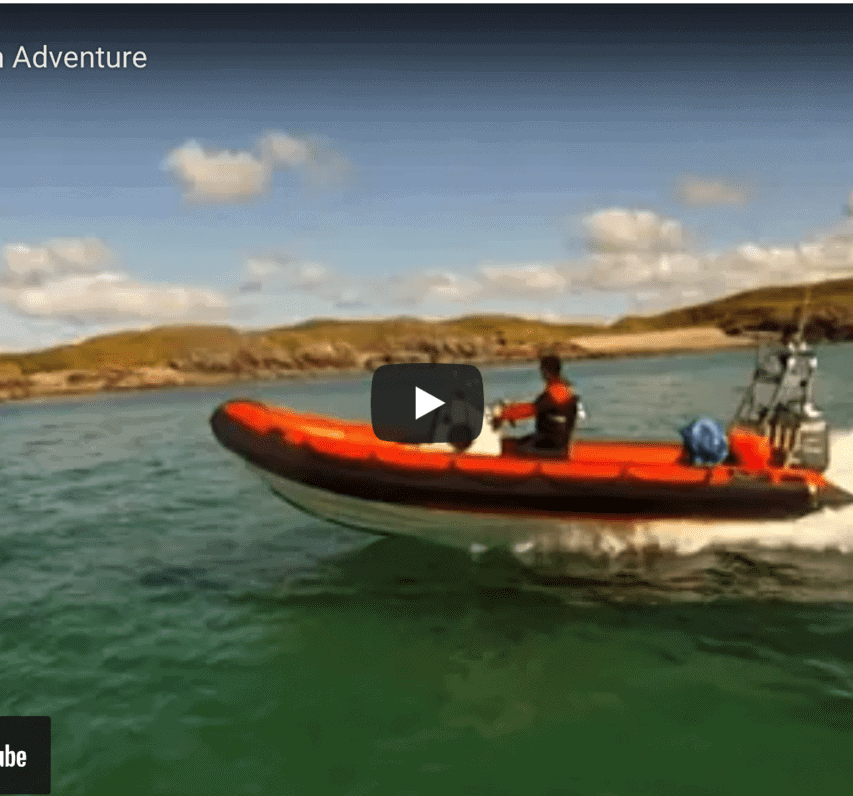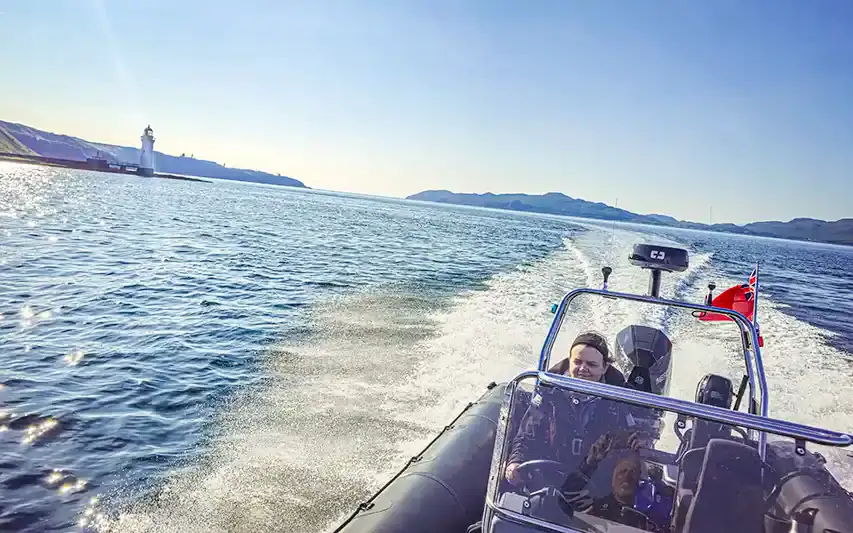
The Lighthouse Adventure
Is there anyone who goes to sea that doesn’t have an appreciation for the form and function of a lighthouse?
Well, I have something of an obsession with them, much to the amusement of my boating friends.
But I can’t help noticing that if I suggest we detour for a look, they don’t put up much of a fight!
So why do they exert such a pull on me?
Apart from their obvious functionality, the lighthouses of Scotland were built at a time of political and social upheaval.
- Scotland and England united.
- Nations became Empire.
- Sail gave way to steam.
- Commerce eclipsed the claymore.
Lighthouses were built not only at the confluence of seas and land, they were also built at the confluence of time and history.
They were hard-headed infrastructure, built because increasing commerce demanded safer seas.
The fact they’re beautiful is almost incidental. Yet two hundred years on, it’s difficult not to see something almost cathedral-like about them.
Built by people who expected their work to outlive them, lighting the darkness for strangers they’d never meet.
An Expedition by RIB:
Scotland’s Great Atlantic Offshore Lighthouses
For me, the holy grails are the great Atlantic, offshore, sea washed lighthouses of Skerryvore, Dubh Artach and Hyskeir, their names evocative of both the Gaelic and Norse influences on these islands and seas.
Reaching them feels less like sightseeing and more like a pilgrimage.
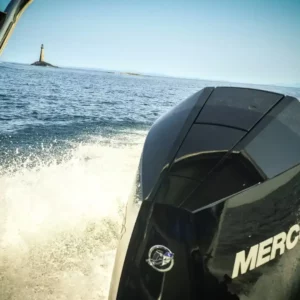
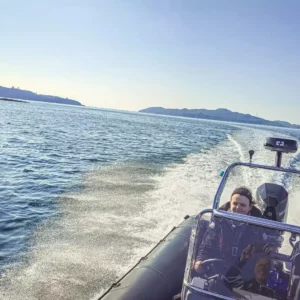
With a rarely benign offshore forecast, we set off from near Oban to make the 57 mile trip to Dubh Artach.
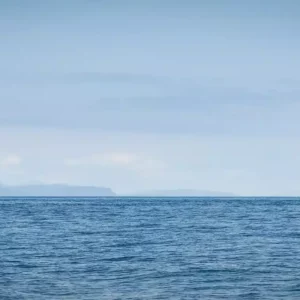
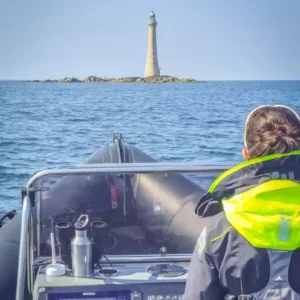
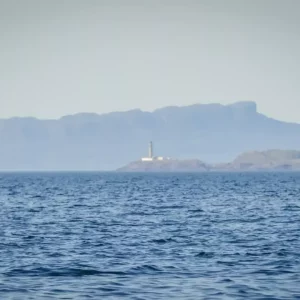
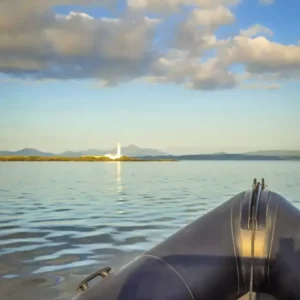
We soon left the familiar shores of Mull behind and headed out into open sea towards a tiny speck on the horizon about 20 NM away.
It was an uneventful run at 26-30 knots, punctuated only by the occasional fishing boat and sail on the horizon.
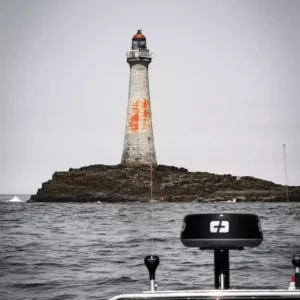
We were pleased to be able to pick up the light by radar at around 10 NM, not bad on a RIB A-frame although it was intermittent as we rode the large rolling swell.
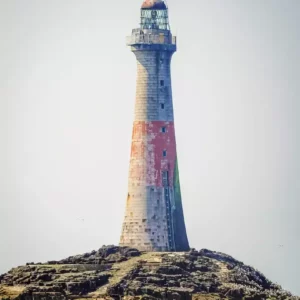
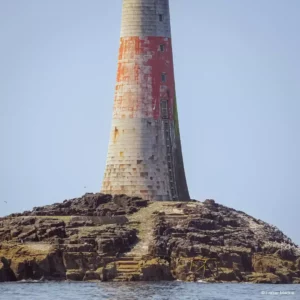
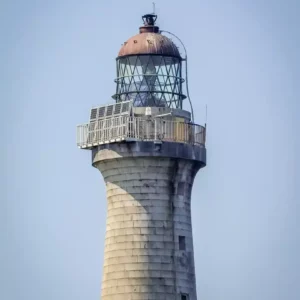
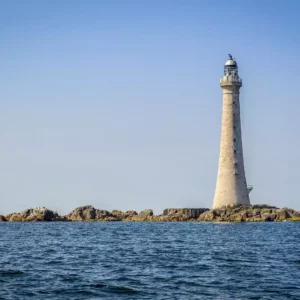
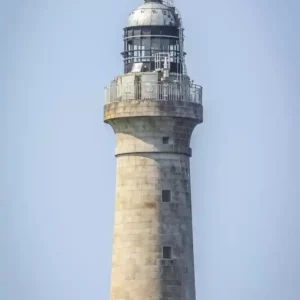
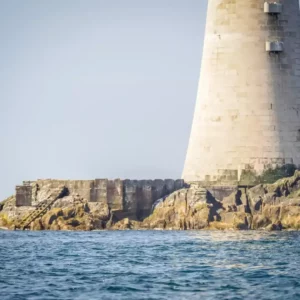
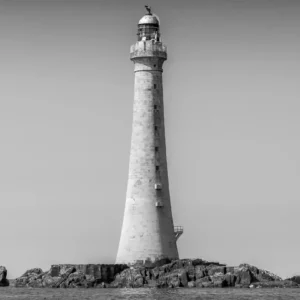
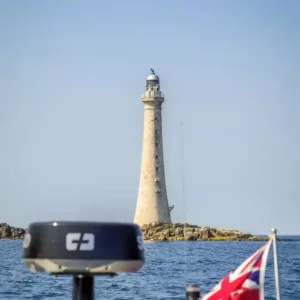
Dubh Artach: The Only Thing Further West is Canada
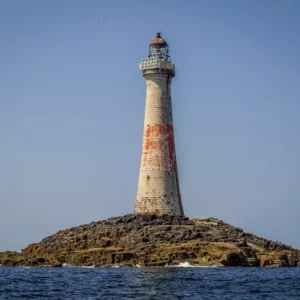
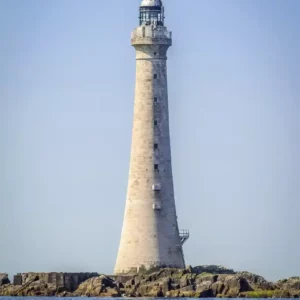
Built between 1867 and 1872 by Thomas Stevenson, it stands 44 m high.
Perched on the only skerry that sits above the high water line of a 3 mile reef system, 15 miles from the nearest land, it lies “between” Islay and Tiree.
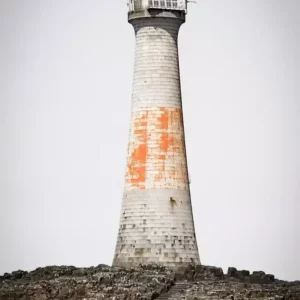
For many years it was painted with a red band to distinguish it from Skerryvore.
With modern navigation making such mistakes unlikely, it’s now being allowed to weather back to natural stone.
Another point of interest for the mariner is that the door is 18m above high water springs. It seems unnecessarily high until you discover that breaking waves of up to 27 metres were recorded by the keepers!
Skerryvore: The Tallest Lighthouse in Scotland
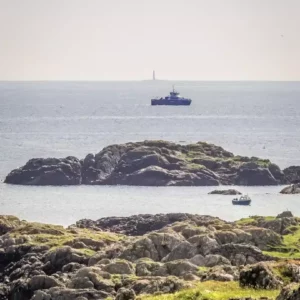
Leaving it behind and with the sea state remaining kind, we headed to Skerryvore, the tallest lighthouse tower in Scotland, 12 miles South of Tiree.
Built between 1838 and 1844 by Alan Stevenson*, it stands 48 m high.
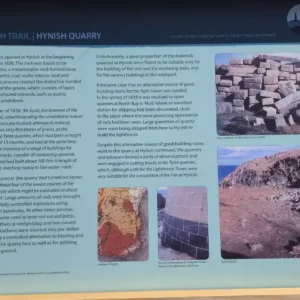
Like Dubh Artach, the granite came from the Ross of Mull, transported to the reef whenever the Atlantic gales allowed.
Like Dubh Artach, it stands on an isolated skerry on the edge of a huge reef.
The engineering of the lighthouse itself is remarkable enough, but the logistics are just as impressive.
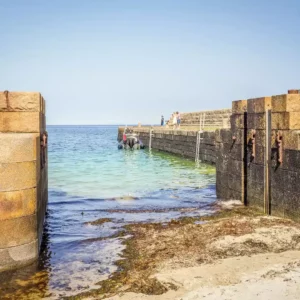
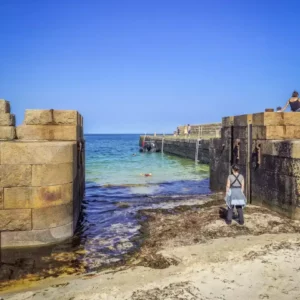
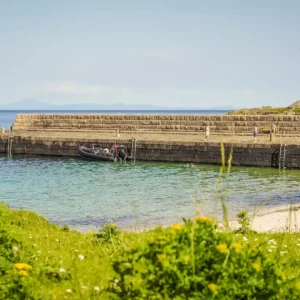
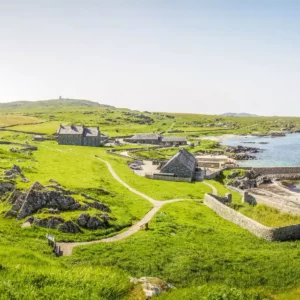
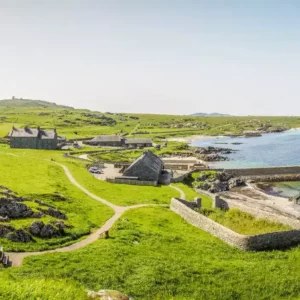
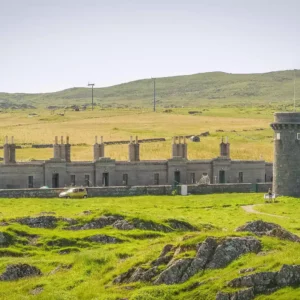
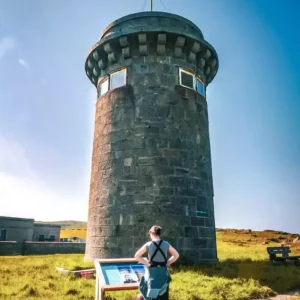
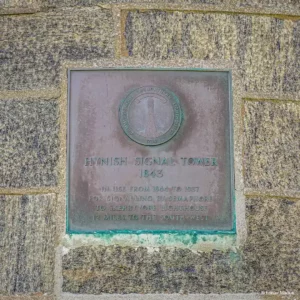
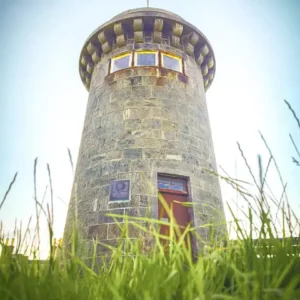
The Northern Lighthouse Board created a complete construction base at Hynish, with a pier, workshops, barracks, signalling tower and keepers’ cottages all to support the building of a lighthouse twelve miles offshore.
* Alan Stevenson’s own account of building Skerryvore is available from the Northern Lighthouse Board archives and is highly recommended.
Hynish: The Forgotten Logistics Hub of the Skerryvore Project
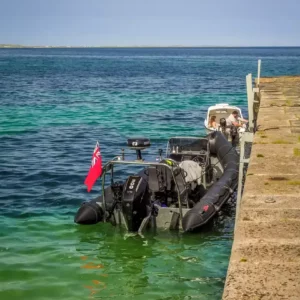
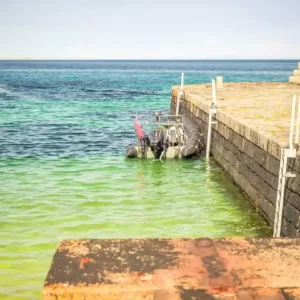
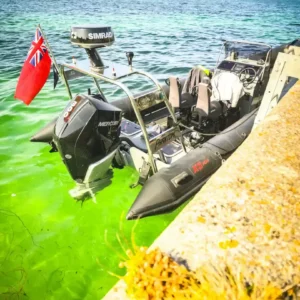
After Skerryvore we landed at Hynish itself, on the original pier, to explore what we thought would be remains of the enterprise.
However, the site is in pristine condition with all the buildings still in use. It’s a testament to the builders and craftsmen, that their work lives on nearly 200 years later.
The huge coal store that serviced the blacksmiths, the fires in the barracks and the steamers that towed the blocks from Mull then to Skerryvore has a human story behind it.
Local tradition has it that all the peat on the island had been burned in the making of whisky, so the walls are high and thick with a stout gate to keep the impoverished locals from stealing!
The Way Home: Mull the Long Way Round
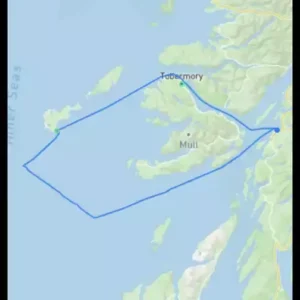
With work calling the following morning, we pointed the RIB back towards Oban. But we still had time to complete the full circumnavigation of Mull.
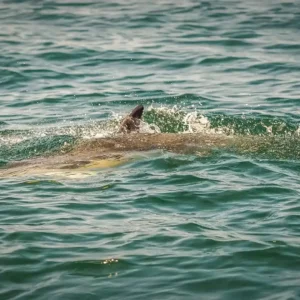
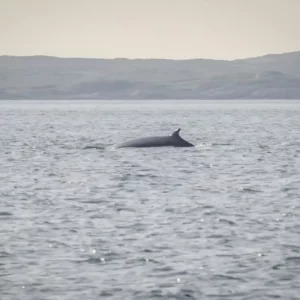
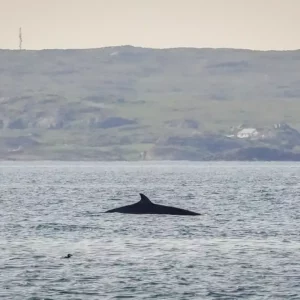
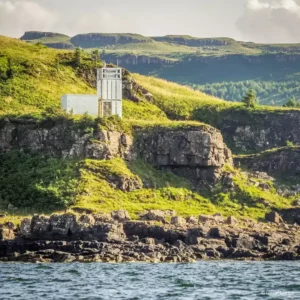
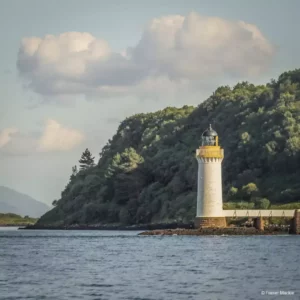
Passing another 3 familiar Stevenson Lighthouses on the way: Ardnamurchan, Rubha nan Gall (Tobermory) and Lismore, with stops to watch Minke whales and Common Dolphins feeding, and dinner in a packed Tobermory, we rounded off a memorable day of 135 NM at sea (14 hours door to door).
Reflections
Like the rocks they’re built from, lighthouses have outlived the world that created them.
But I doubt there’s a sailor alive who doesn’t find a lighthouse’s solid presence reassuring.
There is something comforting about granite rather than electrons, about an aid to navigation that simply stands there, year after year, part of the landscape.
And even better, they don’t need software updates.
Built because a growing nation decided that trade, communication and the lives of complete strangers were worth protecting, they mark the point where commerce, engineering excellence and public service came together on some of the most inhospitable rocks in Britain.
If you look closely enough, every lighthouse is part of a story, and the sea is how we get there.
Read more of my articles here on RIBsONLY.com.