How Electric Propulsion is Changing and Currently Limiting RIB Design
Electric propulsion has moved from niche experiment to genuine product category across the boating industry.
RIBs are no exception, with several manufacturers now offering electric or electric-assisted models for leisure and light commercial use.
This guide explains how electric RIB technology actually works, what it does well, and where it currently falls short.
What Makes a RIB “Electric”
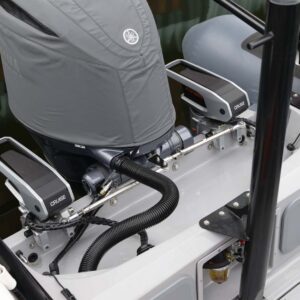
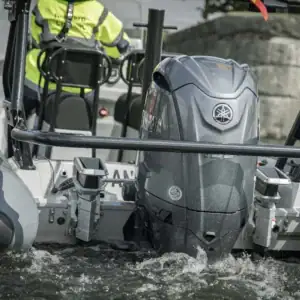
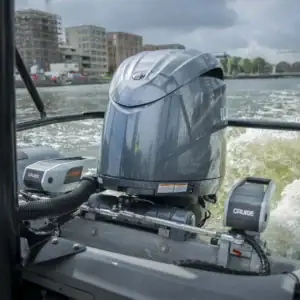
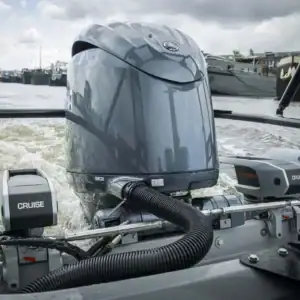
An electric RIB replaces the combustion outboard or inboard with an electric motor powered by an onboard battery pack. Some designs use a dedicated electric outboard, visually similar to a conventional outboard but without fuel or exhaust systems.
Others integrate the motor and battery more deeply into the hull, prioritising weight distribution and hydrodynamics over modularity.
Hybrid systems, covered separately in our guide Hybrid RIBs Explained, combine electric and combustion power rather than replacing one with the other.
How Electric Outboard Motors Work
Electric outboards use a battery pack to power an electric motor connected directly or via a gearbox to the propeller. They offer instant torque, smooth and quiet operation, and none of the vibration typical of combustion outboards.
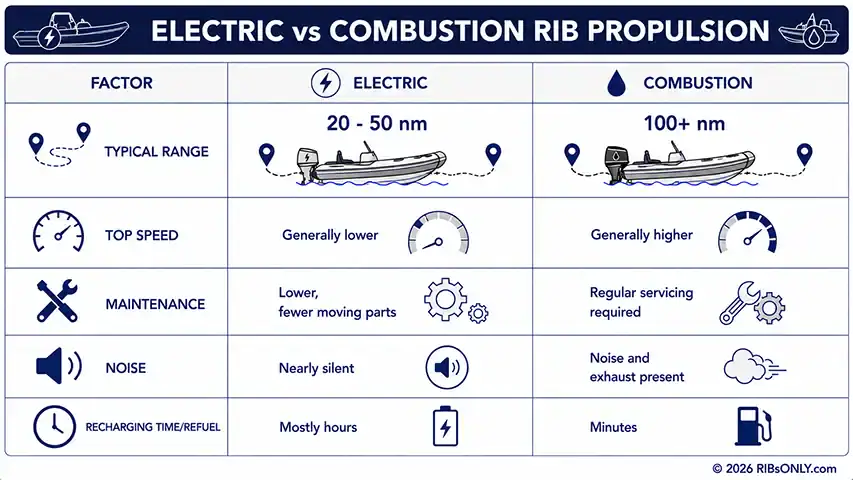
There’s no idling, no warm-up period, and no exhaust fumes, which meaningfully changes the on-water experience. Maintenance is generally simpler too, since electric motors have far fewer moving parts than combustion equivalents.
Range and Battery Limitations
Battery energy density remains the single biggest constraint on electric RIB performance and practicality today.
Most electric RIBs offer a realistic range of 20 to 50 nautical miles at moderate cruising speed.
Range drops significantly at higher speeds, since power draw increases sharply once the boat exceeds efficient cruising speed. This makes electric RIBs currently better suited to short trips, harbour use, and calm inland water than long passages.
Our guide RIB Fuel Consumption Explained explains how combustion engines compare on range and efficiency for context.
Weight and Balance Considerations
Battery packs are heavy, and that weight is typically concentrated low and aft, near the transom. This can meaningfully affect trim, handling, and stability compared with a lighter combustion outboard of similar power.
Manufacturers designing electric RIBs from the ground up can better manage this weight distribution than simple outboard conversions.
Retrofitting an existing hull with electric propulsion often produces worse handling than a boat designed specifically around it.
Performance Compared to Combustion Engines
Top speed for most electric RIBs currently trails comparable combustion-powered boats, particularly at the larger end of the size range. Acceleration is often excellent thanks to instant electric torque, even where top speed remains modest.
For displacement or low-speed cruising, electric propulsion performs very competitively against combustion alternatives.
For high-speed offshore use, combustion engines still hold a clear performance advantage as of today’s technology.
Charging Infrastructure Challenges
Marina charging infrastructure remains limited and inconsistent across regions, unlike the widespread availability of fuel docks.
Charging times vary considerably, from under an hour for fast charging to several hours for standard charging setups.
This makes trip planning more important for electric RIB owners than it typically is for combustion boat owners.
Owners without home or marina charging access may find electric ownership significantly less practical in daily use.
Where Electric RIBs Make Sense Today
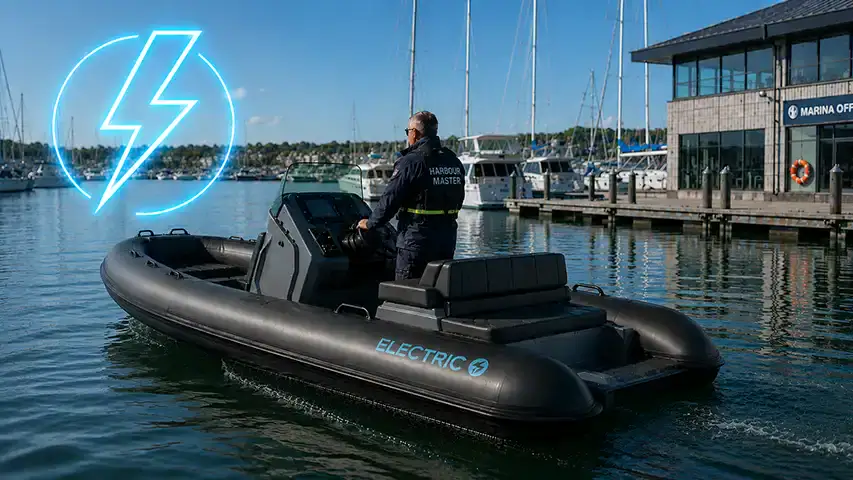
Sheltered harbours, marine reserves with combustion restrictions, and short-range leisure use suit current electric RIB technology well. Quiet operation makes electric RIBs particularly appealing for wildlife watching, diving support, and noise-sensitive environments.
Commercial applications like harbour patrol or short-range tender work are also emerging use cases for electric propulsion. Long-range cruising, offshore passages, and high-speed leisure use remain better served by combustion or hybrid systems for now.
Previously we have published an opinion article (2023) on electric propulsion for Rigid Inflatable Boats (RIBs): Why an Electric Outboard Is Not the Better Choice Now.
Is an Electric RIB Right for You?
Choose electric if your use case involves short trips, sheltered water, and access to reliable charging infrastructure.
Choose combustion or hybrid if you need long range, high speed, or operate where charging access is limited.
Electric RIB technology is improving quickly, and today’s limitations will likely narrow considerably over the coming years.
Our RIB Buying Guide: How to Choose the Right Boat covers propulsion choice alongside every other major buying factor.
Frequently Asked Questions
How far can an electric RIB travel on one charge?
Most currently offer 20 to 50 nautical miles at moderate cruising speed, with range dropping at higher speeds.
Are electric RIBs as fast as combustion RIBs?
Generally not yet, particularly for larger boats, though acceleration from a standstill is often very competitive.
Is electric RIB maintenance really lower?
Yes. Electric motors have far fewer moving parts than combustion outboards, reducing routine servicing needs considerably.
Can I convert my existing RIB to electric power?
Technically often possible, but weight distribution and range limitations usually favour purpose-built electric hulls over conversions.
Where can I watch videos of electric-powered RIBs?
Explore our collection of videos and articles covering everything you need to know about electric-powered Rigid Inflatable Boats (RIBs), from real-world performance and range to technology, charging, and onboard experience.
Related reading: What Is a Rigid Inflatable Boat? · Hybrid RIBs Explained · RIB Fuel Consumption Explained · How to Choose an Outboard for a RIB · RIB Buying Guide: How to Choose the Right Boat · Why an Electric Outboard Is Not the Better Choice Now Electric-powered Rigid Inflatable Boats