The People and Institutions Credited With Creating the Modern RIB
The question of who invented the RIB doesn’t have a single, simple answer, but several names and institutions stand out clearly. So it’s not very clear who invented the RIB.
Innovation rarely happens in isolation, and the RIB’s development involved contributions from multiple people over several years.
This guide covers the individuals and institutions most widely credited with creating and popularising the modern RIB.
Facts about who invented the Rigid Inflatable Boat (RIB).
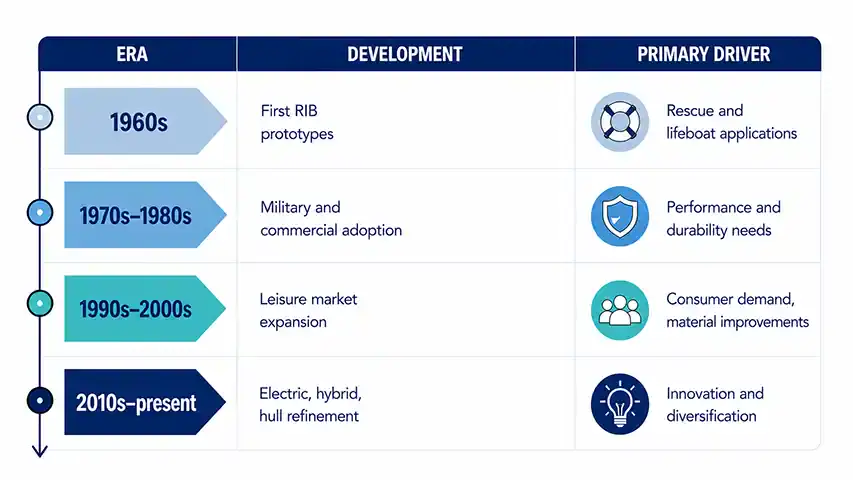
The UK Origins of the RIB Concept
Most historical accounts trace the RIB’s origins to the United Kingdom during the 1960s, particularly around university and rescue circles.
Atlantic College in Wales is frequently credited as a key site of early RIB development, driven by lifeboat crew needs.
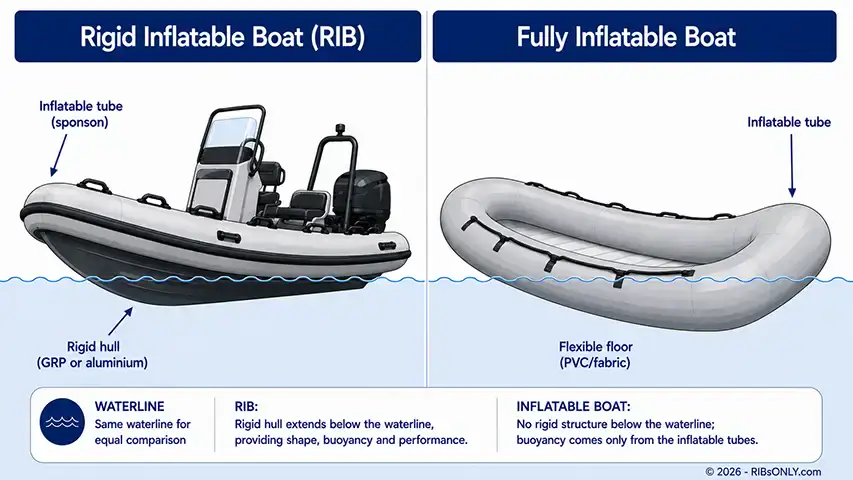
Students and instructors at the college worked on combining a rigid hull with inflatable tubes to improve rescue boat performance.
Our guide History of the Rigid Inflatable Boat covers the broader historical context surrounding these early developments.
Key Individuals Credited with Early Development
Several individuals associated with Atlantic College and the UK lifeboat community are credited with pioneering early RIB designs.
Their work focused on practical rescue requirements: launching quickly through surf, remaining stable, and resisting swamping in rough seas.
This collaborative, problem-driven approach shaped the RIB’s fundamental design philosophy from its earliest development stages.
Documentation from this era is limited, and precise individual credit is sometimes debated among maritime historians.
The Role of the RNLI and Lifeboat Institutions
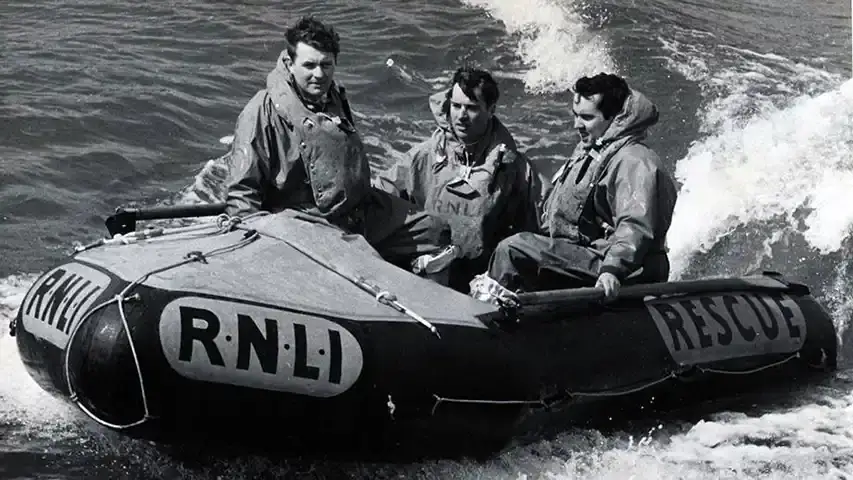
The Royal National Lifeboat Institution (RNLI) played a significant role in adopting and refining early RIB designs for operational rescue use. Their operational feedback helped refine hull shape, tube construction, and overall durability under genuinely demanding rescue conditions.
This institutional involvement helped transform an experimental concept into a proven, operationally reliable rescue boat design.
Our guide Professional and Rescue RIBs Explained explains how this rescue heritage continues to shape professional RIB standards today.
Early Manufacturers and Commercialisation
Following successful rescue adoption, several UK-based manufacturers began commercialising RIB designs for broader military and commercial markets.
These early manufacturers played a crucial role in scaling up production and refining manufacturing techniques for wider distribution.
Their work helped establish many of the construction conventions still used across the RIB industry today.
Why Attribution Remains Somewhat Debated
Unlike some inventions with a single clear inventor, the RIB emerged from collaborative, iterative development across several contributors.
Multiple individuals and institutions contributed meaningfully at different stages, making a single “inventor” designation somewhat imprecise.
This collaborative origin story is, in some ways, fitting for a boat type built around combining two previously separate technologies.
The RIB’s Journey from Invention to Global Standard
What began as a rescue-focused solution to a specific operational problem grew into a globally recognised boating category.
Our guide History of the Rigid Inflatable Boat traces this broader journey from invention through commercial and leisure expansion.
The RIB’s rescue origins remain visible today in the design priorities that still define the category.
Recognising the RIB’s Collaborative Origins
Rather than crediting a single inventor, most historical accounts recognise the RIB as a product of collaborative institutional innovation.
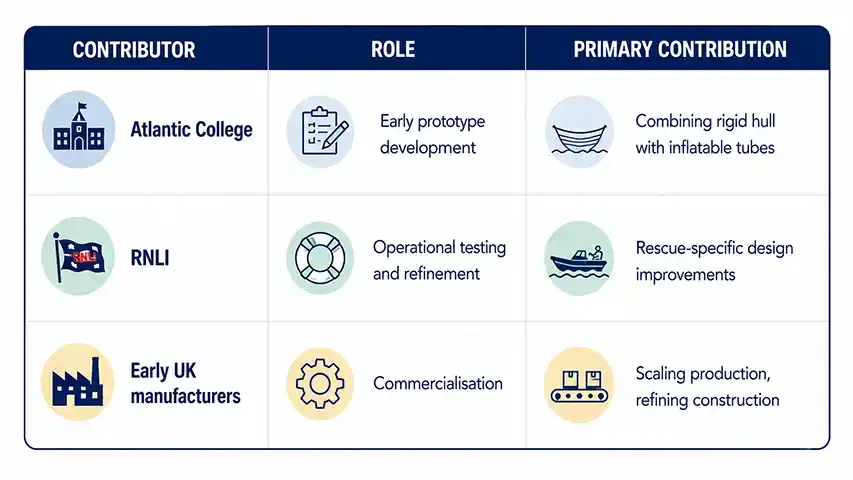
Atlantic College, the RNLI, and early UK manufacturers all played meaningful, interconnected roles in the RIB’s development.
This context helps explain why UK heritage carries particular weight and credibility within the modern RIB manufacturing industry.
Why This History Still Resonates
The RIB’s origin story reflects genuine problem-solving under real operational pressure, not abstract theoretical design.
This practical, rescue-driven heritage continues to influence how the industry approaches durability and performance today.
Our pillar guide What Is a Rigid Inflatable Boat? covers the fundamentals this collaborative innovation eventually produced.
Frequently Asked Questions
Is there a single person credited with inventing the RIB?
No single individual is universally credited; the RIB emerged from collaborative development at Atlantic College and within UK rescue circles.
What role did Atlantic College play in RIB development?
It’s widely recognised as a key site of early prototype development, driven by lifeboat crew operational needs.
Why is the RNLI significant in RIB history?
Their operational testing and feedback helped refine early RIB designs into a proven, reliable rescue boat format.
When did commercial RIB manufacturing begin?
Following successful rescue adoption, UK-based manufacturers began commercialising RIB designs through the 1970s and beyond.
Related reading: What Is a Rigid Inflatable Boat? · History of the Rigid Inflatable Boat · Professional and Rescue RIBs Explained · Best RIB Brands: How to Evaluate a Manufacturer · RIB Buying Guide: How to Choose the Right Boat