Comparing Propulsion Types for Performance, Safety, and Maintenance
Propulsion type shapes a RIB’s performance, safety profile, and maintenance needs more than many buyers initially realise. The choice between waterjet and propeller drive involves genuine trade-offs, not a simple “better or worse” answer.
This guide compares both systems across the factors that matter most for typical RIB ownership and use.
How Propeller Drive Works
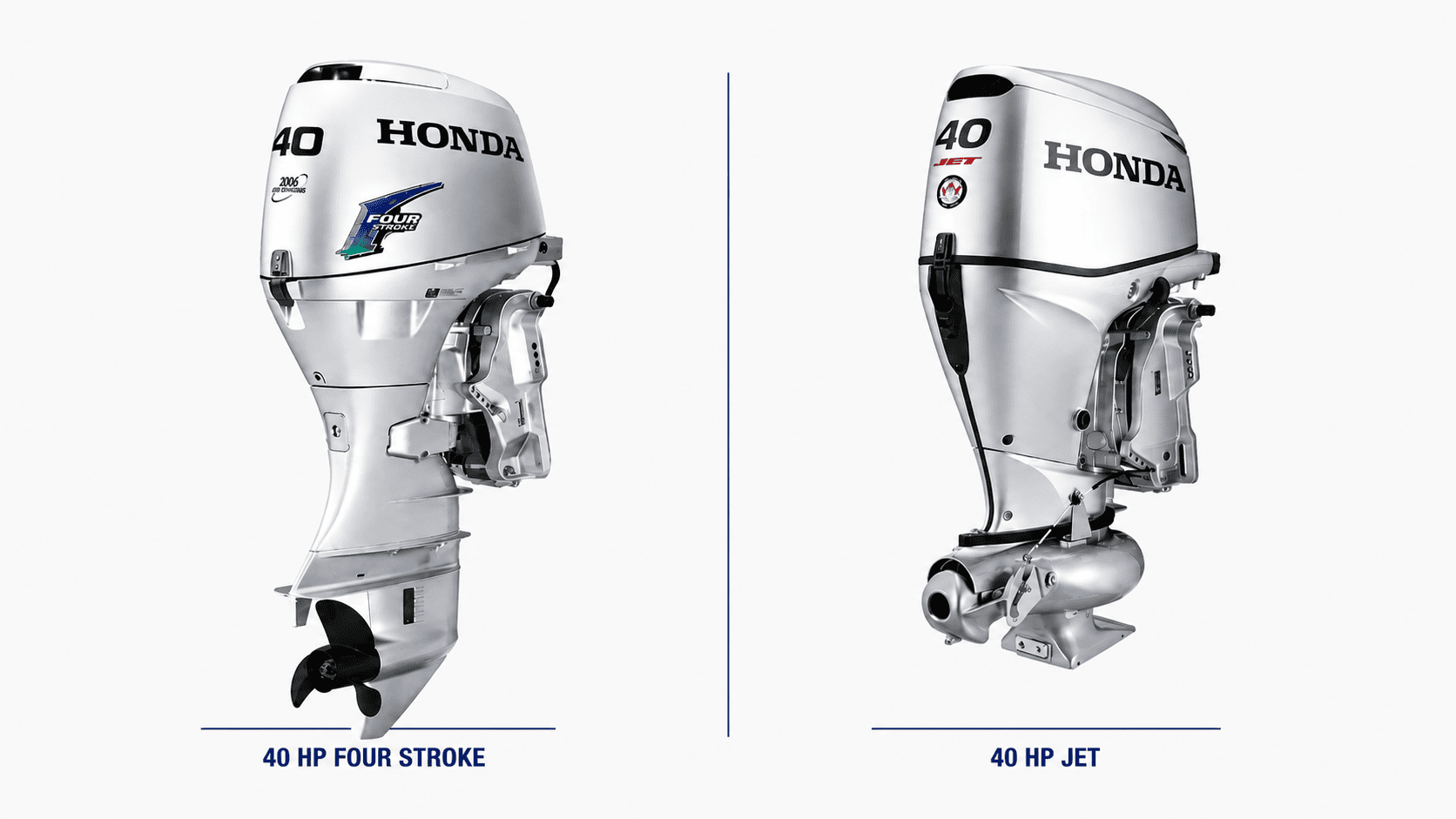
Propeller drive uses a rotating propeller, typically mounted on an outboard or sterndrive, to generate forward thrust. This is the standard propulsion method on the vast majority of leisure and commercial RIBs worldwide.
Propellers are well understood, widely serviceable, and generally more fuel-efficient than waterjets at cruising speed. The propeller itself and the lower unit remain exposed below the hull, vulnerable to grounding or debris strikes.
How Waterjet Drive Works
Waterjet drive pulls water in through an intake beneath the hull and expels it under pressure through a steerable nozzle. There’s no exposed propeller, since the entire mechanism sits within the hull rather than protruding below it.
Steering and reverse are achieved by redirecting the water jet rather than by turning a rudder or lower unit. Waterjets are common on rescue RIBs, shallow-water craft, and boats operating in debris-prone or rocky environments.
Safety Differences Between the Two Systems
Waterjets eliminate the exposed propeller entirely, significantly reducing injury risk to swimmers or crew in the water. This makes waterjets the preferred choice for rescue operations, dive support, and any application involving people in the water.
Propeller drive carries genuine injury risk if someone falls overboard or approaches the boat while the propeller is turning.
Our guide Essential Safety Equipment for a RIB covers broader safety considerations that apply regardless of propulsion type.
Performance Comparison
Propeller drive generally offers better fuel efficiency and acceleration from a standing start than comparable waterjet systems.
Waterjets typically need higher engine power to achieve similar speeds, since jet propulsion is inherently less efficient.
At high speed, waterjets can perform very competitively, particularly in shallow or debris-prone water where propellers are vulnerable.
Handling characteristics differ too; waterjets often feel different at low speed due to reduced low-speed thrust and steering response.
Shallow Water and Grounding Resistance
Waterjets draw significantly less water than propeller drives, since nothing protrudes below the hull.
This makes waterjets far more resistant to damage from grounding, sandbars, or debris strikes in shallow water.
Propeller-driven RIBs risk propeller and lower unit damage in the same conditions that a waterjet would handle safely.
For operation in rivers, shallow estuaries, or rocky coastlines, this durability advantage often outweighs the efficiency trade-off.
Maintenance Differences
Propeller drive is simpler mechanically and generally cheaper and easier to service, given widespread technician familiarity.
Waterjets require specialised knowledge for servicing, and impeller wear or intake blockages need specific diagnostic attention.
Parts availability for propeller systems is typically better, particularly for common outboard brands and models. Waterjet servicing costs are often higher, reflecting the more specialised nature of the mechanism.
Which Propulsion Type Should You Choose?
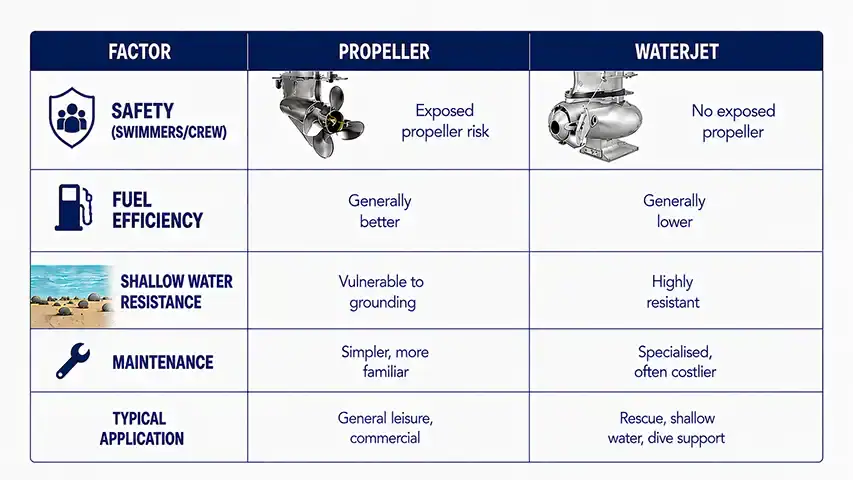
Choose propeller drive for general leisure and commercial use where efficiency and simple maintenance matter most.
Choose waterjet drive if you operate in shallow water, around swimmers, or in debris-prone environments regularly.
Our guide Professional and Rescue RIBs Explained explains why waterjets remain common in rescue and shallow-water applications.
Our RIB Buying Guide: How to Choose the Right Boat covers propulsion choice alongside every other major purchase factor.
Frequently Asked Questions
Is a waterjet safer than a propeller?
Yes, significantly, since there’s no exposed propeller to injure swimmers or crew in the water.
Are waterjets less fuel-efficient than propellers?
Generally yes, since jet propulsion typically requires more power to achieve comparable speeds to a propeller.
Can waterjet RIBs operate in shallow water safely?
Yes, this is one of their main advantages, since nothing protrudes below the hull to strike bottom.
Is waterjet maintenance more expensive?
Often yes, reflecting the specialised knowledge and parts required compared with widely serviced propeller systems.
Related reading: What Is a Rigid Inflatable Boat? · Essential Safety Equipment for a RIB · Professional and Rescue RIBs Explained · Single vs Twin Outboards on a RIB · RIB Buying Guide: How to Choose the Right Boat