Types Explained
At first glance, a RIB and a fully inflatable boat can look almost identical.
Both have air-filled tubes around the sides. Both feel soft to the touch when you step aboard.
The similarity ends there.
Underneath the tubes, these are fundamentally different vessels, built for different purposes, at different price points and performance levels.
The Core Difference: What’s Under the Tubes
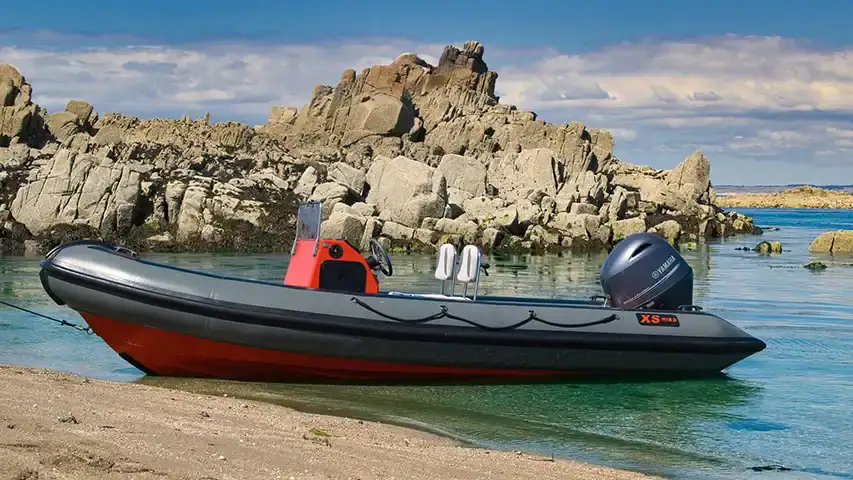
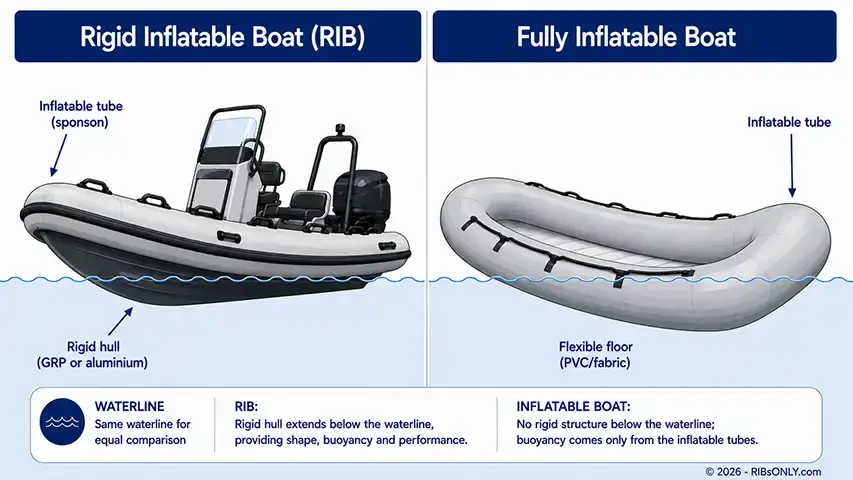
A RIB (Rigid Inflatable Boat) has a solid hull beneath its tubes, typically made from GRP or aluminium.
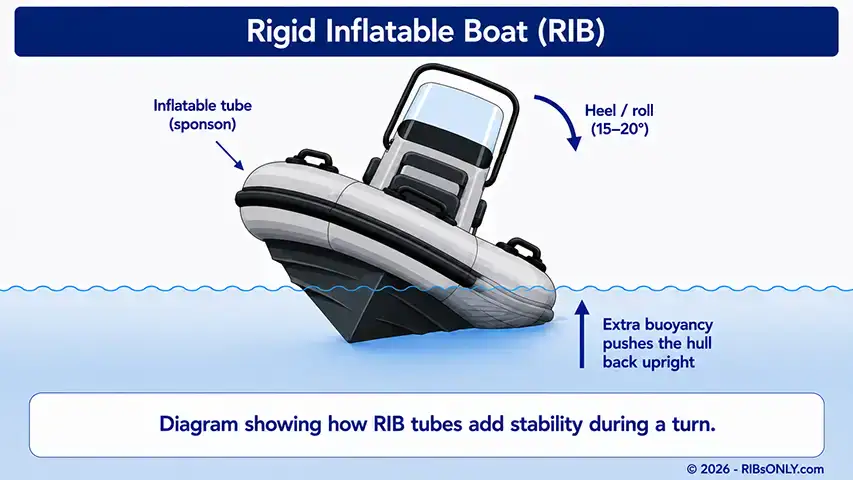
This hull provides the structural strength to plane at speed and hold a straight course in rough water.
A fully inflatable boat has no rigid hull at all.
Its floor is flexible, often made from the same PVC or rubberised fabric as the tubes, sometimes reinforced with a slatted or air-floor system for rigidity underfoot.
This single structural difference explains almost everything else that separates the two boat types.
Performance: Speed, Handling and Sea-Keeping
A RIB’s rigid hull lets it plane, meaning it lifts and rides on top of the water at speed rather than pushing through it.
This dramatically increases achievable speed and improves handling in a chop.
A fully inflatable boat, lacking that rigid structure, generally stays at lower speeds and performs best in calm, sheltered water.
It simply isn’t built to punch through waves the way a RIB can.
Our full technical breakdown of hull performance lives in How Does a RIB Work?, which explains planing behaviour in more depth.
Weight, Portability and Storage
Inflatable boats win decisively here.
They deflate, fold and pack into a bag small enough for a car boot or even a large backpack. Setup takes minutes, and storage requires almost no space at all.
RIBs cannot deflate or fold. They need a trailer, a berth or dry storage, and take up permanent, fixed space.
Engine Power and Capability
Because a RIB’s hull can handle much greater stress, it also accommodates far larger outboard engines.
A small RIB might run a 15 – 40 hp outboard; larger leisure RIBs commonly carry 100 – 300 hp or more.
The other ones are generally limited to smaller outboards, often under 15 hp – or even none at all – simply because the flexible structure cannot handle greater thrust safely.
Price and Typical Use Cases
Inflatable boats are considerably cheaper, making them popular as dinghies, small tenders or occasional-use leisure craft for calm water.
RIBs cost more to buy and maintain, but deliver genuine performance: faster cruising speeds, better rough-water behaviour and the ability to serve as a primary boat, not just a tender.
Rescue services, dive operators and serious leisure boaters choose RIBs precisely because a fully inflatable boat can’t meet their performance demands.
Durability and Lifespan
A RIB’s rigid hull typically outlasts an inflatable boat’s flexible floor by a wide margin, often decades versus several years of regular use.
Tubes on both boat types face similar UV and wear factors, covered in detail in PVC vs Hypalon/CSM RIB Tubes, but the RIB’s hull adds structural longevity an inflatable boat cannot match.
Which One Should You Choose?
Choose a fully inflatable boat if portability, low cost and occasional calm-water use matter most.
Choose a RIB if you want genuine performance, rough-water capability, and a boat that can serve as your primary vessel for years.
Our complete RIB Buying Guide walks through this decision in more detail, alongside sizing and budget considerations.
Frequently Asked Questions
Can an inflatable boat be upgraded into a RIB?
No. The rigid hull is a fundamental part of a RIB’s construction from the build stage, not an add-on.
Are RIBs harder to maintain than inflatable boats?
Not necessarily harder, but different. RIBs require hull and tube maintenance; inflatable boats require only fabric and floor-system care.
Is a RIB safer than a fully inflatable boat?
Generally yes, in open or rough water, thanks to the rigid hull’s stability and performance. See our full breakdown in Are Rigid Inflatable Boats Safe?.
Related reading: What Is a Rigid Inflatable Boat? · What Does RIB Stand For? · How Does a RIB Work? · RIB Tube Cleaning: How to Clean and Protect Your Tubes