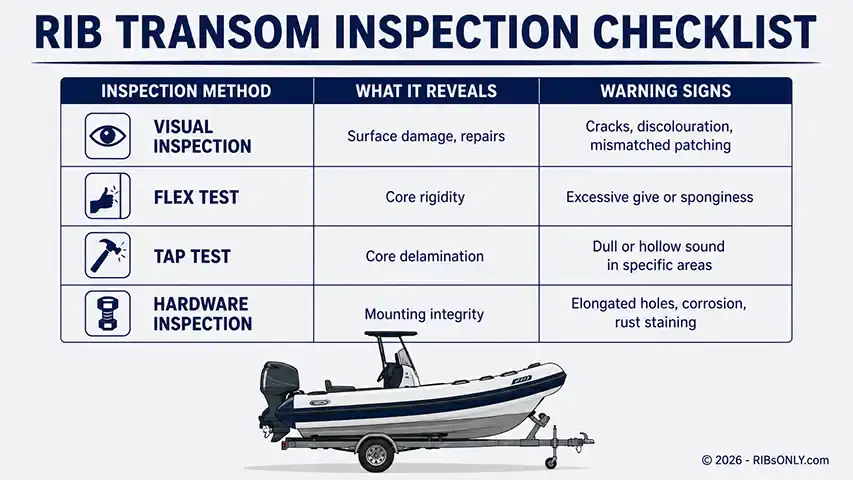
Why the Transom Deserves Special Attention During Any Used RIB Inspection
The transom carries the full load and vibration of the engine, making it one of the most stressed structural areas on any RIB. Transom failure or weakness is a serious, sometimes expensive problem, and it’s not always obvious on a casual look.
This guide explains what to check, how to check it, and what specific signs indicate a genuine concern.
Why the Transom Matters So Much
The transom bears constant vibration, thrust load, and torque from the engine every time the boat is underway. Over years of use, this stress can weaken the surrounding structure, particularly on older or poorly maintained hulls.
A compromised transom affects engine mounting security, hull integrity, and ultimately the safety of everyone aboard.
Our guide Buying a Used RIB: Complete Inspection Guide covers the transom alongside every other area worth checking before purchase.
Visual Inspection: What to Look For
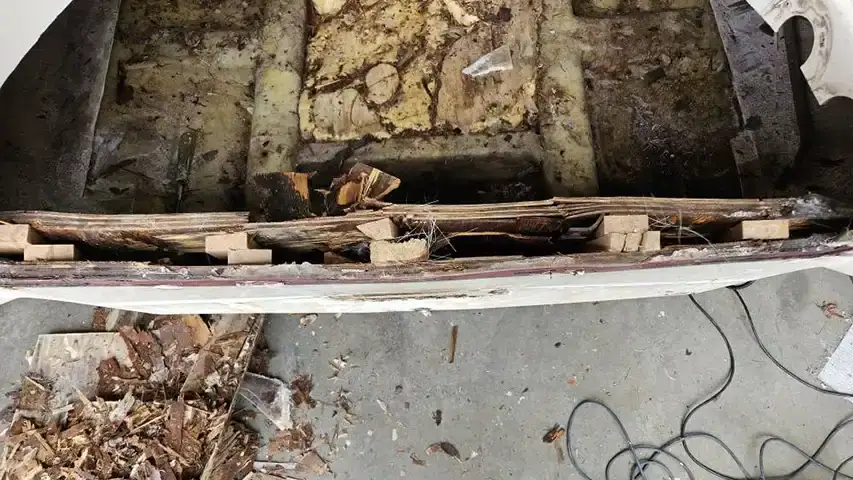
Start by examining the transom surface for cracks, particularly radiating outward from engine mounting bolt holes. Discolouration or staining around the transom can indicate water intrusion into the underlying core material.
Check for any signs of previous repair work, such as mismatched gelcoat, filler, or visible patching. Compare both sides of the transom, inside and outside the hull, since damage isn’t always visible from one angle alone.
The Flex Test
With the engine removed or unloaded, gently press and flex the transom by hand near the mounting area. Excessive give, sponginess, or flex suggests core material degradation, a genuine structural concern worth further investigation.
A solid, rigid transom should show minimal to no perceptible movement under moderate hand pressure. This test works on both fibreglass and aluminium transoms, though the expected feel differs slightly between materials.
The Tap Test for Core Degradation
Tapping the transom surface with a small hard object, like a coin or plastic mallet, reveals core condition through sound. A solid, healthy transom produces a consistent, sharp sound across its entire surface.
A dull, hollow, or noticeably different sound in a specific area suggests possible water intrusion or core delamination there. This test requires some practice to interpret confidently; professional surveyors use it as a standard diagnostic technique.
Checking Mounting Bolts and Hardware
Inspect engine mounting bolts for corrosion, elongation of bolt holes, or signs of previous movement under load. Elongated or oversized bolt holes suggest the transom has experienced significant stress or repeated loosening over time.
Stainless steel hardware in poor condition, with visible rust staining, may indicate galvanic corrosion issues worth investigating further.
Checking for Previous Repairs
Ask directly whether the transom has ever been repaired, and request documentation or receipts if repairs were carried out. Quality transom repairs, properly executed, can restore full structural integrity, but poor repairs often fail again over time.
A professional marine surveyor can assess whether a repair was carried out to an appropriate standard.
Our guide How to Test a Used Outboard covers engine-specific checks that complement a thorough transom inspection.
Aluminium vs Fibreglass Transom Considerations
Aluminium transoms are less prone to the water-intrusion core degradation common on fibreglass-cored designs. However, aluminium transoms can suffer from corrosion, particularly around dissimilar metal contact points near mounting hardware.
Our guide Aluminium vs Fibreglass RIB explains these material differences in more detail relevant to transom inspection.
Fibreglass transoms with a foam or wood core require closer attention to moisture-related degradation over time.
When to Call in a Professional Surveyor
If any test reveals concerning results, a professional marine surveyor can conduct moisture meter testing for definitive confirmation. Transom repairs, if needed, can be costly, making a thorough pre-purchase inspection a worthwhile investment regardless of boat price.
For higher-value purchases, a professional survey covering the transom and hull is strongly recommended before finalising any deal.
Making an Informed Decision
A solid transom inspection takes only a few minutes but can prevent a costly and potentially unsafe purchase mistake. Combine visual, flex, and tap testing for a reasonably confident assessment before committing to any used RIB.
Our successful Buying a Used RIB: Complete Inspection Guide places transom inspection within the full pre-purchase checklist.
Frequently Asked Questions
Can a damaged transom always be repaired?
Often yes, but quality varies significantly. Poor repairs can fail again, making repair history and quality important to verify.
Is the tap test reliable for spotting core damage?
It’s a useful indicator but requires practice. A professional surveyor’s assessment is more definitive for a significant purchase.
Are aluminium transoms less prone to problems than fibreglass?
They avoid core-related water intrusion but can suffer corrosion, particularly around mounting hardware and dissimilar metal contacts.
Should I hire a surveyor even for a lower-value RIB?
For any purchase where transom condition is uncertain, a professional assessment is a reasonable, worthwhile precaution.
Related reading: What Is a Rigid Inflatable Boat? · Buying a Used RIB: Complete Inspection Guide · How to Test a Used Outboard · Aluminium vs Fibreglass RIB · RIB Sea Trial Checklist